
Season 3 - Episode 5- How do we unf*ck It?
Jul 20, 2026 · 1 hr 10 min · 15 segments
Send us Fan Mail In “**How do we unf\*ck It**,” hosts **Rob Kaldor** and **Isy Oderberg** turn from diagnosing Australia’s deepening social…
Jul 20, 2026 · 1 hr 10 min · 15 segments
Send us Fan Mail In “**How do we unf\*ck It**,” hosts **Rob Kaldor** and **Isy Oderberg** turn from diagnosing Australia’s deepening social…
 Hass DellalGuestMichelle GrossmanGuest
 Izzy OderbergHost
 Zachary SchafferGuest
 Van BadhamGuest
 Hamza HowidyGuest
 Kos SamarasGuest
 Adam Louis-KleinGuest
 Margaret SimonsGuest
 Rob KaldorHost
 Noe HarselGuest

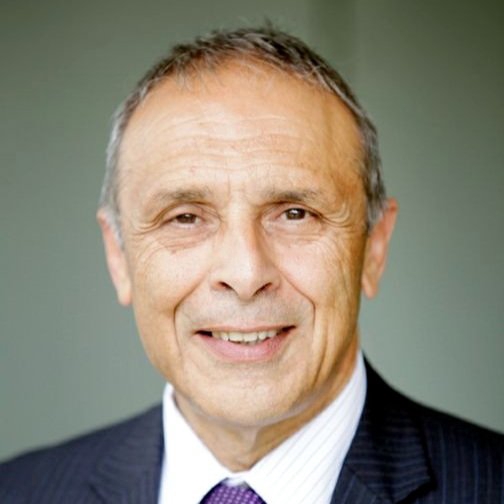
Dr. Hass Dellal AO is truly one of the absolute pioneers and champions of multiculturalism in Australia.
He was the executive director and the founding director of the Australian Multicultural Foundation and after 36 years in that role became the chair of the Australian Multicultural Foundation board.
I went to Hass to talk to him about where we go from here and how we can find a way forward.

And we have seen from time to time when there is crisis, communities coming together is probably the most powerful way of healing in a sense.
And I think it's so important that when one community is targeted, creates a sense of vulnerability across all communities.
So the response needs to be broader than just addressing from one form of hate at that time.
And so I think it starts by recognising that firstly, social cohesion is an abstract and it's how we live together day to day and that fairness and that respect and sense of belonging and trust in institutions.
Leadership becomes so important at this time, a critical one, a tone set by leaders.
Political media community has a direct impact on how people behave and how communities feel safe.
How you frame language becomes very important because communities respond to that as well.
And look, yes, we have many moments in how we think about recent events like Bondi with Christchurch and rise of Islamophobia, anti-Semitism.
They also remind us of the importance of staying anchored on our core values and that fairness that I keep saying fairness and respect and the rule of law becomes so important.
There may be cultural differences, but religious leaders have been able to bring communities together during times of crisis.
It really can work, and the real question is whether we have the discipline to implement it consistently, collectively, and with a long-term view.
Investing in local capacity, intercultural interfaith engagement, community led initiatives, trusted local leadership, that is ways of bringing communities together.



Dr. Hass Dellal AO is truly one of the absolute pioneers and champions of multiculturalism in Australia.
He was the executive director and the founding director of the Australian Multicultural Foundation and after 36 years in that role became the chair of the Australian Multicultural Foundation board.
I went to Hass to talk to him about where we go from here and how we can find a way forward.
And we have seen from time to time when there is crisis, communities coming together is probably the most powerful way of healing in a sense.
And I think it's so important that when one community is targeted, creates a sense of vulnerability across all communities.
So the response needs to be broader than just addressing from one form of hate at that time.
And so I think it starts by recognising that firstly, social cohesion is an abstract and it's how we live together day to day and that fairness and that respect and sense of belonging and trust in institutions.
Leadership becomes so important at this time, a critical one, a tone set by leaders.
Political media community has a direct impact on how people behave and how communities feel safe.
How you frame language becomes very important because communities respond to that as well.
And look, yes, we have many moments in how we think about recent events like Bondi with Christchurch and rise of Islamophobia, anti-Semitism.
They also remind us of the importance of staying anchored on our core values and that fairness that I keep saying fairness and respect and the rule of law becomes so important.
There may be cultural differences, but religious leaders have been able to bring communities together during times of crisis.
It really can work, and the real question is whether we have the discipline to implement it consistently, collectively, and with a long-term view.
Investing in local capacity, intercultural interfaith engagement, community led initiatives, trusted local leadership, that is ways of bringing communities together.
The rest of this transcript — segmented and speaker-labeled, so you land on the exact moment something was said
Search every transcript — by keyword, by phrase, or by meaning, across every show Radar indexes
Trends — what is surging across podcasts, measured against its own baseline
Alerts — when a name you follow appears in a newly indexed episode
No account is needed to search Radar.