The Cultural Dynamics of Political Order and Disorder
Sep 25, 2026 · 58 min · 10 segments
Renowned comparative political scientist and former CASBS fellow (1999-2000) David Laitin has influenced generations of scholars through his investigations of the intricate interplay of cultural…
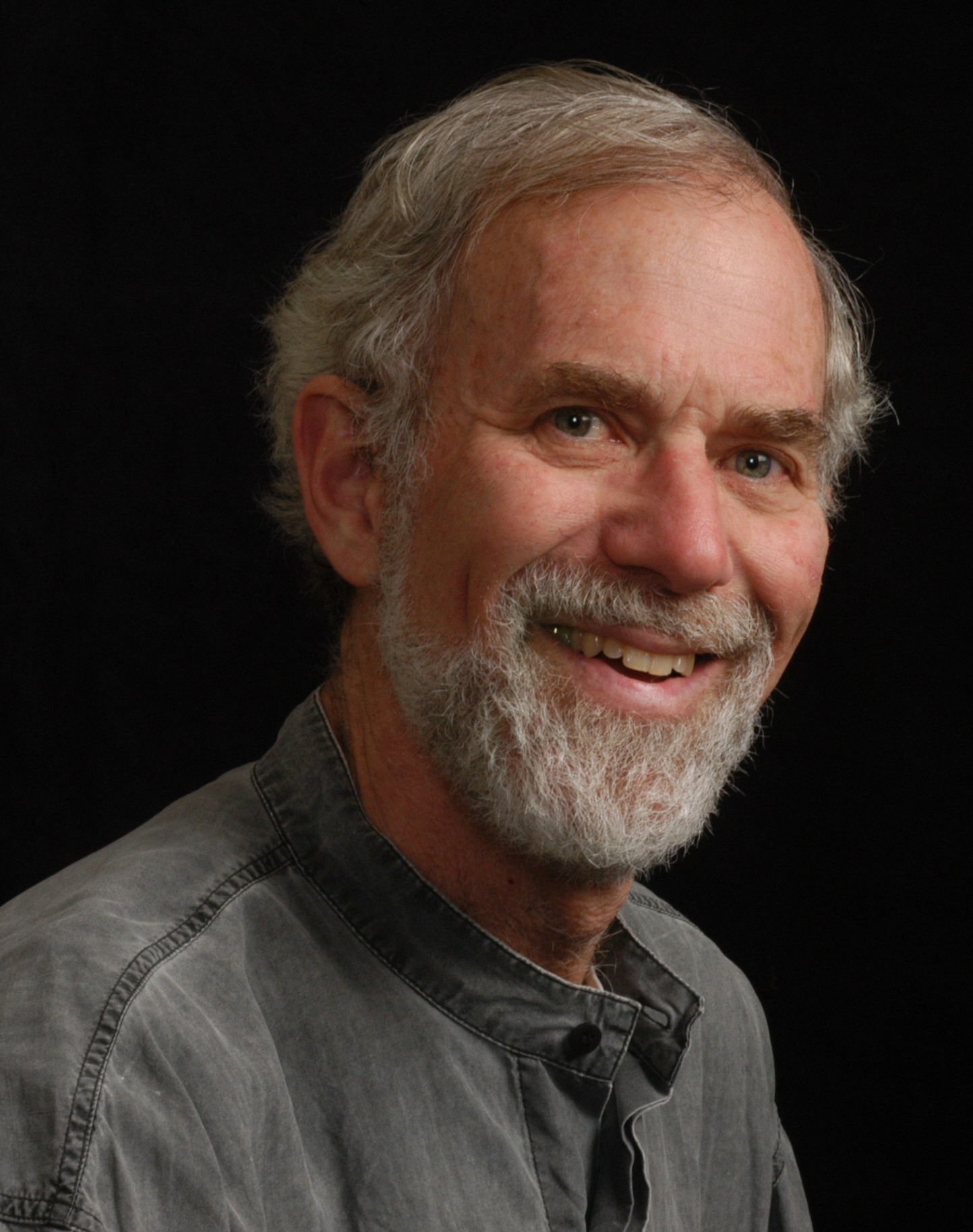
Renowned comparative political scientist and former CASBS fellow (1999-2000) David Laitin has influenced generations of scholars through his investigations of the intricate interplay of cultural phenomena – such as language, religion, and ethnicity – with politics and political life across societies. The complex dynamics he reveals get to the roots of conflict, cooperation, identity formation as well as nation- and state-building. Laitin takes us on a sweeping tour of some of his career’s principal works, findings, and collaborations in conversation with 2025-26 CASBS fellow Olukunle Owolabi. DAVID LAITIN: Stanford faculty page | Google Scholar page | National Academy of Sciences bio | Wikipedia page | Johan Skytte Foundation article | OLUKUNLE OWOLABI: Villanova faculty page | CASBS bio | Villanova article on six awards won by Kunle's 2023 book | **David Laitin books:** D. Laitin. *Politics, Language, and Thought: The Somali Experience* (Univ. of Chicago Press, 1977). D. Laitin. Hegemony and Culture: The Politics of Religious Change among the Yoruba (Univ. Chicago Press, 1986). D. Laitin and S. Samatar, *Somalia: Nation in Search of a State* (Westview Press, 1987). D. Laitin. *Language Repertoires and State Construction in Africa* (Cambridge Univ. Press, 1992). D. Laitin. *Identity in Formation: The Russian-speaking Populations in the Near Abroad* (Cornell Univ. Press, 1998). D. Laitin. *Nations, States and Violence* (Oxford Univ. Press, 2007). D. Laitin, C. Adida and M. Valfort. *Why Mulsim Integration Fails in Christian-heritage Societies* (Harvard Univ. Press, 2016). D. Laitin and D. Christensen. African Politics since Independence: Order, Development and Democracy (Yale Univ. Press, 2019). **David Laitin articles referenced in this episode:** D. Laitin and R. Ramachandran, "The Historical Sources of Language Policy," *Journal of Politics* (2014). D. Laitin and R. Ramachandran, "Language Policy and Socioeconomic Outcomes," *Palgrave Handbook of Economics and Language* (2026). D. Laitin and R. Ramachandran, "Linguistic Diversity, Official Language Choice and Human Capital," *Journal of Development Economics* (2022). D. Laitin, R. Ramachandran and S. Walter," The Legacy of Colonial Language Policies and their Impact on Student Learning: Evidence from an Experimental Program in Cameroon," *Economic Development and Cultural Change* (2019). D. Laitin and R. Ramachandran, "Language Policy and Human Development," *American Political Science Review* (2016). D. Laitin, J. Hainmueller, et al., "Breaking Down Barriers to Naturalization for Low-income Immigrants: Evidence from a Randomized Controlled Design," *Proceedings of the National Academy of Sciences* (2018). D. Laitin, T. Gurr, et al., "Socially Relevant Ethnic Groups, Ethnic Structure and AMAR," *Journal of Peace Research* (2015). D. Laitin and J. Fearon, "Civil War Non-onsets: The Case of Japan," Journal of Civilization Studies (2014) D. Laitin, C. Adida and M. Valfort, "Identifying Barriers to Muslim Integration in France," *Proceedings of the National Academy of Sciences* (2010). D. Laitin and J. Fearon, "Sons-of-the-soil, Migrants, and Civil War," *World Development* (2011). D. Laitin and A. Krueger, "Kto-Kogo? A Cross-country Study of the Origins and Targets of Terrorism," in *Terrorism, Economic Development, and Political Openness* (Cambridge Univ. Press, 2008). D. Laitin and E. Berman, "Religion, Terrorism and Public Goods: Testing the Club Model," Journal of Public Economics (2008). D. Laitin and A. Krueger, "'Misunderestimating' Terrorism: The State Department's Big Mistake, *Foreign Affairs* (2004). D. Laitin and J. Fearon, "Neotrusteeship and the Problem of Weak States," *International Security* (2004). D. Laitin and J. Fearon, "Ethnicity, Insurgency, and Civil War," *American Political Science Review* (2003). D. Laitin and J. Fearon, "Violence and the Social Construction of Ethnic Identities," *International Organization* (2000). D. Laitin and J. Fearon, "Explaining Interethnic Cooperation," *American Political Science Review* (1996). D. Laitin, "The Tower of Babel as a Coordination Game: Political Linguistics in Ghana," *American Political Science Review* (1994). D. Laitin, S. Kalyvas and C Sole, "Language and the Construction of States: The Case of Catalonia in Spain," *Politics and Society* (1994). D. Laitin, "Linguistic Conflict in Catalonia," *Language Problems and Language Planning* (1987). David Laitin's full curriculum vitae accessible from his Stanford University faculty page. **Postscript** In the episode, David Laitin acknowledges the influence of two towering social scientists -- Clifford Geertz and Albert Hirschman -- both of whom were CASBS fellows (Geertz in 1958-59, Hirschman in 1968-69). Hirschman, notably, wrote the seminal book *Exit, Voice, and Loyalty: Responses to Decline in Firms, Organizations, and States* while at CASBS. In this podcast episode, David Laitin describes developing the argument for his book *Identity in Formation* by following the conceptual framework of the classic Hirschman book. **Center for Advanced Study in the Behavioral Sciences (CASBS)** at Stanford University **Explore CASBS:** website | Bluesky | X | YouTube |LinkedIn | podcast | latest newsletterhttps://mailchi.mp/2159cd24c41a/casbs-newsletter-fall-2025?e=c2d0812d02| signup | outreach *Human Centered* Producer: Mike Gaetani **|** Audio engineer & co-producer: Joe Monzel
Renowned comparative political scientist and former CASBS fellow (1999-2000) David Laitin has influenced generations of scholars through his investigations of the intricate interplay of cultural…