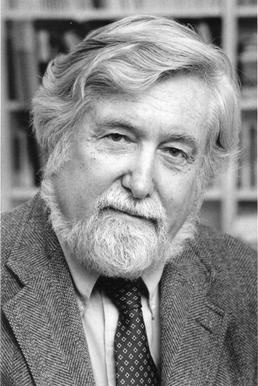
Clifford Geertz
American anthropologistWikipedia
10
MENTIONS
7
EPISODES
5
PODCASTS
Search complete. 10 mentions across 7 episodes found for "Clifford Geertz".
Sep 20, 2026

Andrew M. HenryHOST
For example, Hail Columbia, which is still used as the official vice presidential anthem, and America the Beautiful, where the chorus says, America, God shed his grace on thee.
Andrew M. HenryHOST
So why am I mentioning these? Remember from episode one of this American Civil Religion series that one of the elements of Clifford Geertz's definition of religion is that it requires a system of symbols.
Andrew M. HenryHOST
And we find a bunch of symbols when we consider the political rhetoric surrounding official state and military functions.
Andrew M. HenryHOST
Home of the brave, land of the free, God the author of our liberty.

Elliot GravesHOST
The goal isn't only to stop the ritual, but to see what tension it's releasing.
Elliot GravesHOST
What rift is it trying to mend? And that's where Clifford Geertz helps.
Elliot GravesHOST
He said rituals are texts, both a mirror of reality and a blueprint for it.
Elliot GravesHOST
That splurge ritual reflects the stress you carry and also sketches the freedom you're chasing.
speaker_3ADVERTISER
Discover it all in Nordstrom stores and at Nordstrom.com.
Andrew M. HenryHOST
And here's where Clifford Geertz comes in.
Andrew M. HenryHOST
The definition provided by the 20th century American anthropologist Clifford Geertz is especially compelling because he describes religion primarily as a cultural system dependent on symbols.
Andrew M. HenryHOST
His famous definition is a five-part monster though, so buckle in.
Andrew M. HenryHOST
Religion is a system of symbols which acts to establish powerful, pervasive, and long-lasting moods and motivations in people by formulating conceptions of a general order of existence and clothing these conceptions with such an aura of factuality that the moods and motivations seem uniquely realistic.
Andrew M. HenryHOST
Okay, that's a lot.
Andrew M. HenryHOST
And from the start, I'll say of course this definition is not perfect.
Andrew M. HenryHOST
In a previous episode, I discussed how this same approach could show that Coca-Cola can be a religion according to Geertz's definition.

Yaakov Ginsberg-SchreckGUEST
So studying with her really made me curious about the space between religious space and secular space and what it means that humans need to have cultural systems of meaning.
Yaakov Ginsberg-SchreckGUEST
And I'd say that was in one of her classes that totally transformed my thinking was by an anthropologist called Clifford Geertz, Religion as a Cultural System, talking about religion as a system of symbols meant to produce moods and motivations in people, something like I'm clothed in an aura of factuality to make those moods and motivations appear uniquely realistic.
Yaakov Ginsberg-SchreckGUEST
I mean, ran with it, thought, okay, maybe there's something in a tradition for me as I'm having trouble finding a bedrock of meaning in a context of American empire, even though I resonate and love a lot of American culture and I'm deeply an American.
Yaakov Ginsberg-SchreckGUEST
I was looking for some real bedrock system and thought maybe I'll look at Buddhism, maybe I'll look at not in another world maybe i'm an ashram somewhere in the multiverse but uh it was like i have this this jewish heritage and i want to try to you know unpack it so moved to la after college thinking i would try to move from playwriting into TV writing, was working as an assistant for a writer's room.

Robert WilsonGUEST
And that's just the idea that, you know, these are approaches to understand their, you know, their subject matter, uh, which is often focused on humans, human structures, societies, um, relatedness, um, that requires a, a distinctive kind of methodology.
Robert WilsonGUEST
So, so for example, um, it might require a methodology of, you know, uh, the view that Clifford, uh, Geertz had articulated as interpretationism, the idea that we have to fi- you know, rather...
Robert WilsonGUEST
You know, and this goes back to the Geistes versus Naturwissenschaften distinction from the, from the 19th, uh, century.
Robert WilsonGUEST
Um, the idea that there's a sort of, um, you know...

speaker_1HOST
Yeah.
speaker_1HOST
The anthropologist Clifford Geertz observed that institutions create webs of meaning, essentially the unwritten rules and shared beliefs that tell members of a group what is valuable and what is reality.
speaker_0HOST
Right.
speaker_1HOST
Combine that with the work of organizational theorist Edgar Schein, who found that an organization's culture emerges through repeated patterns of successful adaptation.
Andrew M. HenryHOST
But it goes even further than this.
Andrew M. HenryHOST
The religious studies scholar David Chidester builds on Pendergrast's theory.
Andrew M. HenryHOST
Coca-Cola is not just a conceptual religion on paper, but actual people involved with Coca-Cola have characterized their experiences with it as religious.
Andrew M. HenryHOST
Asa Candler, the founder of Coca-Cola, is said to have had an almost mystical faith for the drink.