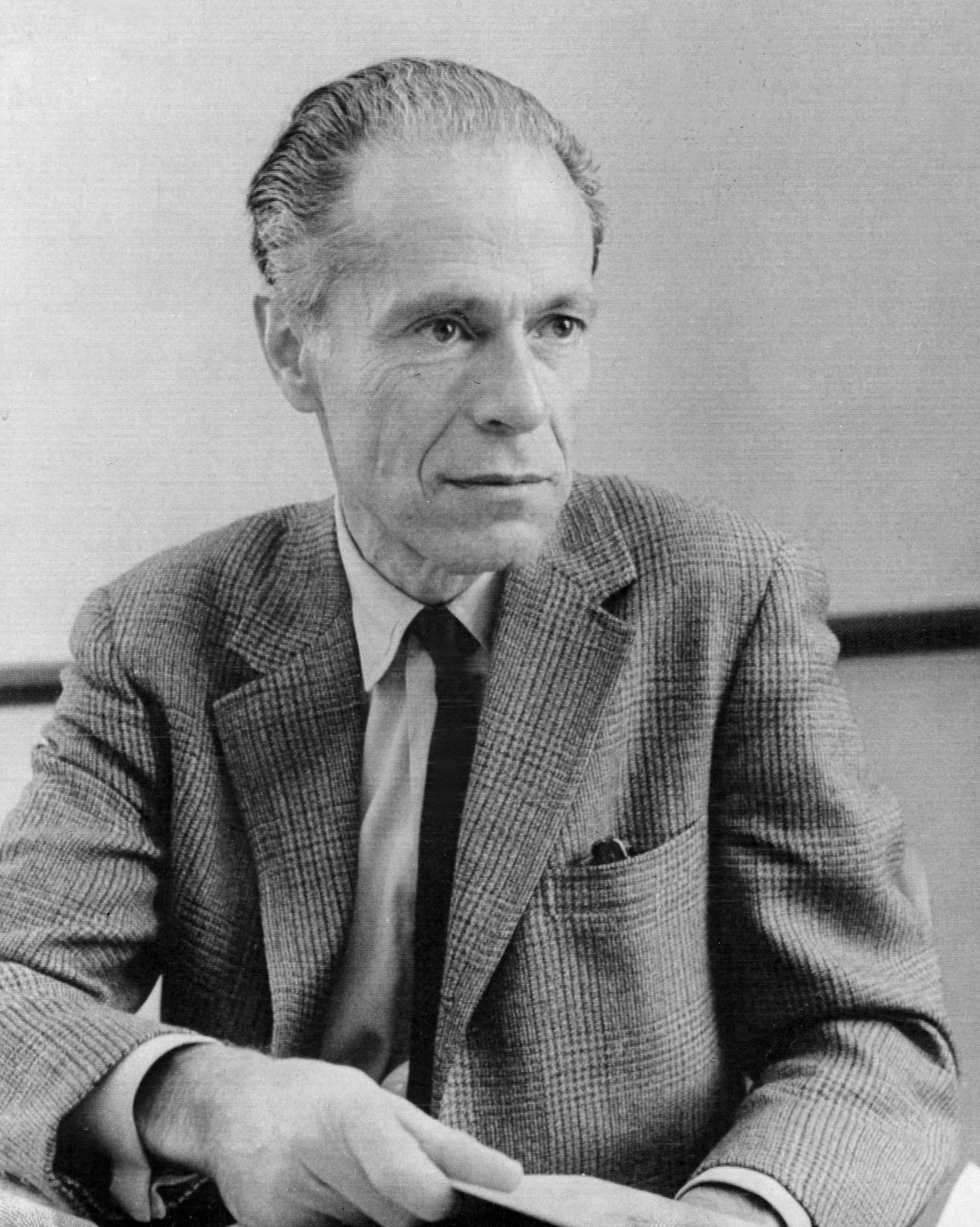
Albert O. Hirschman
American economistWikipedia
21
MENTIONS
12
EPISODES
12
PODCASTS
Search complete. 21 mentions across 12 episodes found for "Albert O. Hirschman".
Sep 17, 2026

Priya ParkerGUEST
And one of the, I love your question about cost.
Priya ParkerGUEST
There was another study, there was actually an essay by an economist and a sociologist named Albert Hirschman.
Priya ParkerGUEST
And this was more than 50 years ago, he wrote a piece called a paper called Exit Voice and Loyalty.
Priya ParkerGUEST
And he basically looked at groups.

Marwa AbdouHOST
Two economies could have identical export concentration and very different capacities to respond when that relationship is disrupted.
Marwa AbdouHOST
Hirschman's work on asymmetric dependence points us towards the cost of replacing a relationship rather than simply its size.
Marwa AbdouHOST
So should Canada, therefore, worry less about the U.S.'s share of export itself and more about substitutability? In other words, I guess...
Marwa AbdouHOST
For our listeners, what I mean by that is how difficult we are for others to replace relative to how difficult they are for us to replace.
Simon J. EvenettGUEST
So I'm very sympathetic to this Hirschman perspective.
Simon J. EvenettGUEST
In fact, immediately after the election of President Trump for his second term, this was exactly one of the calculations I did.
Simon J. EvenettGUEST
I wanted to compare... how exposed a country was to their exports to the United States, and then compare that to how fast their exports were going to third markets.
Simon J. EvenettGUEST
And the ideal, the ultimate statistic I was interested in was, what's the number of years of growth to third markets, which if sustained at the current level, would enable a country to replace the United States' sales if they were all lost, or sales to the United States if they were all lost.

Jacob WeisbergGUEST
But courage can be contagious, too.
Dahlia LithwickHOST
For the last few years, I have been single-mindedly obsessed with the question once articulated by economist A.O. Hirschman in his landmark 1970 book, Exit, Voice, Loyalty, and the cascading questions it prompts about power and courage.
Dahlia LithwickHOST
Who in a dysfunctional and illiberal regime willingly sticks around? Who sticks around to try to mitigate harms? And who just races for the exits and loudly decries the harms being done? This all seemed very simple to me when I started to write about this decision structure in the first Trump administration.
Dahlia LithwickHOST
It's been much murkier as the more principled Justice Department lawyers and military leaders depart and leave us all to the tender mercies of Emil Bove and Pete Hegseth.
Dahlia LithwickHOST
Welcome to Amicus.
Jacob WeisbergGUEST
Well, it's so nice to see you.
Jacob WeisbergGUEST
And I am a fellow admirer of Albert Hirschman, which I would love to talk about with you.
Jacob WeisbergGUEST
But I just want to say thank you for Amicus and your writing.

Jacob WeisbergGUEST
But courage can be contagious, too.
Dahlia LithwickHOST
For the last few years, I have been single-mindedly obsessed with the question once articulated by economist A.O. Hirschman in his landmark 1970 book, Exit, Voice, Loyalty, and the cascading questions it prompts about power and courage.
Dahlia LithwickHOST
Who in a dysfunctional and illiberal regime willingly sticks around? Who sticks around to try to mitigate harms? And who just races for the exits and loudly decries the harms being done? This all seemed very simple to me when I started to write about this decision structure in the first Trump administration.
Dahlia LithwickHOST
It's been much murkier as the more principled Justice Department lawyers and military leaders depart and leave us all to the tender mercies of Emil Bove and Pete Hegseth.
Dahlia LithwickHOST
Welcome to Amicus.
Jacob WeisbergGUEST
Well, it's so nice to see you.
Jacob WeisbergGUEST
And I am a fellow admirer of Albert Hirschman, which I would love to talk about with you.
Jacob WeisbergGUEST
But I just want to say thank you for Amicus and your writing.

Jacob WeisbergGUEST
But courage can be contagious, too.
Dahlia LithwickHOST
For the last few years, I have been single-mindedly obsessed with the question once articulated by economist A.O. Hirschman in his landmark 1970 book, Exit, Voice, Loyalty, and the cascading questions it prompts about power and courage.
Dahlia LithwickHOST
Who in a dysfunctional and illiberal regime willingly sticks around? Who sticks around to try to mitigate harms? And who just races for the exits and loudly decries the harms being done? This all seemed very simple to me when I started to write about this decision structure in the first Trump administration.
Dahlia LithwickHOST
It's been much murkier as the more principled Justice Department lawyers and military leaders depart and leave us all to the tender mercies of Emil Bove and Pete Hexeth.
Dahlia LithwickHOST
Welcome to Amicus.
Jacob WeisbergGUEST
Well, it's so nice to see you.
Jacob WeisbergGUEST
And I am a fellow admirer of Albert Hirschman, which I would love to talk about with you.
Jacob WeisbergGUEST
But I just want to say thank you for Amicus and your writing as I was working on the legal parts of this book.

Michael MezzatestaHOST
Honestly, when I hear someone say that, I'm like.
Gabriel ZucmanGUEST
You know, Albert Hirschman, you know, the famous economist, social scientist, analyzed the rhetoric, reactionary rhetoric, the rhetoric of conservative people.
Gabriel ZucmanGUEST
It's always variations around those types of arguments.
Gabriel ZucmanGUEST
This is futile or this is harmful.

Ha-Joon ChangGUEST
Kind of seduced by Marxism, we explore different things.
Ha-Joon ChangGUEST
I mean, Albert Hirschman and Simon Kuznets, all these development economists.
Ha-Joon ChangGUEST
And then people like Prebysh Frutado, this Latin American structuralist.
Ha-Joon ChangGUEST
We also studied dependency theory.

Larry BernsteinHOST
You have choices.
Larry BernsteinHOST
There's a book by Albert Hirschman called Exit, Voice, and Loyalty.
Larry BernsteinHOST
When you have policies like you described at MIT, what Hirschman said is, is that, well, one thing you can do is you can scream and yell.
Larry BernsteinHOST
You can say, "Look, somebody, you need to change." But at some point, you realize you have only one choice left.

Herman PoppleberryHOST
Exit voice and loyalty.
Herman PoppleberryHOST
Hirschman's framework.
Herman PoppleberryHOST
In a connected place, exit is cheap.
Herman PoppleberryHOST
You don't like your neighborhood, you move.

Lawrence SummersGUEST
And I think in the name first of scientism and then in the name of the more specific set of ideas around achieving compelling identification, we have erred on the side of looking for our wallet under the lamppost even after we've been looking under the lamppost for a long time and not seen the wallet and not being willing to think about the rest of the street.
Lawrence SummersGUEST
So I think it's a good Princeton professor like yourself who brings Albert Hirschman to mind.
Lawrence SummersGUEST
And I think if we had more of that and more welcoming of that, I think it would probably be a quite healthy thing.
Markus BrunnermeierHOST
Thanks a lot, Leardis.
2 more episodes mention Albert O. Hirschman.
Create an account to see the whole feed, search across every transcript, and follow the entities you care about.