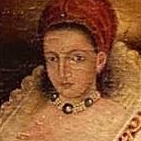
A legend recounts that a woman once asked the Count Saint-Germain's butler if it was true the Count had already lived during the time of Christ.
The butler replied dryly that he wouldn't know, as he'd only been in the Count's service for 300 years.
This anecdote, whether apocryphal or not, perfectly captures the paradox of the Count of Saint-Germain.
For nearly half a century, he charmed, advised, and startled the courts of Europe.
He maintained an image so fantastical that Voltaire dubbed him a man who knows everything.
Saint-Germain was and remains a complete mystery, serving simultaneously as a celebrated 18th century polymath, and in modern times, an immortal spiritual guide.
But a closer look at the count suggests that he was, more likely, an agent of an unknown government, trading his reputation for intelligence.
Saint-Germain made his entrance onto the international scene in the mid-17th century, but his origins are mired in a fog of deliberate contradiction.
He used a variety of names and titles throughout his life.
an accepted practice among traveling aristocrats, but one that Saint-Germain employed to an extreme degree.
This intentional obscurity allowed him to deflect inquiries and invent fantasies about his past, such as the famous claim of being 500 years old.
Historical investigations suggest several possibilities for his birth.
One plausible theory places his birth around 1710 in San Germano, Savoy, perhaps as the son of an Italian princess, with a local tax collector as his supposed father.
He sometimes claimed to be the son of Prince Francis II Roccozzi of Transylvania.
Adding to the chronological confusion, when he arrived in Schleswig in 1779, he told his then patron, Prince Charles of Hesse Castle, that he was 88 years old.
If this was true, this would push his potential birth year back to 1691.
The sheer volume of conflicting identities suggests that the Count's obscurity was not merely happenstance, but a vital tool.
Many of his contemporaries suggested that his lack of a fixed identity may have been a clue that he was actually an agent of an unknown government.
By being simultaneously everyone and no one, his persona provided him with the necessary camouflage to move seamlessly between Europe's royal courts.
The Count's influence derived not just from his mysterious background, but from verifiable, multidisciplinary genius.
He was a polyglot, fluent in all major European languages, and a verified expert in art, philosophy, history, and science.
He was also a celebrated musician, known as a virtuoso on both the piano and violin.
Several of his compositions were published and performed in London and Paris and are still available today, though none are widely performed.
However, the most intriguing aspect of his reputation was his connection to the mystical science of alchemy.
The rest of this transcript — segmented and speaker-labeled, so you land on the exact moment something was said
Search every transcript — by keyword, by phrase, or by meaning, across every show Radar indexes
Trends — what is surging across podcasts, measured against its own baseline
Alerts — when a name you follow appears in a newly indexed episode
No account is needed to search Radar.