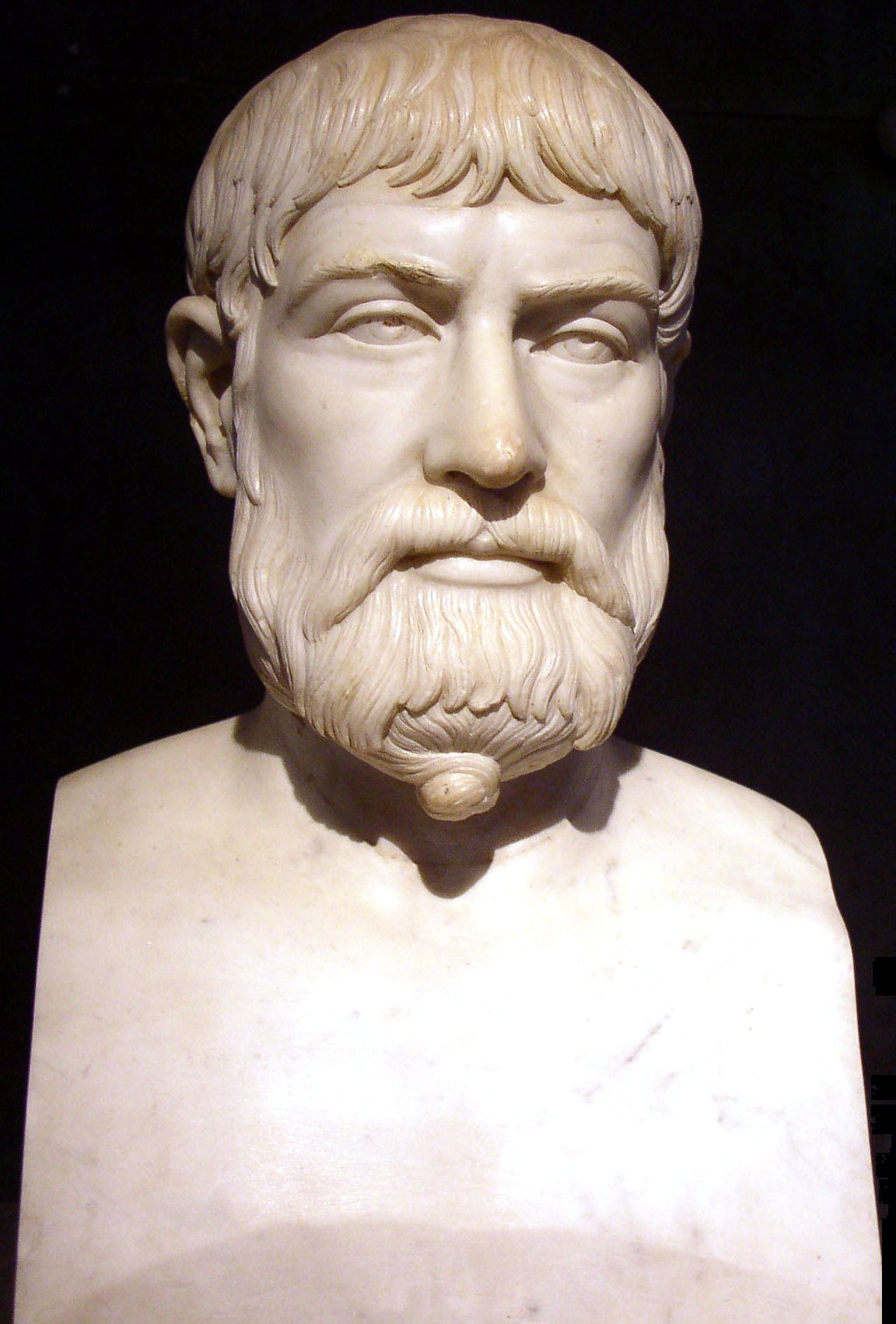
Pindar
Lyric poetWikipedia
312
MENTIONS
126
EPISODES
109
PODCASTS
Search complete. 312 mentions across 126 episodes found for "Pindar".
Sep 17, 2026

Amelia ChesleyNARRATOR
take
Amelia ChesleyNARRATOR
eratosthenes and his origani because that little work is without a flaw is he therefore a greater poet than archilochus with all his disorderly profusion greater than that impetuous that god-gifted genius which chafed against the restraints of law or in lyric poetry would you choose to be a bacchylides or a pindar in tragedy a sophocles or save the mark and io of chios Yet Io and Bacchylides never stumble, their style is always neat, always pretty, while Pindar and Sophocles sometimes move onwards with a wide blaze of splendor, but often drop out of view in sudden and disastrous eclipse.
Amelia ChesleyNARRATOR
Nevertheless, no one in his senses would deny that a single play of Sophocles, the Oedipus, is of higher value than all the dramas of Io put together.
Amelia ChesleyNARRATOR
Chapter 34 if the number and not the loftiness of an author's merits is to be our standard of success judged by this test we must admit that hyperides is a far superior orator to demosthenes for in hyperides there is a richer modulation a greater variety of excellence he is we may say in everything second best like the champion of the pentathlon who though in every contest he has to yield the prize to some other combatant is superior to the unpractised in all five not only has he rivalled the success of demosthenes in everything but his manner of composition but as though that were not enough he is taken in all the excellences and graces of Lysias as well.
43 MINS LATER
Amelia ChesleyNARRATOR
A considerable fragment on the blessings of peace has been translated by Mr. J.
Amelia ChesleyNARRATOR
A. Simmons in his work on the Greek poets.
Amelia ChesleyNARRATOR
He has made the subject of a very bitter allusion by Pindar.
Amelia ChesleyNARRATOR
We may suppose that the stern and lofty spirit of Pindar had little sympathy with the tearful strains of Simonides or his imitators.

speaker_6NARRATOR
Young men did not learn set speeches in the days when Sophocles and Euripides were searching for words in which to express themselves.
speaker_6NARRATOR
In the days when Pindar and the nine lyric poets feared to attempt Homeric verse, there was no private tutor to stifle budding genius.
speaker_6NARRATOR
I need not cite the poets for evidence, for I do not find that either Plato or Demosthenes was given to this kind of exercise.
speaker_6NARRATOR
A dignified, and if I may say it, a chaste style is neither elaborate nor loaded with ornament.

Morgan WatkinsGUEST
But yeah, it is going to be hard.
Morgan WatkinsGUEST
I think it's slightly naive to think that suddenly we're going to have everyone reading Pindar or Herodotus and discussing Thucydides.
Morgan WatkinsGUEST
But we should fight for it.
Morgan WatkinsGUEST
I'm

Chiquito CrastoNARRATOR
Socrates is of the opinion that the more abstract or dialectical definition of figure is far better.
Chiquito CrastoNARRATOR
Now that Meno has been made to understand the nature of a general definition, he answers in the spirit of a Greek gentleman and in the words of a poet that virtue is to delight in things honorable and to have the power of getting them.
Chiquito CrastoNARRATOR
This is a nearer approximation than he has yet made to a complete definition, and regarded as a piece of proverbial or popular morality, is not far from the truth.
Chiquito CrastoNARRATOR
But the objection is urged that the honorable is the good, and as everyone equally desires the good, the point of the definition is contained in the words, the power of getting them, and they must be got justly or with justice.
Chiquito CrastoNARRATOR
But the puzzle has a real difficulty latent under it to which Socrates will endeavor to find a reply.
Chiquito CrastoNARRATOR
The difficulty is the origin of knowledge.
Chiquito CrastoNARRATOR
He has heard from priests and priestesses, and from the poet Pindar, of an immortal soul which is born again and again in successive periods of existence, returning into this world where she has paid the penalty of ancient crime, and having wandered over all places of the upper and under world, and seen and known all things at one time or other, is by association out of one thing capable of recovering all.
Chiquito CrastoNARRATOR
For nature is of one kindred, and every soul has a seed or germ which may be developed into all knowledge.

Robin CotterNARRATOR
For the insurrection of the Amazons, written by the author of the Theseid, telling how, when Theseus married Phaedra, Antiope and the Amazons who fought to avenge her attacked him and were slain by Heracles, has every appearance of fable and invention.
Robin CotterNARRATOR
Theseus did indeed marry Phaedra, but this was after the death of Antiope, and he had a son by Antiope, Hippolytus, or, as Pindar says, Demophone.
Robin CotterNARRATOR
As for the calamities which befell Phaedra and the son of Theseus by Antiope, since there is no conflict here between historians and tragic poets, we must suppose that they happened as represented by the poets uniformly.
Robin CotterNARRATOR
There are, however, other stories also about marriages of Theseus which were neither honorable in their beginnings nor fortunate in their endings, but these have not been dramatized.
1 HR 34 MINS LATER
Anna SimonNARRATOR
In short, many such fables are told by writers who improbably ascribe divinity to the mortal features in human nature as well as to the divine.
Anna SimonNARRATOR
At any rate, to reject entirely the divinity of human virtue were impious and base, but to mix heaven with earth is foolish.
Anna SimonNARRATOR
Let us therefore take the safe course and grant with Pindar that our bodies all must follow death's supreme behest, but something living still survives, an image of life, for this alone comes from the gods.
Anna SimonNARRATOR
Yes, it comes from them and to them it returns, not with its body, but only when it is most completely separated and set free from the body and becomes altogether pure, fleshless and undefiled.

speaker_2NARRATOR
It is from his name that we get our own word tantalized for exactly this kind of endless and impossible temptation, always visible and never once attainable.
speaker_2NARRATOR
Ixion, a mortal king who had dared to pursue Hera herself, was bound forever afterward to a wheel of fire that spun without pause through the sky, a punishment recorded most fully by the poet Pindar, and a fate from which there was no possibility of ever being released.
speaker_2NARRATOR
The fifty daughters of Danaus suffered a punishment of their own, one rooted in a story that began generations earlier, with a woman named Eo, a priestess loved by Zeus himself, who, to hide the affair from a suspicious Hera, transformed her into a white heifer, only for Hera to demand the animal as a gift and set the hundred-eyed giant Argus to watch over her day and night, since Argus could sleep with some of his eyes still open and never lose sight of her.
speaker_2NARRATOR
Zeus sent Hermes to free her, and the god lulled every one of Argus' hundred eyes to sleep with a long, quiet story, before finally killing him, an act Hera honored afterward by taking the giant's many eyes and setting them into the tail of her own sacred bird, the peacock.
26 MINS LATER
speaker_2NARRATOR
quenchable fire from between its jaws, described in vivid detail by Hesiod himself as a terrible thing sprung directly from the union of Typhon and Echidna.
speaker_2NARRATOR
To face such a creature, Bellerophon first needed Pegasus, the very same winged horse born earlier from Medusa's own death.
speaker_2NARRATOR
According to the poet Pindar, the seer Polyaidos advised Bellerophon to sleep one night at an altar of Athena, and there in a dream the goddess appeared to him and left behind a golden bridle beside him when he woke.
speaker_2NARRATOR
With this divine gift in hand, Bellerophon was finally able to approach and tame the wild horse, and mounted on Pegasus, he attacked the chimera from above beyond the reach of its fire and brought the monster down.

Luke SartorNARRATOR
During the life of Confucius lived Leonidas, Miltiades, Cyrus the Great, Cambyses, Darius, Xerxes, and then quite naturally occurred the battle of Marathon, Salamis, and Thermopylae.
Luke SartorNARRATOR
Then lived Buddha Gautama, Lao Tse, Ezekiel, Daniel, Haggai, Zechariah, Pythagoras, Pindar, Aeschylus, and Anacreon.
Luke SartorNARRATOR
The Chinese are linked to the past by ties of language and custom beyond all other nations.
Luke SartorNARRATOR
They are a peculiar people, a chosen people, a people set apart.

Lynn ThompsonNARRATOR
here lieth buried slumber in the little and scot a musical shaft of old athens dishes and fishes bird beast and sesquicent blackguard sleep weary ghosts be at peace abide in your lexicon limbo sleep is in your lava for ages your herculean kindred Sleepin' for aught would I care, the sleep that knows no waking.
Lynn ThompsonNARRATOR
Aeschylus, Sophocles, Homer, Herodotus, Pindar, and Plato.
Lynn ThompsonNARRATOR
Three weeks hence be it time to exhume our dreary classics.
Lynn ThompsonNARRATOR
And in the chorus join Lindsay, the piper, the dialectician.

Roland RamblerHOST
Best of all things is water, but gold, like a gleaming fire by night, outshines all pride of wealth beside.
Roland RamblerHOST
Pindar, Olympian One Pindar's priorities felt entirely reasonable while staring down at a concrete smeared water pipe, though the island itself demanded a wider view than any one broken pipe could offer.
Roland RamblerHOST
Underfoot, the ground held the quiet tension of a place shaped by cyclical catastrophe, which was reason enough to look both outward toward the sunken crater and backward toward the much older buried settlements that had occupied these cliffs long before the medieval fortresses and the tourist crowds arrived.
Roland RamblerHOST
Santorini, where Therasanque and legends surfaced.

speaker_1HOST
The texts are fascinating.
speaker_0HOST
The ancient Greek poet Pindar wrote extensively about a mystical utopian land called Hyperborea.
speaker_0HOST
He claimed it was located far to the north beyond where the north wind comes from.
speaker_1HOST
A place where the sun supposedly shined 24 hours a day, which aligns perfectly with the Arctic Circle, and the legend states that the god Apollo visited Hyperborea, traveling there every 20 years.
speaker_0HOST
It is a continuous global thread.
speaker_1HOST
To traditional Egyptologists, these texts are purely mythological incantations.
speaker_1HOST
They are viewed as magical poetry meant to symbolically ensure the pharaoh's safe passage to the afterlife.
speaker_1HOST
It is a metaphorical journey.
116 more episodes mention Pindar.
Create an account to see the whole feed, search across every transcript, and follow the entities you care about.