INFORMATIVE1:21
Swiss Industry Freefall Stats
Brace yourself for stunning industry collapse numbers

Feb 16, 2026 · 1 hr 1 min · 11 segments
How did an industry survive a technology that should have made it obsolete? Aled Maclean-Jones explains to EconTalk's Russ Roberts how Japanese quartz watches nearly wiped out Swiss watchmaking with…
 Russ RobertsHost
I suppose that period, the early nineteen eighties, was the, uh, the kind of... is seen, certainly within the Swiss watch industry, as the kind of pivotal, pivotal moment.
So, um, uh, i- it's also the, probably the moment, uh, of the Swiss watch industry's lowest ebb.
So certainly for the last sort of thirty years prior, they essentially had a dominance over the global watch market.
I think this was something they assumed would, would sort of carry on forever.
Um, but obviously, what you then had happened was the, um, these sort of quartz watches, this new technology, and it's interesting, you know, a, a quartz watch, we call it a watch, but ultimately, it's a completely different technology.
The only reason they share the same, like, the, the same name is simply because they, they have, I suppose, the same function.
But, um, this whole new technology entered the market, and, um, was really spearheaded by the Japanese, and very, very quickly, as these things often do, you know, the industry went from a position of global dominance to one of quite profound weakness.
So I think it's around half of, um, half of kind of Swiss watchma-ma-- watchmaking companies went bankrupt in the years prior, and, um, and also, you know, two-thirds of jobs within the industry also ceased to exist.
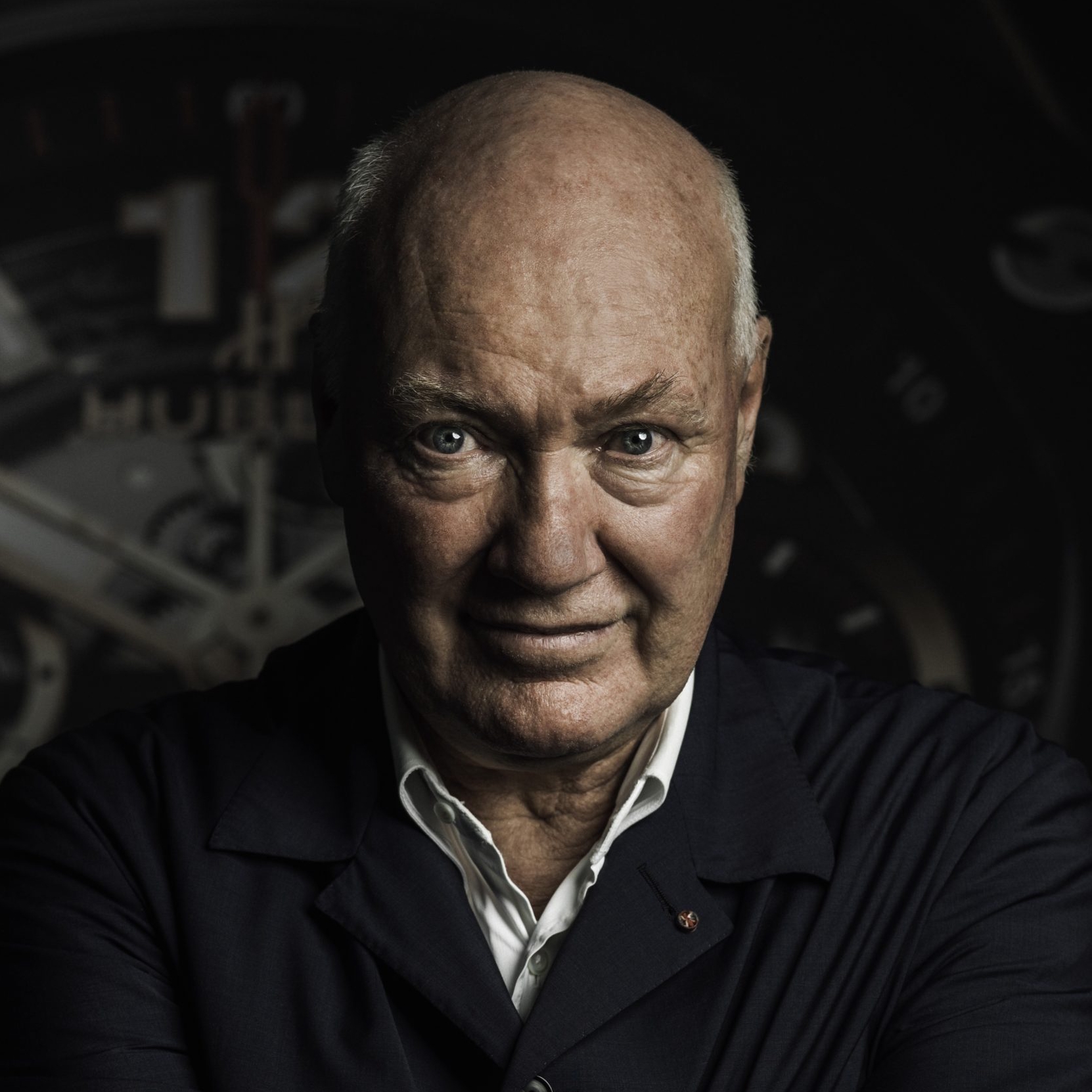
Um, so I begin the, the essay in this car park in Basel, um, with these two figures, um, uh, Jacques Piaget and Jean-Claude Biver.
And these were two, uh, slight sort of renegades and mavericks who, um, uh, had just sort of bought a, a new kind of watch brand called Blancpain, and they were kind of ready to sort of lead the fight back against quartz and try and save the industry.
The problem was they didn't really have any cash, so they basically had a, I think, a borrowed Volkswagen Westfalia, which is an excellent camper van by all sounds.
But, um, uh, and they were there for, um, the Basel Fair, which is, um, which was sort of, at the time, the kind of the main event of the watchmaking calendar that happened once a year in Basel, and they were there to sort of make their, uh, make their, make their big debut and sort of, you know, shake up the industry a little bit.

Uh, but the other thing that, that I want to point out, which you pa-- pointed out in, in passing, is-- comes from, uh, Clayton Christensen's, uh, The Innovator's Dilemma, and he makes the point that a lot of times your competitor is not a better version of what you do.
His ex-- The classic example that I used to think about a lot, 'cause I'm a weird, strange person, is, uh, the slide rule.






I suppose that period, the early nineteen eighties, was the, uh, the kind of... is seen, certainly within the Swiss watch industry, as the kind of pivotal, pivotal moment.
So, um, uh, i- it's also the, probably the moment, uh, of the Swiss watch industry's lowest ebb.
So certainly for the last sort of thirty years prior, they essentially had a dominance over the global watch market.
I think this was something they assumed would, would sort of carry on forever.
Um, but obviously, what you then had happened was the, um, these sort of quartz watches, this new technology, and it's interesting, you know, a, a quartz watch, we call it a watch, but ultimately, it's a completely different technology.
The only reason they share the same, like, the, the same name is simply because they, they have, I suppose, the same function.
But, um, this whole new technology entered the market, and, um, was really spearheaded by the Japanese, and very, very quickly, as these things often do, you know, the industry went from a position of global dominance to one of quite profound weakness.
So I think it's around half of, um, half of kind of Swiss watchma-ma-- watchmaking companies went bankrupt in the years prior, and, um, and also, you know, two-thirds of jobs within the industry also ceased to exist.
Um, so I begin the, the essay in this car park in Basel, um, with these two figures, um, uh, Jacques Piaget and Jean-Claude Biver.
And these were two, uh, slight sort of renegades and mavericks who, um, uh, had just sort of bought a, a new kind of watch brand called Blancpain, and they were kind of ready to sort of lead the fight back against quartz and try and save the industry.
The problem was they didn't really have any cash, so they basically had a, I think, a borrowed Volkswagen Westfalia, which is an excellent camper van by all sounds.
But, um, uh, and they were there for, um, the Basel Fair, which is, um, which was sort of, at the time, the kind of the main event of the watchmaking calendar that happened once a year in Basel, and they were there to sort of make their, uh, make their, make their big debut and sort of, you know, shake up the industry a little bit.
Uh, but the other thing that, that I want to point out, which you pa-- pointed out in, in passing, is-- comes from, uh, Clayton Christensen's, uh, The Innovator's Dilemma, and he makes the point that a lot of times your competitor is not a better version of what you do.
His ex-- The classic example that I used to think about a lot, 'cause I'm a weird, strange person, is, uh, the slide rule.
Every episode on Radar is fully transcribed, speaker-labeled, and rich with metadata. Here is a taste of this one. Try Radar for free to see the rest.
3 of 7
Swiss Industry Freefall Stats
Brace yourself for stunning industry collapse numbers
Adam Smith On Watches
Historic wisdom reshapes how we view time
Machine-Gun Brand Philosophy
Listen to Hayek’s fierce brand defense mantra
+4 more clips · 5 min 23 sec of audio in all
7 of 25
The rest of this transcript — segmented and speaker-labeled, so you land on the exact moment something was said
All 7 clips — the highlight moments, each cut as its own audio, with a title and a speaker
All 11 segments — the transcript broken into labeled sections, every ad read marked
All 25 topics — jump to every other episode discussing the same subject
Every related episode — other shows Radar links to this one
No account is needed to search Radar.

