Sep 8, 2026 · 40 min · 9 segments
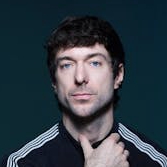
Brett sits down with Jordan Tannahill to discuss his latest book, 'The Living Realm'. They talk about London and latex, the books setting of Lake Teufelssee in Berlin and the forest around it. Aging…
Jordan TannahillGuest
Brett BennerHost
I'm really tracing it back to its origin, for me, all writing begins with reading.

And the act of writing in some way is a desire to extend the act of reading into conversation, into sort of placing oneself perhaps in sort of someone petrously in conversation with the greats.

And I was deeply, deeply inspired by the work of W.G. Sebald and had endeavored basically to begin with his earliest writing and to read him sort of sequentially, chronologically to his final works, both sort of full books, but also essays.

And just what Seybold does with those books, the sort of very particular psychic space he creates, the way obviously he's writing about time, memory, the ghosts of post-war Europe, but also just the way those books make you feel as a reader, the sort of the space that they suspend you in.

It's both while you're reading them and also while you're going about your daily life.

And it's a little bit elusive as to how he, I think, of course, does this.

I mean, these books are sort of these kind of hybrid works of fiction and travelogue and memoir and critical theory and history.

A Seyboldian kind of narrative was something that I was living inside or wanting to, I guess, be in conversation with somehow.

We had spent time at Teufelssee that week, just lounging in the sun naked and swimming.

And I was thinking quite a bit about the idea of summer as just how few summers we had left.

in our lives, I mean, but also just in these bodies as they are now, and perhaps even in our relationship.


And various sylloges that had been buried by the creation of dams and reservoirs were also resurfacing.

And I was at Berghain in the garden because it was locked down still in those days.

We were not having indoor parties, but we were having an outdoor rave as such in the garden of Berghain.

And I was coming up on an MDMA pill and the whole novel just really kind of presented itself, arrived as a sort of like this kind of this cascading series of images and sort of I say revelation, that seems a little bit too religious, but it just sort of presented itself over kind of a half hour period as I was dancing and sitting down and just allowing these kind of synapses to be connected in my brain.

And I don't know, I've never really quite had an experience like it, but it really was there for me in terms of the characters, the plot mechanics.
The rest of this transcript — segmented and speaker-labeled, so you land on the exact moment something was said
Search every transcript — by keyword, by phrase, or by meaning, across every show Radar indexes
Trends — what is surging across podcasts, measured against its own baseline
Alerts — when a name you follow appears in a newly indexed episode
No account is needed to search Radar.