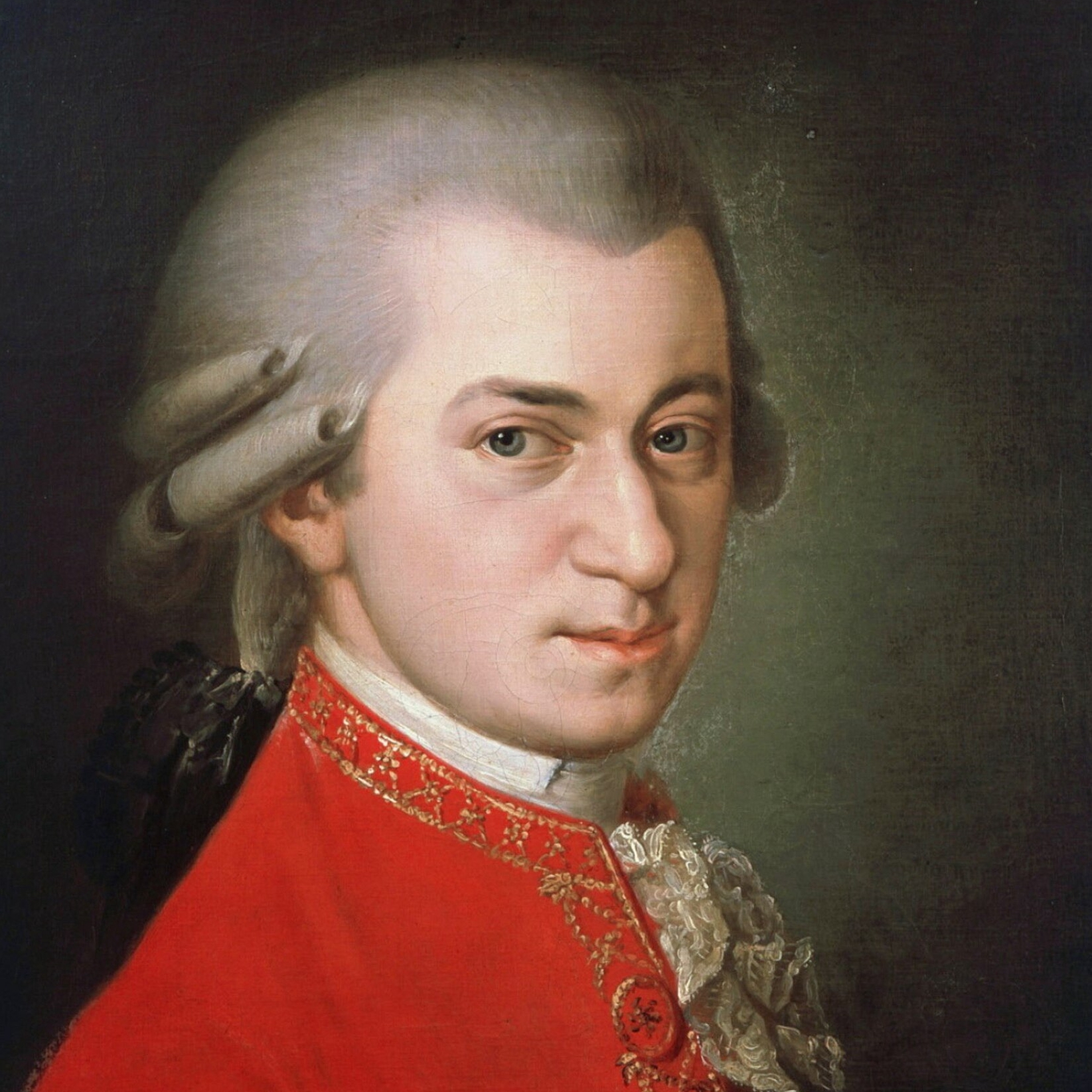
When I talked to Elliot about this piece, there just really isn't a part of it that you want to skip through when you're listening.
And, you know, it was written in 1782 to 83, right? It was right around Mozart's marriage to Costanza, which his father didn't approve of.
And I'm hesitant to mention this in front of a musicologist, but I always felt like it was this desire to please his dad, to bring his new wife to the family, to star her in this soprano role, and to show his dad, this is just an epic piece of music, and look at my epic wife.
And then on top of that, there's that connection with the sublime, with just why you write a Mass.
What are your thoughts? I just wanted to run that by you, and you can spit it out as a musicologist or whatever you want to do.
Well, since I'm not here in the role of a professor, but as a fellow music lover, if you want, I think you're right about many things, especially about this mass is a declaration of love to his wife.
There is this line qui sedet ad dexteram patris, which is who is sitting, Jesus is sitting at the right hand of the father and Mozart writes, doesn't write celebratory music, but writes this dissonant clusters for a double choir.
As you said, Mozart wrote it in January 1783, around that time, or at least he mentions.
The rest of this transcript — segmented and speaker-labeled, so you land on the exact moment something was said
Search every transcript — by keyword, by phrase, or by meaning, across every show Radar indexes
Trends — what is surging across podcasts, measured against its own baseline
Alerts — when a name you follow appears in a newly indexed episode
No account is needed to search Radar.