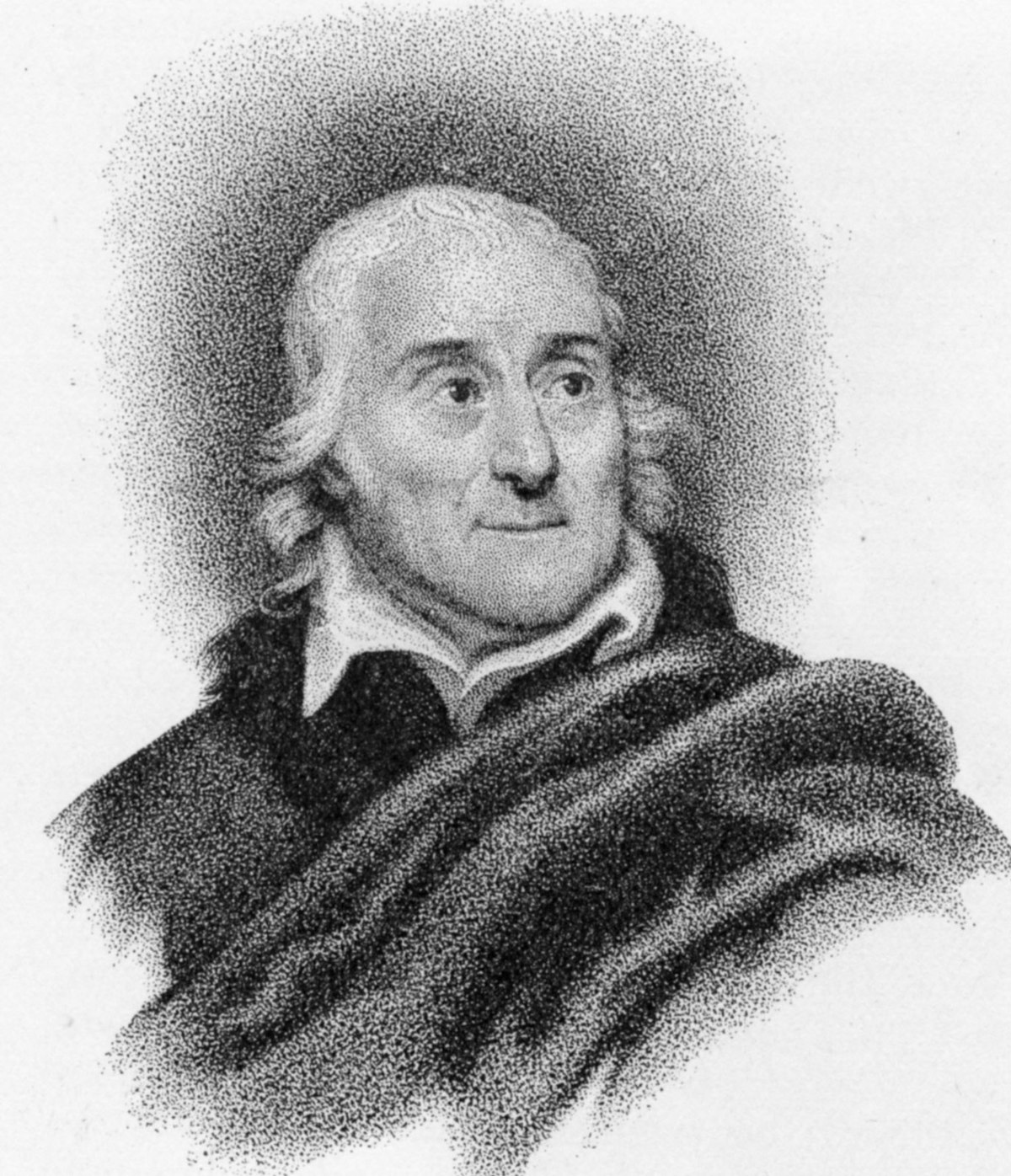
Lorenzo Da Ponte
American librettist and poetWikipedia
9
MENTIONS
4
EPISODES
4
PODCASTS
Search complete. 9 mentions across 4 episodes found for "Lorenzo Da Ponte".
Oct 20, 2026

speaker_6NARRATOR
Though he briefly thought of a Rudolf von Habsburg, he had no choice in the end but to return to Italian models, now, however, with a difference.
speaker_6NARRATOR
Soon after the amateur presentation of Idomeneo in Vienna, he had the good fortune to be brought together with Lorenzo da Ponte, whose real name was Emanuele Conegliano, and who belonged to a Jewish family in Cognera, near Venice.
speaker_6NARRATOR
The youth entered a theological seminary and became an industrious student with a poetic bent, which resulted in quantities of Italian and Latin verse.
speaker_6NARRATOR
an outspoken adventurer with countless amorous escapades la casanova to his credit he began his theatrical career in dresden went to vienna where he was to enjoy the favour of joseph the second and in the process of time went to london and finally to america where he became a teacher of languages a liquor merchant a theatre enthusiast and what not he died in new york many years after mozart but like him was buried in a grave of which all traces have been lost mozart suggested to his picturesque collaborator who cheerfully wrote opera books for salieri martin rignini and others a libretto to be adapted from pierre augustin caron de beaumarchais les noces de figaro of which paesiello had recently composed beaumarchais predecessor le barbier de saville but figaro had been prohibited in france because it reflected on the morals of the aristocracy and the same ban had been in effect in vienna da ponte altering it for mozart's purposes adroitly eliminated its barbed satire and then tactfully explaining his alterations to the emperor secured his permission for the performance the composer who limited his teaching to the afternoon in order to complete the score had been as touchy as gunpowder and threatened to burn the opera if it were not produced by a certain time to joseph the second's credit it must be said that the music delighted him as soon as mozart played him a few samples figaro was produced at the burgh theatre on may one seventeen eighty six a lucky star shone on its birth in spite of intrigues set in motion against it
25 MINS LATER
speaker_6NARRATOR
When he reached home and found her suffering from a foot-trouble, he sent her, regardless of his depleted purse, to nearby Baden for a cure, at the same time admonishing her to beware of flirtations.
speaker_6NARRATOR
then he set to work on the quartets for the prussian king of which he finished three the last he was to write and a single easy sonata instead of the promised six for the princess frederica in september seventeen eighty nine he was to compose for his friend the clarinet virtuoso anton stadler the celestial clarinet quintet k five eighty one which for sheer euphony is almost without parallel in its composer's writings the success of a revival of figaro in august seventeen eighty nine appears to have moved the emperor to approach mozart with a commission for a new opera The outcome was così fan tutti, the incentive to the plot being an incident said to have taken place in Viennese society.
speaker_6NARRATOR
Once again, Lorenzo da Ponte was called upon to put the piece into shape.
speaker_6NARRATOR
The fundamentals of the story are to be found in Boccaccio, and it may well have been in the Decameron that da Ponte discovered the real basis of his dexterous and amusing, though highly artificial, comedy.

Peter CudlipHOST
And I genuinely hope that for some listeners to this episode, this is going to be something new.
Peter CudlipHOST
But I have said on this podcast before that if you want to find a way into opera, then Wolfgang Amadeus Mozart's Le Nozze di Figaro, The Marriage of Figaro, with words by Lorenzo da Ponte, based on a play by Pierre de Beaumarchais, is, I think, the ideal place to start.
Peter CudlipHOST
It's hard not to be charmed by the comedy, the romance, the complexity, the depth, but mostly the music.
Peter CudlipHOST
Here is René Jacobs directing the Concerto Cologne with the overture to The Marriage of Figaro.
Peter CudlipHOST
I'll give you a little more detail about Figaro before we move on.
Peter CudlipHOST
It was composed in 1786, and this is a very rare instance of Mozart finding the dramatic material for an opera himself.
Peter CudlipHOST
He brought the Beaumarchais play to the poet Lorenzo da Ponte and asked him to adapt it as an opera libretto.
Peter CudlipHOST
And it was da Ponte who then persuaded the emperor Joseph II, who had banned the play because of its anti-nobility politics, to allow it to be staged as an opera, assuring him that he and Mozart had removed the more confronting elements.

Devin Patrick HughesGUEST
But with Mozart and Haydn even, Handel, they become rock stars of the day because of their skills.
Devin Patrick HughesGUEST
And Mozart is given, you know, a libretto from Lorenzo da Ponte, for instance, who wrote, librettists would write the words, would put a story, and they would take like Don Juan, Or Don Quixote, which became Don Giovanni, which is about a womanizer who's got his little sidekick, Leporello.
Devin Patrick HughesGUEST
He womanizes.
Devin Patrick HughesGUEST
He kills one of the fathers of the girl he had an affair with.
Devin Patrick HughesGUEST
And then by the end, he's hauled off to hell.
Devin Patrick HughesGUEST
because he gets us comeuppance.
Devin Patrick HughesGUEST
So Lorenzo da Ponte has to write, make a libretto.
Devin Patrick HughesGUEST
And actually Lorenzo da Ponte actually was also a womanizer.

Hilary PorissGUEST
Opera had been around, but translated into English and not by an Italian opera troupe.
Hilary PorissGUEST
So one of the people who helped them set that up was Lorenzo da Ponte, who was living in New York City at the time.
Hilary PorissGUEST
Lorenzo da Ponte is, of course, Mozart's librettist for the most famous Mozart operas, including Don Giovanni and Marriage of Figaro.
Sandra MogensenHOST
Yeah, also No Slouch.
Hilary PorissGUEST
They were there in New York.