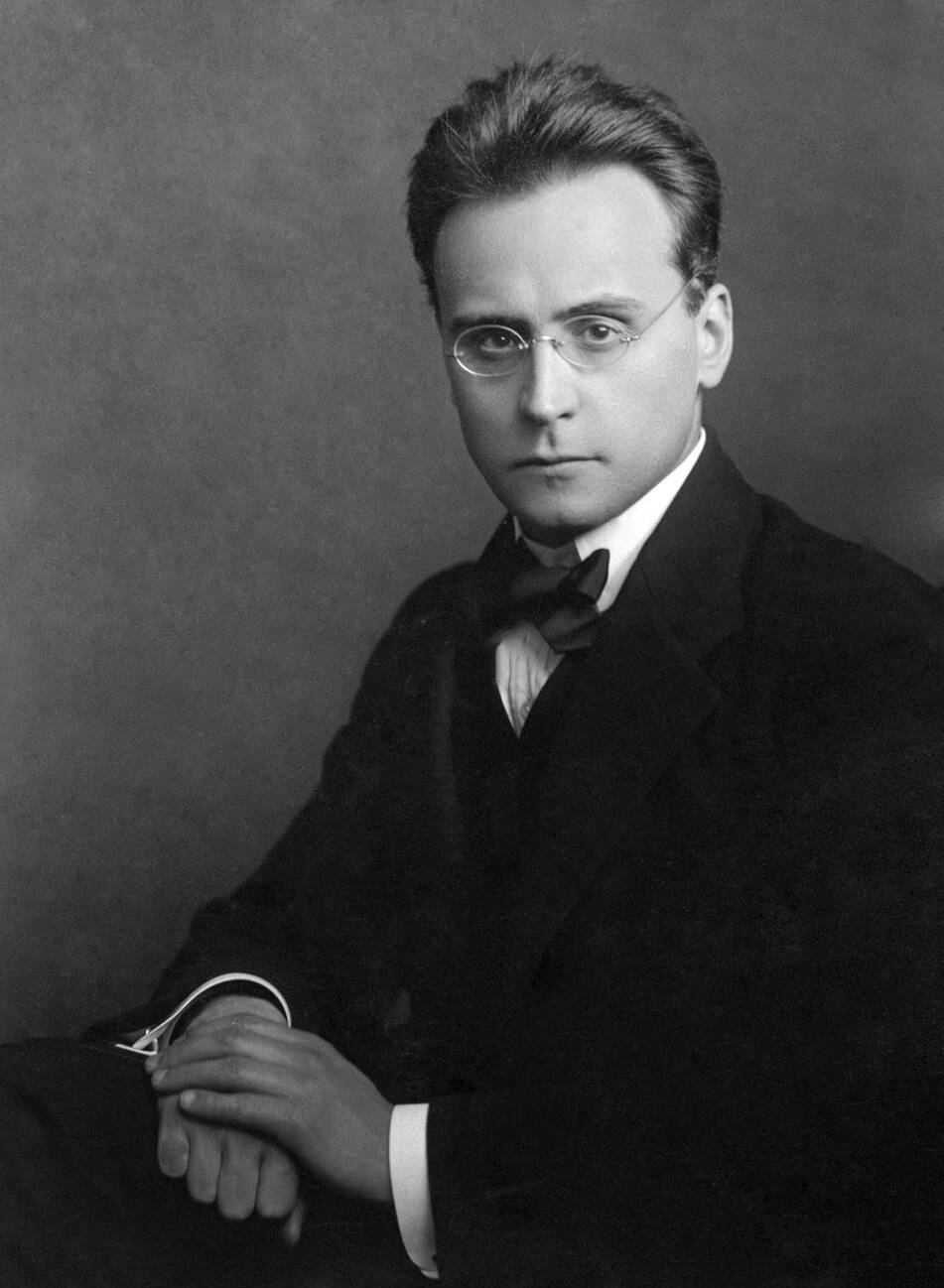
Anton Webern
Austrian composer and conductorWikipedia
19
MENTIONS
11
EPISODES
11
PODCASTS
Search complete. 19 mentions across 11 episodes found for "Anton Webern".
Sep 13, 2026

Ben AllisonGUEST
And, you know, they would...
Ben AllisonGUEST
Yeah, Schoenberg, like, you would have a concert and it'd be Bach, like Mozart, Bach, Webern-
Jay SweetHOST
Yeah
Ben AllisonGUEST
... and then Schubert.

Texu KimGUEST
When you perform, because theory, again, what we need to focus more is how music works.
Texu KimGUEST
For example, you know, Webern has this very sparse music.
Texu KimGUEST
And then if you understand the notes and then the tempo and then the direction and interval and all these things shape music.
Texu KimGUEST
the phrase and the form

TempoGUEST
Do you remember that? It was a long time ago.
TempoGUEST
But I had a conversation with him because there was some Webern that was on this school's concert.
TempoGUEST
And he was like saying, wow, that was brave doing that.
TempoGUEST
But actually, it was a short piece that had some interesting musical sounds.

Lisa SimeoneHOST
We'll also turn to Russia as violinist Vadim Glusman takes on Shostakovich's alternately biting and poignant First Violin Concerto.
Lisa SimeoneHOST
All of that, plus the summertime sounds of Anton Webern, are ahead on this week's CSO program.
Lisa SimeoneHOST
I'm Lisa Simeoni.
speaker_1UNKNOWN
Welcome to this Chicago Symphony Orchestra broadcast on the radio and online.
1 HR 21 MINS LATER
Lisa SimeoneHOST
David Avcom led the Chicago Symphony Orchestra in a June 2023 performance.
Lisa SimeoneHOST
Still to come, two portraits of Austria.
Lisa SimeoneHOST
We'll hear Ravel's depiction of a Viennese waltz and Webern's postcard from the Austrian countryside.
Lisa SimeoneHOST
Stay with us.

Nate BrownHOST
I thought there were just kind of these isolated sound events and And it surprised me that somebody was still writing that sort of stuff in 1987.
Nate BrownHOST
To me, it's associated more with the 50s or 60s, maybe with Morton Feldman, but also with somebody like Webern or some of his followers who maybe would have been more sparse.
Nate BrownHOST
Certainly not somebody like Boulez who likes to be more dense.
Nate BrownHOST
But the other thing was that it was really low.

Matthew Scott PhillipsHOST
But that, and that is post-war serialism, what we call integral serialism.
Jeremy BurnsHOST
And the name Webern comes to mind.
Jeremy BurnsHOST
Was he a user of this, or was he...
Matthew Scott PhillipsHOST
Webern was the inspiration for integral serialism.
Matthew Scott PhillipsHOST
Webern was a student of Schoenberg.
Jeremy BurnsHOST
Yeah,
Matthew Scott PhillipsHOST
yeah.
Matthew Scott PhillipsHOST
But that extreme level of organization was actually sort of the inspirational model that the people who did integral serialism, Bulez, Shostakovich, not Shostakovich, Stockhausen, sorry.

Robert DessaixGUEST
But sometimes I need help.
Robert DessaixGUEST
I mean, I listened to Webern last night, the modernist German composer who was shot dead when he was quite young.
Robert DessaixGUEST
I didn't enjoy it in the way I can enjoy music.
Robert DessaixGUEST
Rachmaninoff or Beethoven or Schubert in particular.

Patrick FiorilliHOST
You can...
Patrick FiorilliHOST
Basically, as far as I understand it, they were... like webern's brother was like involved in yeah black market um as they say here like this story is basically exactly how it happened and then uh anton stepped outside and was promptly shot uh by the an over eager police raid
Andrew TillettHOST
where was he from
Patrick FiorilliHOST
uh i couldn't find where he was from in north carolina but

Lew SmoleyHOST
They're followed by a strikingly dissonant movement of a more rhapsodic character.
Lew SmoleyHOST
About a year after the premiere of Sinfonietta in Boston under Sloninski in early 1931, Webern conducted, and all these great names associated with this very independent stylistic approach to composing is quite remarkable.
Lew SmoleyHOST
The Sinfonietta is in three movements.
Lew SmoleyHOST
They are not particularly distinguishable per se, and are not separated in any particular way.

Denise Finnegan-HillHOST
Oliver Danyanyi led the Polish State Philharmonic in the Carnival's Ambassador Waltz by Johann Strauss Jr.
Denise Finnegan-HillHOST
Next up, a set of six German dances by Franz Schubert, orchestrated here by Webern.
Denise Finnegan-HillHOST
We'll hear the Berlin Philharmonic Orchestra with conductor Pierre Boulez.
Denise Finnegan-HillHOST
© transcript Emily Beynon © transcript Emily Beynon ¦ ¦ ¶¶ ¦ ¦ ¦ ¦ Thank you.
1 more episode mentions Anton Webern.
Create an account to see the whole feed, search across every transcript, and follow the entities you care about.