Aug 11, 2026 · 1 hr 51 min · 12 segments
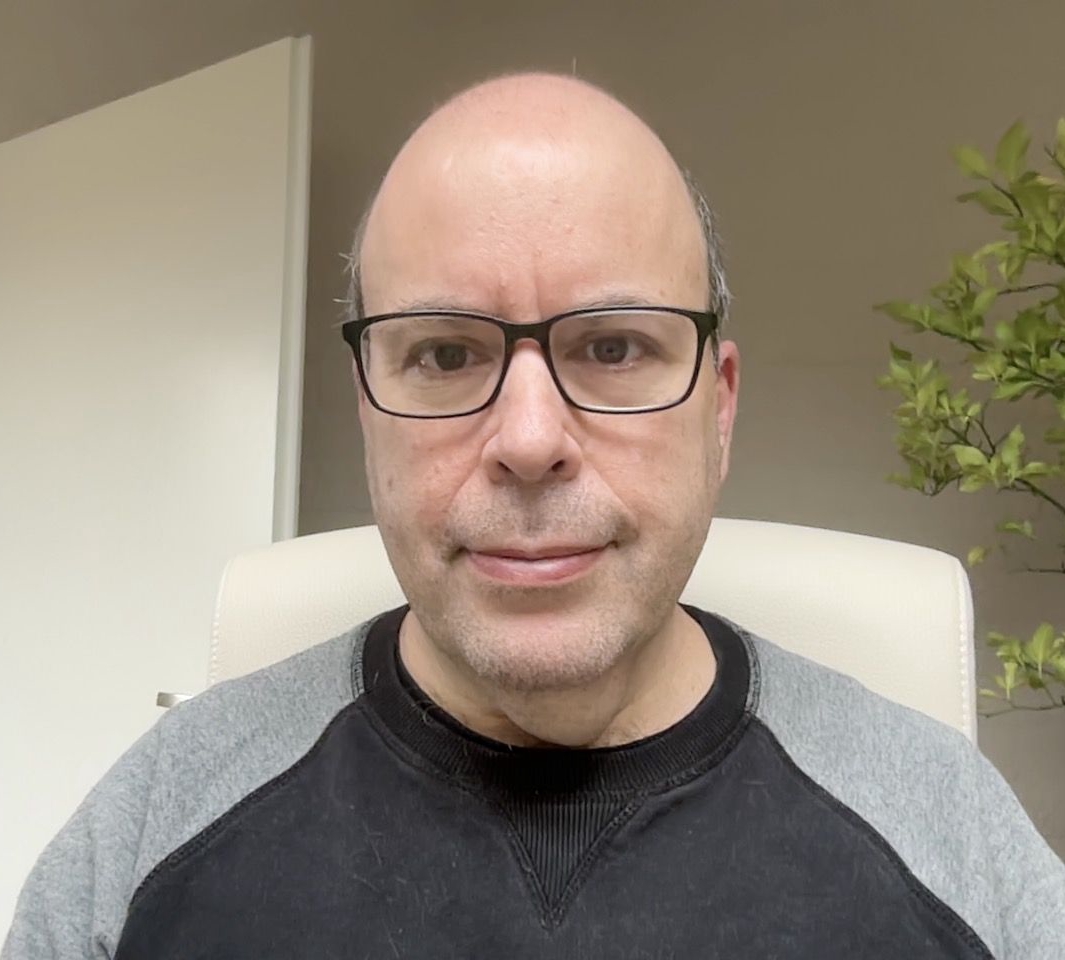
John Vervaeke returns to the podcast 5 years later to argue that the modern war between science and religion was always a mistake. A cognitive scientist at the University of Toronto, he makes the case…
You know, w- we both kind of operate very, very widely because of all these reasons that, that you mentioned.
But has there ever been a situation where you felt like you, you got deeper into a topic but you didn't get as much out of that? Uh, because for example, something in my own life, I'm sure this de- this depends on, on a lot of things.
It's just my own little per- personal bubble.
But for example, especially now after I'm getting like deep, deep deeper on my PhD, I look back at my master's, which is in neuroscience, and I, I, I like neuroscience, but I still feel like that was a massive amount of waste of time.
Like I, I learned things from it, but not to the point where it justified the commitment that, that I was making.
So I'm just curious if anything remotely like this happened to you where, you know, obviously breadth is, is very, is very important, but then you kind of like went deeper and it's like, actually, this is not as relevant as I thought it was.
You've got to get some very deep training in a couple of the home disciplines.
So I mean, I, I went to university for like 17 years, uh, to try and get enough of the educate.
You have to go like deep in, uh, two or three disciplines, and then you have to do the breadth, uh, of, of integrating them.
Um, and so I, I, I think I've sort of after a lot of [laughs] wandering, which maybe it overlaps with what you're talking about, where I was like, "Ah, I don't know if that was worth it." And right.
I, I, I think I feel like I'm closer to that sweet spot, but I've also-- or now I'll just sound like the old guy.
Uh, stuff I thought that I'd, you know, stuff, stuff I'd learned like 15 years ago, what was that for? Will suddenly become relevant-
Right
I was really privileged to take the ecological approach to visual perception by J.J. Gibson with one of his greatest proteges, John Kennedy.
And I really appreciated John and the argument he made that that whole approach, it's sort of like I was-- At, at that time I was a deep student of Fodor, and I was like, "What, what is this?" Like, this is not-- This ecological stuff.
You know, I'll be reading one of Julian Kiverstein's paper, and he argues, "We gotta, we gotta integrate an activism with the ecological approach to perception." And I go, "Oh, my goodness.
And the notion of affordances came back and, and, and it was like, oh, the connection to relevance realization.
You know, w- we both kind of operate very, very widely because of all these reasons that, that you mentioned.
But has there ever been a situation where you felt like you, you got deeper into a topic but you didn't get as much out of that? Uh, because for example, something in my own life, I'm sure this de- this depends on, on a lot of things.
It's just my own little per- personal bubble.
But for example, especially now after I'm getting like deep, deep deeper on my PhD, I look back at my master's, which is in neuroscience, and I, I, I like neuroscience, but I still feel like that was a massive amount of waste of time.
Like I, I learned things from it, but not to the point where it justified the commitment that, that I was making.
So I'm just curious if anything remotely like this happened to you where, you know, obviously breadth is, is very, is very important, but then you kind of like went deeper and it's like, actually, this is not as relevant as I thought it was.
You've got to get some very deep training in a couple of the home disciplines.
So I mean, I, I went to university for like 17 years, uh, to try and get enough of the educate.
You have to go like deep in, uh, two or three disciplines, and then you have to do the breadth, uh, of, of integrating them.
Um, and so I, I, I think I've sort of after a lot of [laughs] wandering, which maybe it overlaps with what you're talking about, where I was like, "Ah, I don't know if that was worth it." And right.
I, I, I think I feel like I'm closer to that sweet spot, but I've also-- or now I'll just sound like the old guy.
Uh, stuff I thought that I'd, you know, stuff, stuff I'd learned like 15 years ago, what was that for? Will suddenly become relevant-
Right
I was really privileged to take the ecological approach to visual perception by J.J. Gibson with one of his greatest proteges, John Kennedy.
And I really appreciated John and the argument he made that that whole approach, it's sort of like I was-- At, at that time I was a deep student of Fodor, and I was like, "What, what is this?" Like, this is not-- This ecological stuff.
You know, I'll be reading one of Julian Kiverstein's paper, and he argues, "We gotta, we gotta integrate an activism with the ecological approach to perception." And I go, "Oh, my goodness.
And the notion of affordances came back and, and, and it was like, oh, the connection to relevance realization.
The rest of this transcript — segmented and speaker-labeled, so you land on the exact moment something was said
Search every transcript — by keyword, by phrase, or by meaning, across every show Radar indexes
Trends — what is surging across podcasts, measured against its own baseline
Alerts — when a name you follow appears in a newly indexed episode
No account is needed to search Radar.