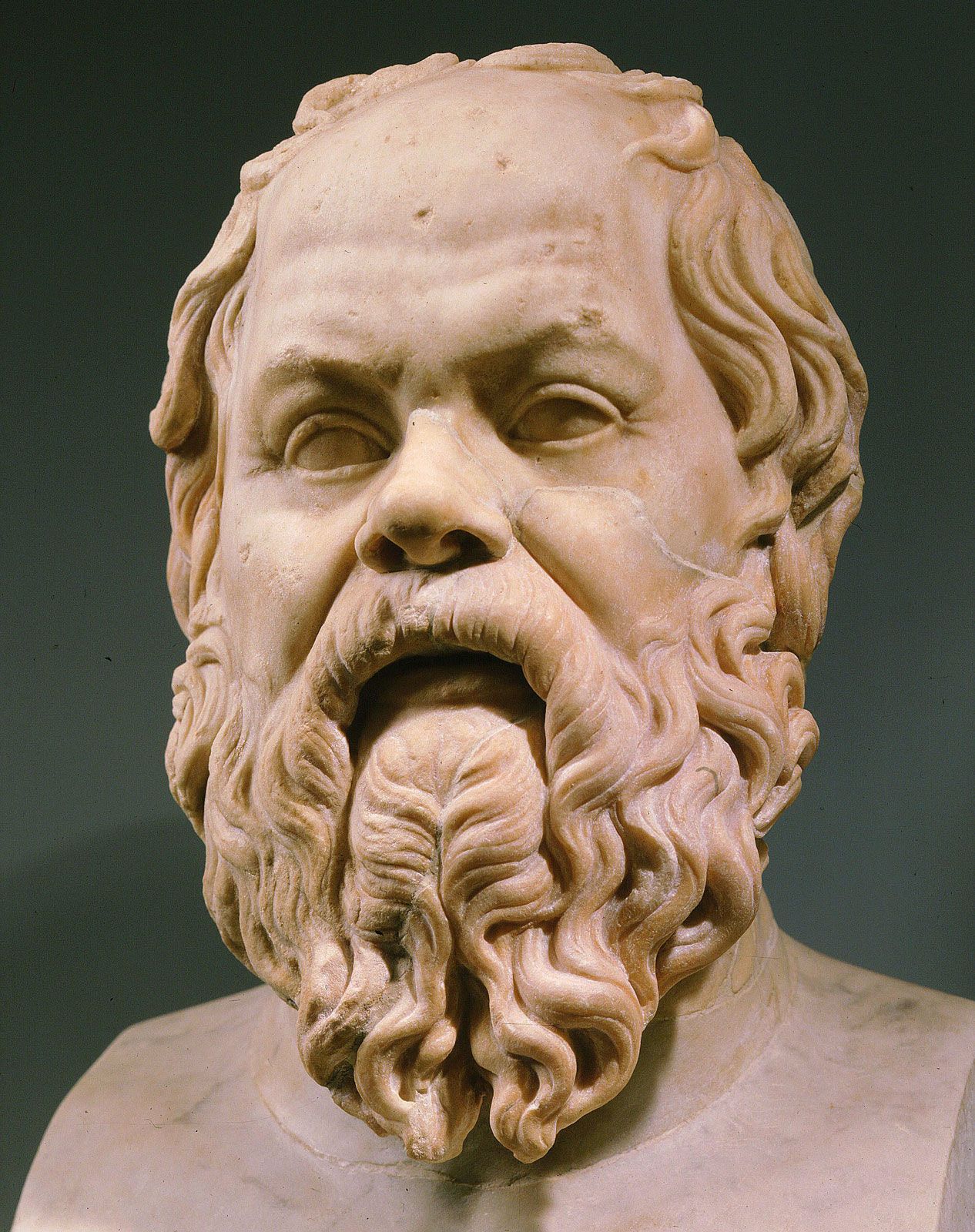
Socrates

Socrates

PhilosopherWikipedia

Search complete. 8539 mentions across 1373 episodes found for "Socrates".

Sep 11, 2026

Zac ThompsonGUEST
6:50
I mean, if we're looking for interesting anecdotal pieces, so depth is everything, right? There's a therapy technique in the book called The Cascading Why or the Why Ladder.
Zac ThompsonGUEST
6:59
It came from Socrates in ancient Greece.
Zac ThompsonGUEST
7:03
He would take someone down a path if they would say, "I've got this idea.
Zac ThompsonGUEST
7:05
It's a really solid idea," and he would take them down a path where actually the idea felt less certain.
Tasia JanineGUEST
2:50
The scholars was gay.
Tasia JanineGUEST
2:52
Socrates, all of them niggas was gay.
Alexa LeightonGUEST
2:53
No, nobody, because we didn't have-
Tasia JanineGUEST
2:53
He molested little boys.
Timothy FlandersHOST
7:43
That's where it came from.
Timothy FlandersHOST
7:43
It came from the dialogues of Socrates.
Timothy FlandersHOST
7:46
That's what true dialogue is.
Timothy FlandersHOST
7:47
And that's what Pope St. John, or Pope St. Paul VI, in his encyclical Ecclesiam Suam, he said in order to convert them We have to talk with them.
Landon D. C. ElkindNARRATOR
17:51
There are passages in Plato, among those which illustrate the scientific side of his mind, where he seems clearly aware of this.
Landon D. C. ElkindNARRATOR
17:59
The most noteworthy is the one in which Socrates, as a young man, is explaining the theory of ideas to Parmenides.
Landon D. C. ElkindNARRATOR
18:08
After Socrates has explained that there is an idea of the good, but not of such things as hair and mud and dirt, Parmenides advises him not to despise even the meanest things, and this advice shows the genuine scientific temper.
Landon D. C. ElkindNARRATOR
18:24
It is with this impartial temper that the mystic's apparent insight into a higher reality and a hidden good has to be combined if philosophy is to realize its greatest possibilities.
Landon D. C. ElkindNARRATOR
18:36
And it is failure in this respect that has made so much of idealistic philosophy thin, lifeless, and insubstantial.

2 HRS 43 MINS LATER

Landon D. C. ElkindNARRATOR
181:58
In this capricious world, nothing is more capricious than posthumous fame.
Landon D. C. ElkindNARRATOR
182:03
One of the most notable examples of posterity's lack of judgment is the Eleatic Zeno.
Landon D. C. ElkindNARRATOR
182:10
This man, who may be regarded as the founder of the philosophy of infinity, appears in Plato's Parmenides in the privileged position of instructor to Socrates.
Aidan MattisHOST
28:33
Rather than just simply sitting there and writing down, you should do this because he has them argue and debate.
Aidan MattisHOST
28:40
Which, of course, he would have gotten from, you know, Socrates.
Aidan MattisHOST
28:47
But in this case, he gets the timing on the nose.
Aiden ThornburyHOST
28:52
Yeah.
speaker_8SOUNDBITE_SPEAKER
79:00
Week one.
speaker_8SOUNDBITE_SPEAKER
79:01
Socrates comes up to your stand.
speaker_8SOUNDBITE_SPEAKER
79:02
He looks at your crystals and calls you a goddamn artist.
KeidBoiHOST
79:05
Oh, that's pretty nice of Socrates.
KeidBoiHOST
79:07
He seems like a chill guy.
KeidBoiHOST
79:09
Bro knows good crystal drugs whenever he sees them.
speaker_8SOUNDBITE_SPEAKER
79:12
For the first time, Socrates didn't hate.
speaker_8SOUNDBITE_SPEAKER
79:14
He asks if he can be your cook partner.
Jonathan BrownHOST
34:30
And as I said, becoming available through Shepard Warwin.
Jonathan BrownHOST
34:34
You talk in your work about the Socrates challenge.
Jonathan BrownHOST
34:38
I know Socrates famously said that cities will never have rest from their evils until philosophers are kings.
Jonathan BrownHOST
34:46
And then you point out that in a democracy, we are effectively kings and princes because the principle of our societies is of the people, for the people, by the people.
Jonathan BrownHOST
34:56
So what are the personal precepts you endorse and how can we use them?
Michael ArmentaNARRATOR
10:51
The fables were in the first instance only narrated by Aesop and for a long time were handed down by the uncertain channel of oral tradition.
Michael ArmentaNARRATOR
11:03
Socrates is mentioned by Plato as having employed his time while in prison awaiting the return of the sacred ship from Delphos, which was to be the signal of his death, in turning some of these fables into verse, but he thus versified only such as he remembered.
Michael ArmentaNARRATOR
11:23
Demetrius Valerius, a philosopher at Athens around 300 BC, is said to have made the first collection of these fables.
Michael ArmentaNARRATOR
11:35
Phaedrus, a slave by birth or by subsequent misfortune and admitted by Augustus to the honors of a freed man, imitated many of these fables in Latin iambics about the commencement of the Christian era.
Sarah StankorbGUEST
32:46
I love philosophy.
Sarah StankorbGUEST
32:47
I had too much Socrates.
Sarah StankorbGUEST
32:48
I'm more comfortable saying I don't know.
Sarah StankorbGUEST
32:51
So I'm an agnostic.
Steve O'BrienNARRATOR
13:45
They're the nice guys on business.
Steve O'BrienNARRATOR
13:48
I was thinking of the immortal words of Socrates, who said, The nice guys drank what? Call it revisionist history.
Steve O'BrienNARRATOR
13:56
Call it desecration.
Steve O'BrienNARRATOR
13:58
But people all over the country are pulling down the statues of the nice guys on business.

1,363 more episodes mention Socrates.

Create an account to see the whole feed, search across every transcript, and follow the entities you care about.

We value your privacy

We use cookies to understand how you use our platform and to improve your experience. Click “Accept All” to consent, or “Decline non-essential” to opt out of non-essential cookies. Read our Privacy Policy.