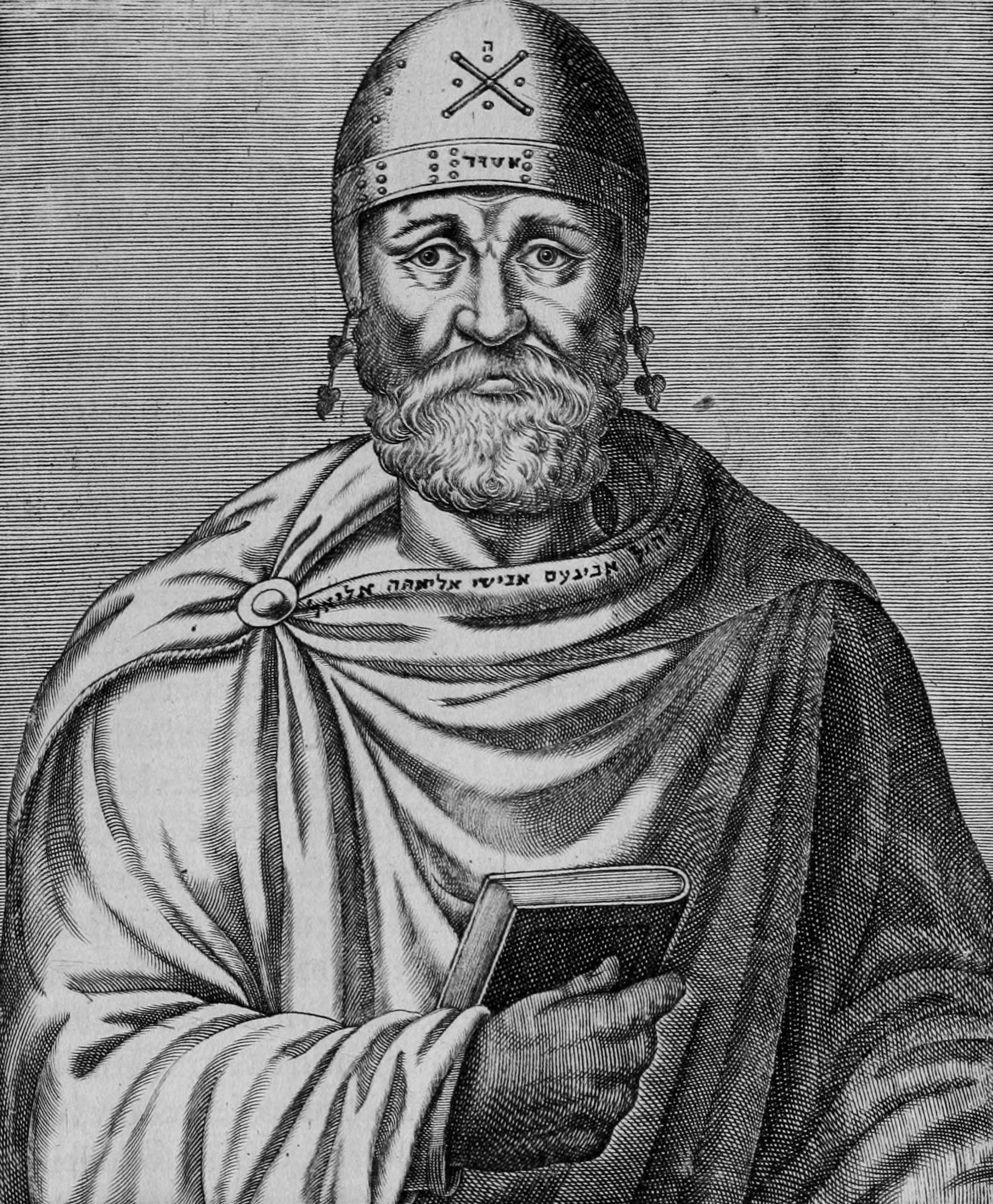
Philo
PhilosopherWikipedia
274
MENTIONS
83
EPISODES
77
PODCASTS
Search complete. 274 mentions across 83 episodes found for "Philo".
Sep 19, 2026

Joe DickersonNARRATOR
Among the Jews of the dispersion, those of Alexandria, who had opportunities of coming in contact with Greek philosophy, showed no intrinsic want of aptitude for metaphysics.
Joe DickersonNARRATOR
Philo, their most eminent representative, was an able thinker, though trammeled, like our Western scholastics of the Middle Age, by the necessity of limiting himself where revealed religion has spoken.
Joe DickersonNARRATOR
If there was no such living coercive authority to check him, he personally desired to remain a faithful adherent to the Mosaic law.
Joe DickersonNARRATOR
He was at work during the early years of the Christian era, but the movement he represents can be traced back, like the production of the apocalyptic literature, to at least the second century B.C.
Joe DickersonNARRATOR
To the original contact with Greek thought must be ascribed, indeed, the beginnings of the effort to explain away those anthropomorphisms in the Bible which were a scandal to Jewish and Christian theologians till the higher criticism shifted the problem.
Joe DickersonNARRATOR
What is known as the wisdom literature is already touched by the Greek spirit.
Joe DickersonNARRATOR
Philo's historical significance is due to his strenuous effort of reconciliation on the same line.
Joe DickersonNARRATOR
In elaborating, with the aid of his philosophical learning, the half-personalized abstractions called wisdom or spirit or word, through which the transcendent God of Platonizing Judaism could be conceived as acting on matter, he provided Christian speculators an advance with their conception of the Logos.

Kirk ZieglerNARRATOR
Who blindly and for years reposed his whole trust in one whose sole aim was to rob him, not only of his little competence, but of his character as a man, who suffered one near and dear to him to starve, literally starve to death, and then be buried at the very moment that himself and his were luxuriating on the very money for which that man had bartered health and almost life itself.
Kirk ZieglerNARRATOR
Was it not very singular? I have wondered time and again how such things could be, and intensely so when he has been revealing to me some of the loftier mysteries of the order, when talking of Apollonius of Tyana, the Platonists, the elder Pythagoreans, of the Sylphs, Salamanders, and Glendoveres, of Cardan, of Jung Se-so, and the Kabbalistic light, of Hermes Trismegistus, and the Smaragdine Tables, of sorcery and magic, white and black, of the labyrinth and divine policy, of the god and the republic of gods, of the truths and absurdities of the gold-seeking Hermeticists and pseudo-Rosicrucians, of Justin Martyr, Tertullian, Caprian, Lactantius, and the Alexandrian Clement, of Origen and Macrobius, Josephus and Philo, of Enoch and the pre-Adamite races, of Nambuc and Cecus, Celus, Jamblichus, Plotinus and Porphyrius, Paracelsus, and over seven hundred other mystical authors.
Kirk ZieglerNARRATOR
Said he to me one day, Do you remember laughing at me when I first began to talk about the Rosicrucians, and you asserted that, if such a fraternity existed, it must be composed either of knaves or fools, laughing heartily when informed that the order ramified extensively on both sides of the grave? And on the other shore of time was known in its lower degrees as the Royal Order of the Foley, and powering infinitely beyond and above that was the Great Order of the Neridi, and that whoever, actuated by proper motives, joined the fraternity on this side of the grave, was not only assured of protection and a vast amount of essential knowledge imparted to him here, but also of sharing a lot on the farther side of life, compared to which all other destinies were insignificant and crude.
Kirk ZieglerNARRATOR
I repeat this assertion now.
35 MINS LATER
Kirk ZieglerNARRATOR
The latter created a sensation, and then disappeared, only occasionally jingling their bells to let the world know that the fools were not all defunct, while the true brotherhood went on, and still goes on, quietly performing its mission.
Kirk ZieglerNARRATOR
Every student of history is, or ought to be, aware that the pretended adepts in past times laid claim to enormous amounts of the most wonderful knowledge, but when put to the proof, invariably failed to substantiate their claims.
Kirk ZieglerNARRATOR
Such were the men who sought, and in some instances pretended to have succeeded, in accomplishing the composition of the Philosopher's Stone and the Great Elixir.
Kirk ZieglerNARRATOR
Vaughan, in his Hours with the Mystics, laughs at the idea that there ever was really such a society as that of the Brethren of the Rosy Cross, and alleges that they were but the Mrs. Harris of certain romancers of the past two centuries.

LeniNARRATOR
Because the number four is solid and square, therefore it denotes the solidity and perfection of the gospel.
LeniNARRATOR
Whence Philo says, the number four first shows the nature of a solid, for a point is reckoned in unity, a line by duality.
LeniNARRATOR
When breadth is added, superfluities pertain to the number three.
LeniNARRATOR
For a surface to become a solid body, it lacks one thing.

Gavin MichalHOST
Hello, everybody.
Gavin MichalHOST
Our show today is titled The Forgotten Legacy of Philo of Alexandria.
Gavin MichalHOST
I've based myself on the research of Rabbi David Campbell.
Gavin MichalHOST
And we're going to look at the often overlooked legacy and the deep influence of Philo Judeus of Alexandria.
Gavin MichalHOST
And he's born in 20 BCE.
Gavin MichalHOST
And he passes away in 50 CE.
Gavin MichalHOST
Now, those of you interested in Jewish history, we know that the Tanayic period or the period of the Mishnah began, usually the dates given from the year 10 to the year 210.
Gavin MichalHOST
That's the Mishnahic period.
Gavin MichalHOST
So we actually didn't really know about someone who may have been one of Rambam's inspirational writers, because it got taken out of the Jewish tradition by the Christians.
Gavin MichalHOST
The other person, of course, was Philo, whose writings were adopted by Christianity, lost to Judaism completely.
Gavin MichalHOST
And then they only started to come back Much, much, much later.
Gavin MichalHOST
This idea is quite common in Jewish history.

Jonathan HarrisGUEST
The concept has a history, we can trace it back at least to the pre-Socratic philosopher, Heraclitus, who was possibly the first one to use logos to denote this underlying cosmic principle, which we're kind of interested in.
Jonathan HarrisGUEST
It'll appear in Plato and in Aristotle, have an important role in thinkers like Philo, that middle Platonist philosopher who's roughly contemporary with the apostle Paul.
Jonathan HarrisGUEST
However, for our purposes, we're gonna focus on the Stoics.
Jonathan HarrisGUEST
who by most accounts had become one of the central schools of thought in the first century, and in whose philosophical system the concept of logos played a central role.

Sean FinneganHOST
it just sounds ridiculous when I say it, but there are so many scholars and now certainly a lot of apologists who are saying that on the basis of the work by Alan Siegel in his 1977 book on the subject of two powers.
Sean FinneganHOST
So I'm going to be demystifying a lot of that and exposing the truth on what the primary sources like First Enoch and Philo actually say in the Mishnah and the Tosefta and the Midrashim and the Talmud.
Sean FinneganHOST
What do these Jewish literary sources actually say about two powers and when do they say it? Stay tuned for that.
Sean FinneganHOST
Hopefully I will be able to get a recording of that and put that out on this podcast as well sometime after that presentation occurs in October.

Blake BarberaHOST
But either way, the basic story existed before Josephus.
Blake BarberaHOST
Now Philo of Alexandria, who also wrote before Josephus, says that Moses received an exceptional education in subjects such as mathematics, geometry, music, philosophy, hieroglyphics, and astronomy.
Blake BarberaHOST
Now, this broadly agrees with what Acts chapter 7, verse 22 says.
Blake BarberaHOST
And Moses was learned in all the wisdom of the Egyptians and was mighty in word and deed.

speaker_0HOST
Now, a word about Pilate, Pontius Pilate, before we go further.
speaker_0HOST
The historical record we have of him from sources outside the New Testament, so Tacitus, Josephus, Philo of Alexandria, all of that, it paints a not very flattering picture.
speaker_0HOST
He had brought military standards bearing the image of the emperor into Jerusalem and had only backed down when his Jewish subjects threatened to die in protest.
speaker_0HOST
He had taken money from the temple treasury to build an aqueduct and had crushed the resulting demonstration with violence.

Vanessa BentleyGUEST
It was sort of the rational discourse by which we can know what is true.
Vanessa BentleyGUEST
Okay, fast forward to Philo of Alexandria.
Vanessa BentleyGUEST
This is right around the time of Christ.
Vanessa BentleyGUEST
Philo of Alexandria believed that the logos, this is what he taught, that the logos was the intermediary between God and man.
Vanessa BentleyGUEST
It was like the reason why.
Vanessa BentleyGUEST
The understanding that sat between the vastness of God and the mortality of man by which we could understand God.
73 more episodes mention Philo.
Create an account to see the whole feed, search across every transcript, and follow the entities you care about.