Bryce HoffmanGuest
Gary BertwistleHost
I started by asking Bryce about the origins of red team thinking to take me back to the CIA and 9-11.


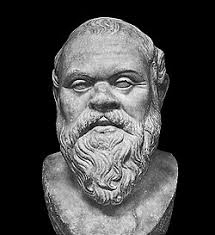
And he famously, for those who don't know, never espoused a philosophy or wrote a book.

And that's why we call the method of getting at root causes and getting answers where you have question and answer, the Socratic method.

And so this has kind of been something that has been part of Western thought for millennia.

And so, you know, fast forward to 9-11, after 9-11. in the United States, our Congress set up an inquiry to find out how did this happen? And it revealed that there was all sorts of intelligence that the US spy agencies had that suggested that we were about to be attacked, that we were about to be attacked with airplanes, that we were about to be attacked by Al-Qaeda.

And yet, despite having all these data points, the CIA and the FBI were unable to connect the dots until the terrorists connected them for them so tragically on the morning of September 11th, 2001.

One is, and it didn't take a congressional inquiry for the CIA to realize that they had screwed up.

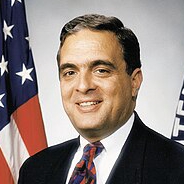
On the morning of September 12th, just after midnight, while they were still pulling people from the World Trade Center and the Pentagon, the director of the CIA, George Tenet, activated a group within the CIA called the Red Cell.

So your job is to take whatever the prevailing thinking of the Central Intelligence Agency is and do your best to challenge it.

to argue that the opposite is true, to develop tools to challenge our assumptions, to force us to think about other perspectives, to look at things in different ways.

They say that the red cell since 9-11 has been responsible for thwarting a number of major terrorist attacks that would have been equal to or larger than the 9-11 attacks.

By using this applied critical thinking approach, by using this method of asking tough questions, of challenging assumptions, of poking holes in plans to get at the truth.
The rest of this transcript — segmented and speaker-labeled, so you land on the exact moment something was said
Search every transcript — by keyword, by phrase, or by meaning, across every show Radar indexes
Trends — what is surging across podcasts, measured against its own baseline
Alerts — when a name you follow appears in a newly indexed episode
No account is needed to search Radar.