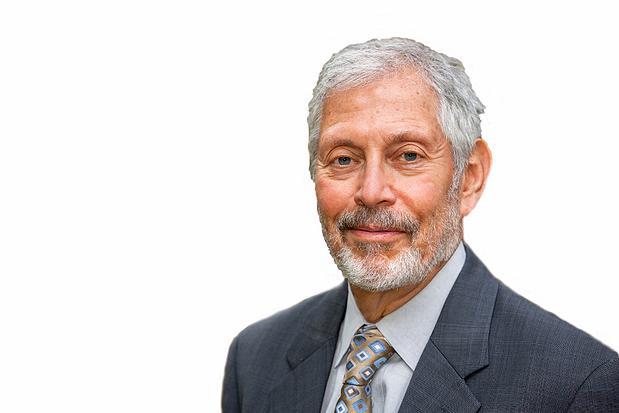
Gary A. Klein
PsychologistWikipedia
50
MENTIONS
25
EPISODES
24
PODCASTS
Search complete. 50 mentions across 25 episodes found for "Gary A. Klein".
Nov 16, 2026

WillHOST
And I wanted to read more books about how our mind worked.
WillHOST
Books like Blink by Malcolm Gladwell, Sources of Power by Gary Klein, The Emergency Mind.
WillHOST
These books I felt like became more informative to how I worked in the field than anything else because it started to help me understand what my brain does under stress.
WillHOST
And it was something that I had seen played out on the scene of 911 calls.
24 MINS LATER
RossHOST
Yeah, absolutely.
RossHOST
And that's exactly what we were doing earlier with that RSI discussion, right? With the fellow in our community, when we were talking about, okay, what are your if-thins around intubation in an uptended patient or RSI in an uptended patient? And so developing those are huge.
RossHOST
As we dug into, like a big part of this too is understanding how we make decisions, right? And as we dug into the literature and the research on decision-making, I had this realization that whether it's the recognition prime decision-making that Gary Klein talks about, whether it's the system one, system two thinking that Daniel Kahneman talks about, whether it's the Orient Observe Decide Act that John Boyd talks about, They're essentially describing the same decision-making process or loop in our head that we all go through.
RossHOST
But understanding this helps us understand how we can make decisions quickly.

Rob CaineGUEST
So when you've got the seconds to make those decisions, if you haven't trained that intuition, you've got to be really cautious about diving in there.
Rob CaineGUEST
But if you have trained intuition, what Gary Klein and Malcolm Gladwell will tell you is that you can trust that intuition.
Rob CaineGUEST
You might not even be able to explain why, you know, it's right.
Rob CaineGUEST
But if it's trained intuition, you can do quick, decisive rights.
Rob CaineGUEST
You can walk into a situation and you just know, but only if you've been doing it for a reasonable amount of time and you have a rich feedback loop to prove that intuition.
Rob CaineGUEST
Absolutely.
Adrian EvansHOST
Yeah, I love the Gary Klein example of the fire chief where he walks into a building.
Adrian EvansHOST
It looks like all the data points are saying everything's under control.

Finola WilsonGUEST
And the, the question I want to ask about this is, how can you actually know how to fix a problem if you don't really fully understand what the problem is, and if you don't know what good actually looks like, and if you don't have a clear mental model of what good looks like which you can use to evaluate and drive the change? And that, that's the, um, the question, the story that I want to actually share with you.
Finola WilsonGUEST
And I want to start by sharing with you Dr. Gary Klein's work.
Finola WilsonGUEST
Now, Dr. Gary Klein, actually, um, his research, he did most of his research in the US and it was about how experienced professionals make decisions in complex, uncertain, time-pressured, real-world situations.
Finola WilsonGUEST
So basically, schools.
Finola WilsonGUEST
Because that, that's what schools are.
Finola WilsonGUEST
I am all about pictures.
Finola WilsonGUEST
You must know that by now.
Finola WilsonGUEST
But I want to tell you a story about Dr. Gary Klein, and I, I usually describe this as the drive-by story.

Anthony HawkinsGUEST
And system two is where you have to take a step back and do some real primal thinking to solve a problem that may be more difficult.
Anthony HawkinsGUEST
Gary Klein is another cognitive psychologist, and he lives in the camp of what they call recognition primed decision making.
Anthony HawkinsGUEST
And I think you could read both of those and they align somewhat.
Anthony HawkinsGUEST
There are some differences.
Anthony HawkinsGUEST
But I think for listeners, I would say to better understand your own cognition, I would go spend a little time reading some Danny Kahneman and or some Gary Klein.
Anthony HawkinsGUEST
And that will help you to better understand what are some things that you're just so unaware of.
Anthony HawkinsGUEST
And then if you're more aware of it, you can be more intentional as you're thinking or as you are explaining to your learners.

Colby MorrisHOST
All right, third, run the premortem.
Colby MorrisHOST
This one comes from a research psychologist named Gary Klein.
Colby MorrisHOST
Okay.
Colby MorrisHOST
He wrote about it in Harvard Business Review back in 2007.

Hanju LeeHOST
And today we're building our own Steve.
Hanju LeeHOST
So back in 1980s, the US Army paid researcher named Gary Klein to figure out how many people make decisions under pressure.
Hanju LeeHOST
And Klein picked firefighters.
Hanju LeeHOST
Fire commander with around 20 years of experience.
Hanju LeeHOST
So let's bring it home.
Hanju LeeHOST
Adam Scott couldn't see the line, so he trusted somebody who's seen that putt before.
Hanju LeeHOST
Gary Klein found that experts don't really compare options under pressure.
Hanju LeeHOST
They recognize patterns they've stored up over time.

Adam SzulewskiHOST
Well, some of this, I think, comes down to this concept of tacit knowledge, or at least it makes me think about tacit knowledge.
Adam SzulewskiHOST
We very recently had Gary Klein on this program.
Adam SzulewskiHOST
Gary Klein, for those who aren't familiar, is a really well-known cognitive psychologist.
Adam SzulewskiHOST
And one of his main areas was recognition-prime decision-making.
Adam SzulewskiHOST
And he did a lot of work in his early career interviewing fire chiefs, experienced expert fire chiefs, and asking them how they knew how to approach a certain fire.

Adam SzulewskiHOST
Well, some of this, I think, comes down to this concept of tacit knowledge, or at least it makes me think about tacit knowledge.
Adam SzulewskiHOST
We very recently had Gary Klein on this program.
Adam SzulewskiHOST
Gary Klein, for those who aren't familiar, is a really well-known cognitive psychologist.
Adam SzulewskiHOST
And one of his main areas was recognition-prime decision-making.
Adam SzulewskiHOST
And he did a lot of work in his early career interviewing fire chiefs, experienced expert fire chiefs, and asking them how they knew how to approach a certain fire.

Emily LairdHOST
The third thing I'll tell you is run a pre-mortem.
Emily LairdHOST
That's going to be Gary Klein's move from Harvard Business Review back in 2007.
Emily LairdHOST
And mad shout out to Gary and Harvard Business Review.
Emily LairdHOST
I adore you guys.

April PrideHOST
That was a small study of one profession.
April PrideHOST
In week four of my 12-part Psychedelics and Trust series on Substack, I referenced the work of psychologists Daniel Kahneman and Gary Klein, who came at intuition from opposite sides of the debate.
April PrideHOST
But in 2009, they agreed on this much.
April PrideHOST
Gut feelings are most reliable when they've been trained somewhere that gives clear, fast feedback.
15 more episodes mention Gary A. Klein.
Create an account to see the whole feed, search across every transcript, and follow the entities you care about.