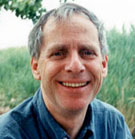
Amos Tversky
Israeli cognitive psychologistWikipedia
105
MENTIONS
71
EPISODES
64
PODCASTS
Search complete. 105 mentions across 71 episodes found for "Amos Tversky".
Oct 28, 2026

A.J. JacobsHOST
So this one comes from
Grant SandersonGUEST
So these two psychologists, behavioral economists, Daniel Kahneman and Amos Tversky, who did a lot of foundational work in that field, people might be familiar with it through the book Thinking Fast and Slow, they wanted to show that people don't use what they call priors.
Grant SandersonGUEST
And so in this context...
Grant SandersonGUEST
They set us up that the vibe of Steve is clearly soft and withdrawn.

speaker_2UNKNOWN
And when we transfer this biological reality to our bank accounts, it explains why we constantly sabotage our own economic happiness.
speaker_2UNKNOWN
Daniel Kahneman and Amos Tversky formalized this in 1979 with prospect theory.
speaker_1UNKNOWN
Right.
speaker_2UNKNOWN
Their central argument was that human beings do not evaluate their final states of wealth.

Bill S. BallasGUEST
It's always looking to not expend energy.
Bill S. BallasGUEST
So when we do a lot of thinking through the prefrontal cortex where executive function and deliberation and logic and so forth occurs, brains go into a metabolic deficit in terms of glucose and oxygen right so yeah so what they do is they try to save energy they're already depleted in energy so they rely on what's called system one resources now Daniel Kahneman and Amos Tversky, two Israeli psychologists, created this concept of System 1, System 2.
Bill S. BallasGUEST
System 1 uses the limbic system.
Bill S. BallasGUEST
okay in our brains and the limbic system is known as the emotional brain and it is fast it is automatic and it exists so that the brain does not spend all its energy processing logic why is because as we humans develop we might see a you know we're in the savannah and small competitive groups of humans and if we see something rustle in the tall grass we don't know if it's a friend or a foe yep a lion who knows right so the limbic system is purposeful in our evolutionary design and so It takes, if we talk about Donald Trump as an example and say, gee, he's an authoritarian and anti-democratic and so forth.

Brian HerriotHOST
And A lot of people have done research on this.
Brian HerriotHOST
Amos Tversky, I think, is one of them.
Brian HerriotHOST
There's some others.
Brian HerriotHOST
And the numbers are slightly different.

Steven HassanHOST
Kahneman, Nobel Prize winner in behavioral economics.
Steven HassanHOST
And Amos Tversky passed away, so he didn't get the Pulitzer Prize.
Steven HassanHOST
But psychologists who introduced system one thinking and system two thinking were- We really have to make an effort to critically think about stuff instead of just be on default mode network.
Mara EinsteinGUEST
But this technology wants you to think fast in his terms, right? They don't want you to think.

Sarah Beth HermanHOST
It's called loss aversion.
Sarah Beth HermanHOST
It's associated with the work of psychologists Daniel Kahneman and Amos Tversky.
Sarah Beth HermanHOST
The idea is that people often feel the possibility of losing something more strongly than they feel the possibility of gaining something of equal value.
Sarah Beth HermanHOST
And I think that's really relevant to business owners because sometimes we're not choosing between a good situation and a bad situation.

Gad SaadGUEST
Axiomatic Irrationality, I don't know how many of you have heard of that.
Gad SaadGUEST
Basically, it's the research that Kahneman and Tversky developed, whereby they were trying to show that consumers do not adhere to axioms of rational choice in the way that classical economists think we should behave.
Gad SaadGUEST
So for example, the transitivity axiom says if I prefer car A to car B and I prefer car B to car C, then I should prefer car A to car C.
Gad SaadGUEST
If I don't do that, I'm being intransitive, therefore I'm being irrational.

Geoff EngelsteinGUEST
It's kind of interesting.
Geoff EngelsteinGUEST
It was first pioneered by Kahneman and Tversky in 1984 for economics.
Geoff EngelsteinGUEST
They ultimately won the Nobel Prize for the work that they did on loss aversion and other things around it.
Geoff EngelsteinGUEST
OK.

Scott PhillipsHOST
behavioural economists too, right? Oh, yeah.
Scott PhillipsHOST
Who are the two? Amos Tversky and what's the other bloke's name? Help me out.
Scott PhillipsHOST
Thinking Fast and
Andrew PageHOST
Slow, Kahneman, yes.

EricHOST
And it's the cool thing is that, you know, what you and your team have done is really this idea.
EricHOST
I'll say it's kind of like what Kahneman and Tversky did for behavioral economics.
EricHOST
This is why I see more and more people that I I'm really cheering success towards is when you're understanding that heuristics from human behavior will affect how technology works with humans.
EricHOST
And even technology, speaking with technology, these LLMs, they're based on neural networks, which are modeled after what we understand about the human brain.
61 more episodes mention Amos Tversky.
Create an account to see the whole feed, search across every transcript, and follow the entities you care about.