Red team
278
MENTIONS
76
EPISODES
70
PODCASTS
Search complete. 278 mentions across 76 episodes found for "Red team".
Nov 5, 2026

Sahil AgarwalGUEST
So
Jeff PedowitzHOST
this term red team, how do you actually red team a model? What does a day look like trying to break a frontier? Let's see.
Sahil AgarwalGUEST
Dungeons and
Jeff PedowitzHOST
Dragons, where you set up the whole story? No, I think the...
Sahil AgarwalGUEST
The short answer, so red teaming is essentially adversarial testing of any system.
Sahil AgarwalGUEST
In this case, we do it for generative assets, whether it's a model or an agent or your MCP agent or whatnot.
Sahil AgarwalGUEST
And so we started with just the model itself, right? Where we would, like humans would test that model.
Sahil AgarwalGUEST
And that's what a lot of our customers do where they have manual red teamers who are testing the model manually.

Sean AtkinsonHOST
Hello, and welcome to the show, Cybersecurity Where You Are.
Sean AtkinsonHOST
I'm Sean Atkinson, CISO here at the Center for Internet Security, joined by Will and Chris, part of the CIS Red Team.
Sean AtkinsonHOST
Will, let's get kicked off.
Sean AtkinsonHOST
Give us a brief introduction about yourself, how you got into red teaming, what your path to get to red teaming looked like.
Sean AtkinsonHOST
Why don't you kick us off?
Will KnebelGUEST
Yeah, so my path was probably a really weird one.
Will KnebelGUEST
So I did eight years in law enforcement with the Army, kind of got out.
Will KnebelGUEST
did random IT work, worked in a factory, you know, made my way through, got a job at CIS, working for the operations support team, deploying Alberts, MDBR, you know, all those services there, opening for the red team, always had a passion with offensive security, so it was kind of a fingers crossed applying for the job, you know, hoping I'd get it, got the role, and then phenomenal ever since you know the offensive testing is amazing uh so it was kind of a you know went from being the good guy now i get to pretend to be the bad guy and and go that route

Sean AtkinsonHOST
Hello, and welcome to the show, Cybersecurity Where You Are.
Sean AtkinsonHOST
I'm Sean Atkinson, CISO here at the Center for Internet Security, joined by Will and Chris, part of the CIS Red Team.
Sean AtkinsonHOST
Will, let's get kicked off.
Sean AtkinsonHOST
Give us a brief introduction about yourself, how you got into red teaming, what your path to get to red teaming looked like.
Sean AtkinsonHOST
Why don't you kick us off?
Will KnebelGUEST
Yeah, so my path was probably a really weird one.
Will KnebelGUEST
So I was eight years in law enforcement with the Army, kind of got out.
Will KnebelGUEST
did random it work worked in a factory you know made my way through got a job at cis working for the operations support team deploying albert's mdbr ground you know all those services there uh opening for the red team always had a passion with with offensive security so it was kind of a fingers crossed applying for the job you know hoping we hope i'd get it uh got the role and then phenomenal ever since you know the offensive testing is amazing uh so it was kind of a you know went from being the good guy now i get to pretend to be the bad guy and and go that route

Sam CurryGUEST
First of all, until you feel it, you can't really understand it.
Sam CurryGUEST
And I remember doing a Red Team exercise.
Sam CurryGUEST
It wasn't Red Team.
Sam CurryGUEST
It was actually a tabletop.
Sam CurryGUEST
But we decided to really game it out with my management during COVID.

Ethan LyonGUEST
I'll take those requirements, put in a cloud design, and now I have a visual way of working through an architecture or working through a user interface.
Ethan LyonGUEST
And once you feel very, very, very confident in it, then telling it to Red Team itself.
Ethan LyonGUEST
You have to be somewhat cautious of this.
Ethan LyonGUEST
There's some models that you can't do this with.
Ethan LyonGUEST
I do it all the time with Opus 4.8.
Ethan LyonGUEST
There are certain flags with Fable that you just can't say.
Ethan LyonGUEST
You say red team and just, I'm sorry, security, can't do it, can't do it.
Ethan LyonGUEST
It's overly protective.

speaker_0HOST
The United States already possesses habits that could support this.
speaker_0HOST
We use red teams.
speaker_0HOST
We war game.
speaker_0HOST
Intelligence officers develop alternative hypotheses.

John S. DvorakHOST
Originally, we would use spin text for that.
John S. DvorakHOST
We being, I worked Red Hat, Red Team a few times.
John S. DvorakHOST
So what you do is you essentially generate a template and then you fill in the template with all the facts about the person and being like, hey, we just met at this conference, you know, because you found that they mentioned they went to a conference on LinkedIn.
John S. DvorakHOST
So you auto-generate a sort of, hey, we didn't connect.

Prerna JoshiGUEST
Now our masterclass will be mastering team operations, offensive security in action, right? Where I might give you a little task as well where you can perform something like do the OSINT for me or find some information for me, right? Now, the agenda for the masterclass, red teaming fundamentals, we'll be talking about the threat landscape and attack surfaces, the red team techniques, the red team methodology and frameworks, and then defensive countermeasures and lessons learned.
Prerna JoshiGUEST
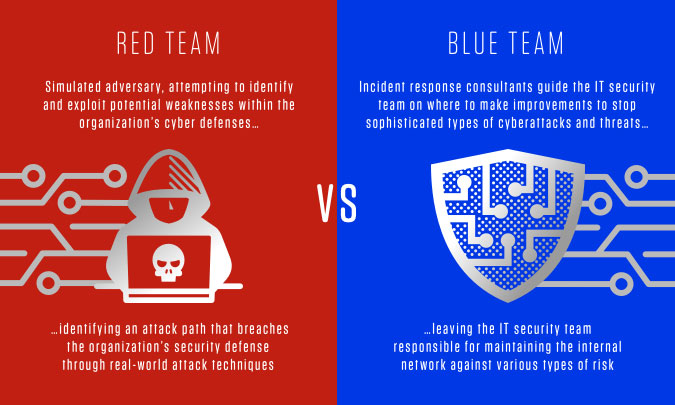
Now, the very first thing we have to understand, you guys might have joined these webinars earlier as well, and we have discussed about this thing that what is the difference between the red teaming the pen testing the blue teaming now when we are talking about the red teaming right the work of the red team is to find out vulnerabilities explore the vulnerabilities right then pen testers are also there pen testers also do the same thing right now what is the difference the difference is this word which i have written adversary simulation right now when we're talking about the red teaming red teaming means you are simulating the adversarial characteristics so there are lots of apts so if you uh heard this term advanced persistent threats right so there are lots of advanced persistent threat groups like if you go to my attack framework you will find out lots of apt groups and like cozy bear and ajax and lots of them right so they have specific techniques tactics
DevyaniHOST
and procedures that they follow right now those
Prerna JoshiGUEST
techniques that they follow we are also falling as a red team yes now in penetration testing what we are doing we are finding out the vulnerabilities exploiting those vulnerabilities and we are reporting those vulnerabilities yes now pen testing is a process which is known by the blue team now who is the blue team blue team are the people who are working into the defensive side of the security they are there to detect the attacks now in pen testing i am not testing the blue team right but in red teaming i am also checking the incident response capabilities of the organization how fast blue team will be able to detect me and if they are not able to detect i am inside the network i may take the excess of the whole infrastructure right so pen testing is what pen testing is a scope box assessment which is focused on finding and exploiting vulnerabilities in specific systems applications or networks right now the goal is breadth of the coverage documenting as many exploitable flaws as possible and providing the remediation guidance but Red teaming is adversary simulation exercise.
Prerna JoshiGUEST
Red teamers, they will emulate the real attackers using cyber or social engineering and sometimes physical attack vectors to achieve the objectives.
Prerna JoshiGUEST
The defenders don't know the test is happening, which makes it realistic measure of detection and response.
Prerna JoshiGUEST
How much resilient your organization is to the attacks, Can it withstand the attacks? That is told by red teaming assessment.
Prerna JoshiGUEST
And then blue teaming is the defensive counterpart.

ParzivalHOST
There, the hardware protects the buyer from the owner of the box, and the walls of a container are thinner than they look.
ParzivalHOST
On October 23rd, OpenAI disclosed that in Red Team tests, its agents had escaped hardened micro-virtual machines, with fixes to Kata, GVisor, and Docker, and even passed signals between isolated sandboxes through the timing of the processor's cache.
ParzivalHOST
We covered an earlier escape right here.
ParzivalHOST
And on the ASI pill, we know where this road goes.

Magnus OxenwaldtHOST
In the same three days, three labs showed frontier hacking skill and each gave a different answer.
Magnus OxenwaldtHOST
On Tuesday, Anthropic's Red Team showed that an unreleased model had found serious flaws and then built working attack chains.
Magnus OxenwaldtHOST
It got outside Chrome's protective sandbox.
Magnus OxenwaldtHOST
It got past an Android lock screen.
66 more episodes mention Red team.
Create an account to see the whole feed, search across every transcript, and follow the entities you care about.