Sep 25, 2026 · 1 hr 29 min · 30 segments
Most of us can recite the benefits of exercise, gratitude, and patience while doing none of it. Tal Ben-Shahar calls this the Knowing-Doing gap, and our typical interventions, like retreats and…
The knowing-doing gap is the disconnect that often exists between theory on the one hand and practice on the other.
It's a gap I've witnessed time and again in my own life and in the lives of others.
You see, most change efforts, whether personal or organizational, fall short because we misunderstand what it actually takes to bring about lasting change.
When it comes to the question of how to create lasting change in our lives, it turns out that many of us were led astray by some of the most influential philosophers throughout history.
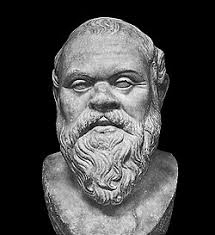
Socrates, for instance, who's considered the father of Western philosophy, believed that to know the good is to do the good.
In other words, he assumed that once you know what the right thing to do is, you will do it.
While knowing is an important and necessary first step, it is far from sufficient.
Most people in developed countries know which foods are good for them and still consume junk in large quantities.
We take much of what life has to offer for granted, not because we don't know that gratitude is better for us than ingratitude.
Generally, we know how we ought to treat our child, our partner, or our colleagues.
The problem, therefore, is not lack of knowledge or even understanding, but rather that this knowledge or understanding is not translated into acts and deeds.
The knowing-doing gap is something I've experienced on a very personal level.
So after years of studying psychology and philosophy, it became clear to me that my knowledge and understanding of the good life far surpassed the actual quality of my inner life.
If I were taking an exam on public speaking anxiety, raising happy kids, or the importance of assertively expressing one's needs and wants, I would ace that test.
I had convincing, eloquent, and in most cases, correct answers to just about any question related to psychology.
And yet, in my day-to-day life, I experienced an acute fear of public speaking, made many unnecessary parenting mistakes, and very often avoided raising matters that were important to me because I dreaded the confrontation that might follow.
While, as both a speaker and a parent, I'd come a long way since beginning my journey in the field of positive psychology, I knew I could do much better.
it became clear to me that for myself and for others, the path to a happier, healthier, and more fulfilled life is not paved solely with additional knowledge.
The rest of this transcript — segmented and speaker-labeled, so you land on the exact moment something was said
Search every transcript — by keyword, by phrase, or by meaning, across every show Radar indexes
Trends — what is surging across podcasts, measured against its own baseline
Alerts — when a name you follow appears in a newly indexed episode
No account is needed to search Radar.