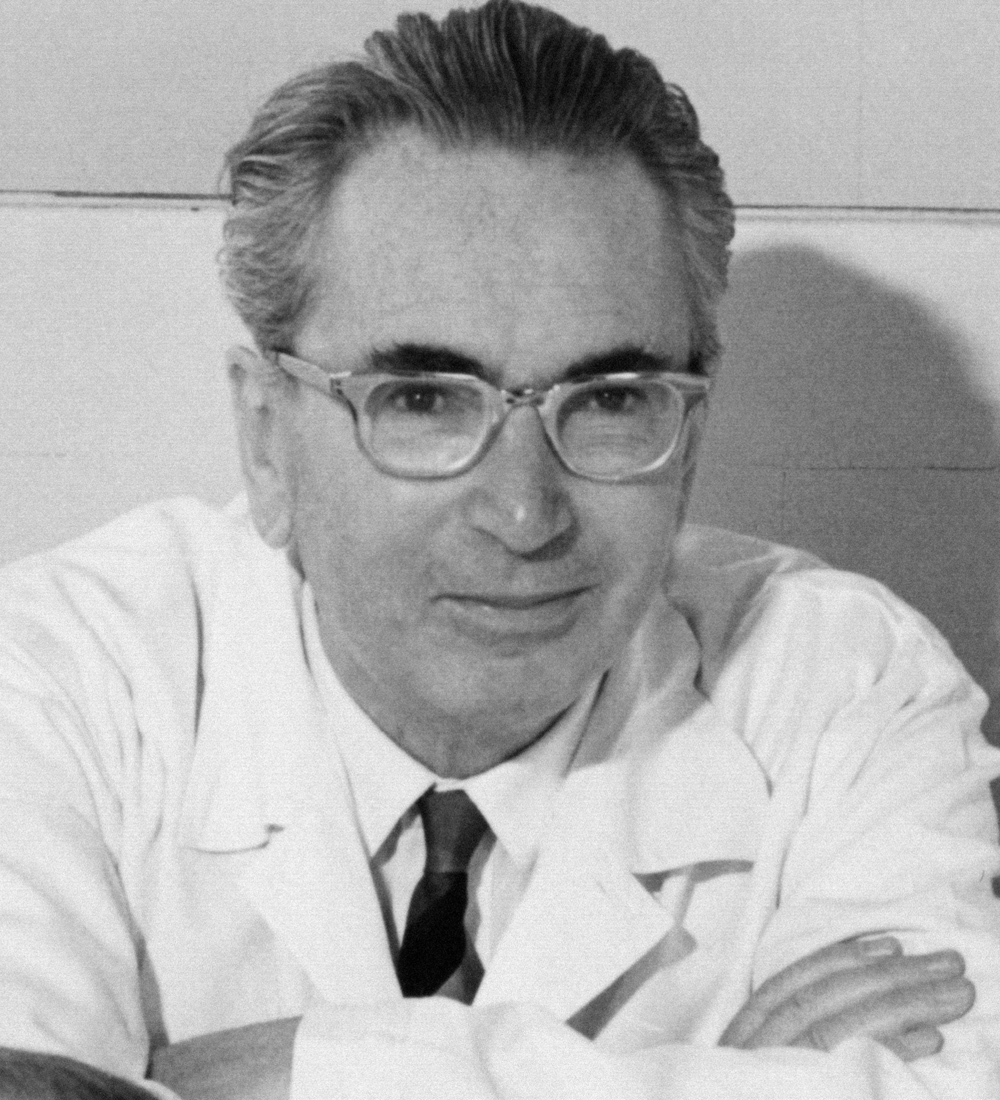
Viktor Frankl

Viktor Frankl

Austrian neurologist and psychiatristWikipedia

Search complete. 703 mentions across 429 episodes found for "Viktor Frankl".

Sep 11, 2026

Ben AzadiHOST
44:46
You should take a second, and in that second is where your power is.
Ben AzadiHOST
44:49
That's what Viktor Frankl said.
Ben AzadiHOST
44:50
He said in, in between stimulation, stimulus, and, um, your response is a power.
Ben AzadiHOST
44:56
And that's the power that we're talking about here, that it's the fight that isn't yours.
EvanHOST
1:57
Yeah.
EvanHOST
1:58
So how can we get them out? Alexander Botjani is a philosopher and psychologist who directs the Viktor Frankl Institute in Vienna.
EvanHOST
2:07
He ran the first modern study of a phenomenon that modern medicine ignored, the unexpected return of memory and speech in people whose brains have failed them.
EvanHOST
2:17
His work has fundamentally changed how I think about dementia, because if someone can return whole and then die with their brain measurably unchanged, then what we call losing a person may actually be that person losing access to themselves, still there, just unable to get out.

13 MINS LATER

Alexander BatthyányGUEST
15:56
You just go along with the moment.
Alexander BatthyányGUEST
15:58
But I must say that at the moment, I was merely grateful.
Alexander BatthyányGUEST
16:03
And I already back then was a student of Viktor Frankl, you know, the famous psychiatrist.
Alexander BatthyányGUEST
16:09
Yeah.
speaker_2NARRATOR
47:55
Yet he saw suffering not as a curse, but as an opportunity to exercise virtue.
speaker_2NARRATOR
48:01
Viktor Frankl, surviving the concentration camps, wrote that those who found meaning in their suffering could endure almost anything.
speaker_2NARRATOR
48:11
These are not romanticized tales of hardship.
speaker_2NARRATOR
48:14
They are testaments to a truth you can't learn in theory.
Tim FisherHOST
5:57
I didn't just do.
Tim FisherHOST
5:58
Man's Search for Meaning, Viktor Frankl.
Tim FisherHOST
6:01
That's a famous book, isn't it?
Rich DevineHOST
6:03
Yeah, that's very highbrow, yeah.
Dennis PragerGUEST
19:21
An idol worshiper who is a decent human being goes to heaven sooner than a Jew who is not decent.
Dennis PragerGUEST
19:34
Judaism, the Torah, divide the world between the decent and the indecent, to use Victor Frankl's great terminology, not between Jew and Gentile, not between pagan and monotheist, but between the decent and the indecent.
Marissa StreitHOST
19:58
Okay, Dennis, this is one of my favorite questions yet.
Marissa StreitHOST
20:02
This is from Douglas, uh, from Jacksonville, Florida.
Anne CurzanGUEST
2:56
Of course it is.
Anne CurzanGUEST
2:58
Now Covey links it to Viktor Frankl's freedom of choice.
Anne CurzanGUEST
3:03
Viktor Frankl, a psychiatrist and a Holocaust survivor, wrote Man's Search for Meaning in 1946, and he argued that humans have the freedom to choose our attitude in a given situation.
Anne CurzanGUEST
3:17
And for Covey, that meant we have the choice to focus on what can be influenced rather than what can't be, or we can make things happen rather than waiting for them to happen.
Anne CurzanGUEST
3:29
Be proactive.
Adriene SchroederHOST
8:25
If you're inactive, like you're being in some type of abuse or like extreme, like horrific pain, there's a different frequency.
Adriene SchroederHOST
8:37
And I do want to bring forward Viktor Frankl.
Adriene SchroederHOST
8:41
Man searched for meaning.
Adriene SchroederHOST
8:42
He lived in a concentration camp.
Paul PattiGUEST
40:40
And the warden was nice enough to say, well, yeah, Dr. Patty went around.
Paul PattiGUEST
40:44
The other thing I would tell you, Steve, it's like when we talked about Viktor Frankl, in a previous podcast and the idea of finding meaning in one's life.
Paul PattiGUEST
40:55
So when I did this, I was like 64 and I really did have the feeling and it was a very tranquil feeling.
Paul PattiGUEST
41:05
I mean, like I really didn't think I was going to get COVID and die from it, but I also very much had the feeling of like, this is why I became a psychologist.
Terry WurzbacherHOST
0:12
That's the title of a collection of thoughts and emotions rolled into a country song by Alan Jackson.
Terry WurzbacherHOST
0:18
Where were you when the world stopped turning? So where were you 25 years ago today? Do you, like so many others, remember every single moment of that day? How did your life change after that day? What does it mean to you today? How much thought have you given to freedom since 9-11? What is freedom to you, to others? As the Stoics talk about and Viktor Frankl personified along with many others, our freedom lies within our skull, in our mind.
Terry WurzbacherHOST
0:44
You're free to dwell on the horrors of that day, and you're free to celebrate the changes that came about.
Terry WurzbacherHOST
0:49
It seems all we do, though, is complain about those changes.
Ian Morgan CronHOST
8:37
So, I mean, I think you're right.
Ian Morgan CronHOST
8:40
I think, you know, there's that old trope about, and I think it was Viktor Frankl who said, you know, if you have the why, you can endure just about anything, right? Right.
Derwin L. GrayGUEST
8:53
If
Ian Morgan CronHOST
8:53
you know why, then you can endure any what, essentially, is what he said.

419 more episodes mention Viktor Frankl.

Create an account to see the whole feed, search across every transcript, and follow the entities you care about.

We value your privacy

We use cookies to understand how you use our platform and to improve your experience. Click “Accept All” to consent, or “Decline non-essential” to opt out of non-essential cookies. Read our Privacy Policy.