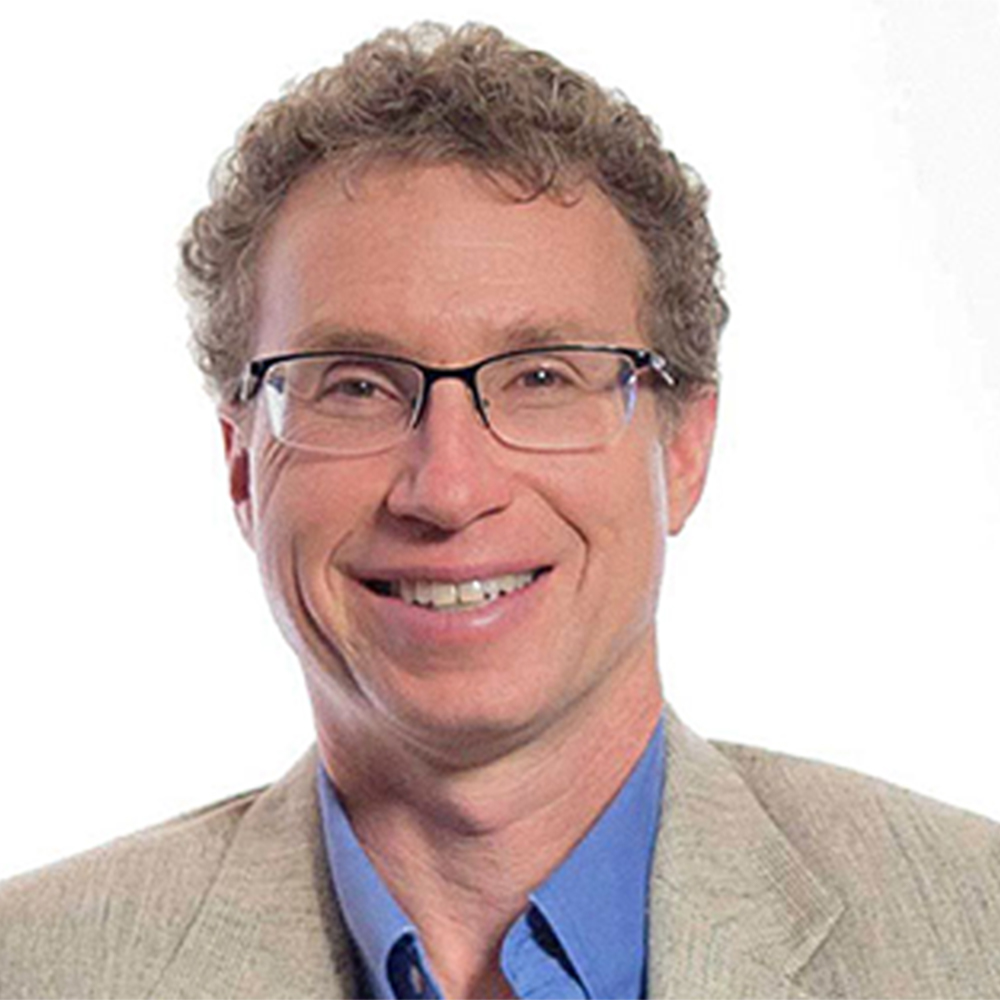
Andrew B. Newberg
American neuroscientistWikipedia
15
MENTIONS
11
EPISODES
11
PODCASTS
Search complete. 15 mentions across 11 episodes found for "Andrew B. Newberg".
Oct 5, 2026

Kate BowlerGUEST
[laughs] Yeah, I think, I think researchers want to research, and there was a very frantic attempt to out-know this very sudden diagnosis.
Kate BowlerGUEST
And so, yeah, my colleagues just were looking into genetic mutation possibilities.
Kate BowlerGUEST
I remember, um, how tempting that was.
Kate BowlerGUEST
I-- My mom found me one time at, like, one in the morning sitting in the middle of the floor, and I'd printed out all the blood work and all the paperwork and all the, from everything that, you know, they, that everyone wanted to try, and I had them spread out around me.
Kate BowlerGUEST
Yeah, that's exactly right.
Shankar VedantamHOST
[gentle music] Now, you're a professor at Duke University's Divinity School, and many of the individuals you know are people of faith.
Shankar VedantamHOST
Um, I'm wondering how your religious colleagues and friends responded to the news of your illness.
Kate BowlerGUEST
It was actually one of the most meaningful things I have ever experienced.

speaker_1NARRATOR
It threatens no one's body, but it can unsettle the certainties a life has been organized around without offering others in their place.
speaker_1NARRATOR
Where does that trust come from? For Andrew Newberg, a neuroscientist who studies how the brain takes part in religious experience and one of the people interviewed in the film, Beliefs arise from a combination of what we perceive, what we feel, what we think, and the relationships we live through.
speaker_1NARRATOR
They begin to form at birth and go on being shaped by everything we experience.
speaker_1NARRATOR
By that standard, the trust that the world is as it appears is also a belief.

Julie AndersonHOST
Another word, another book that I will, uh, we're going to start doing some book reviews here in the future and that's one that I will, I will talk about.
Julie AndersonHOST
But it's by Dr. Newberg and Dr. Waldman.
Julie AndersonHOST
And interestingly enough, they've been doing work for decades and Norman Cousins in his original in Head First, he quoted some of their work, but they're still continuing to do it.
Julie AndersonHOST
And more recently they have narrowed down or really pulled down not that it's not just your th- your overall thoughts positive or negative, but it's actually the words that you use.
12 MINS LATER
Julie AndersonHOST
And we can do this by shifting the actual words.
Julie AndersonHOST
So in the same way that fear and failure will, or impossible, will engage negative, or have a negative response in the brain, words such as love, peace, loving kindness, they've shown on fMRI machines that it actually opens up, it increases, I should say, the circulation, or it increases the activity in the cognitive reasoning portions of our brain, that, those frontal lobes, by simply words.
Julie AndersonHOST
And when you use words, uh, Dr. Waldman and Dr. Newberg brought this out in their book, that when you use words, positive words more often than negative words, that you actually can activate the motivational centers in the brain.
Julie AndersonHOST
And that's really powerful, right? 'Cause so now you're not just activating the prefrontal cortex or those frontal lobes to give yourself the ability to creatively think through a problem.

Lee WarrenGUEST
So, again, functional imaging has shown us all these things that the Bible said a long time ago that turn out to be true neuroanatomically and scientifically now.
Lee WarrenGUEST
There's a guy named Andrew Newberg who's a researcher at the University of Pennsylvania.
Lee WarrenGUEST
He's written a bunch of books about this.
Lee WarrenGUEST
I had

Luther McKinstry IIIGUEST
And so now what the Lord is doing, he allowed things to happen now to drive the people back to their knees because they don't have a relationship with him.
Luther McKinstry IIIGUEST
That's why this past Sunday when I was preaching and I was sharing with the people of God, even how prayer is scientifically proven by Andrew Newberg, where how prayer rewires your brain and the things of your body.
Luther McKinstry IIIGUEST
And he did it by a study of just doing 12 minutes of prayer a day.
Luther McKinstry IIIGUEST
Just 12? Just 12.

Shaleen KendrickGUEST
So what that means is neurotheology is not science and religion and conversation in the playground and fields of neurotheology.
Shaleen KendrickGUEST
We're actually looking at how do spiritual and religious experience physiologically shape human beings? specifically most neurotheologians like Andrew Newberg, they're looking through the lens of cognitive neuroscience.
Shaleen KendrickGUEST
So back to neuroplasticity, they're looking at what happens in the brain, what is happening in the brain when we're having spiritual and or religious experiences.
Shaleen KendrickGUEST
And there is an insane amount of data coming out that is deeply fascinating to me and incredibly healing.

Tal Ben-ShaharGUEST
The words we think about and use shape our lives and the lives of those around us.
Tal Ben-ShaharGUEST
Researchers Andrew Newberg and Mark Waldman write in their book Words Can Change Your Brain that a single word has the power to influence the expression of genes that regulate physical and emotional stress.
Tal Ben-ShaharGUEST
They point to studies to research showing that the longer you concentrate on positive words, the more you begin to affect other areas of the brain.
Tal Ben-ShaharGUEST
Functions in the parietal lobe start to change, which changes your perception of yourself and the people you interact with.

Ben YimHOST
I'm just asking you to pray to your higher power, to your God.
Ben YimHOST
Research from Andrew Newberg at Thomas Jefferson University published in his book, How God Changes Your Brain, documents through brain imaging studies that regular prayer and spiritual practice produce measurable changes in your brain structure and in function.
Ben YimHOST
Specifically, in the prefrontal cortex, which governs the decision-making, emotional regulation, and the ability to hold a long-term vision of yourself.
Ben YimHOST
And in the parental lobe, which governs the sense of self and separation.

David AllenGUEST
But expressing surprise at something is completely at odds with any notion that it's, uh, a, an existing memory or it's something that's been manufactured.
David AllenGUEST
The other thing which is com- out, completely outside the book, but it's a different book altogether, it's one called Why God Won't Go Away, and it's written by Andrew Newberg, who is a brain scientist, for want of a better word.
David AllenGUEST
And because he deals with people with brain disease and brain injuries, and he's also a research scientist, he has the opportunity to examine people's brains.
David AllenGUEST
He's also extremely interested in spiritual matters and, uh, the connectivity with their spiritual selves.

Chris EnsbeyGUEST
And this is being confirmed.
Chris EnsbeyGUEST
I looked at this study, this Newberg study, which over generations, sorry, over decades, it scans people's brains while they're in prayer.
Chris EnsbeyGUEST
And he's very disclosing to say that this in no way proves God, but it proves what prayer does.
Chris EnsbeyGUEST
And he did nuns and priests, and then he moved on to the Protestants eventually.
1 more episode mentions Andrew B. Newberg.
Create an account to see the whole feed, search across every transcript, and follow the entities you care about.