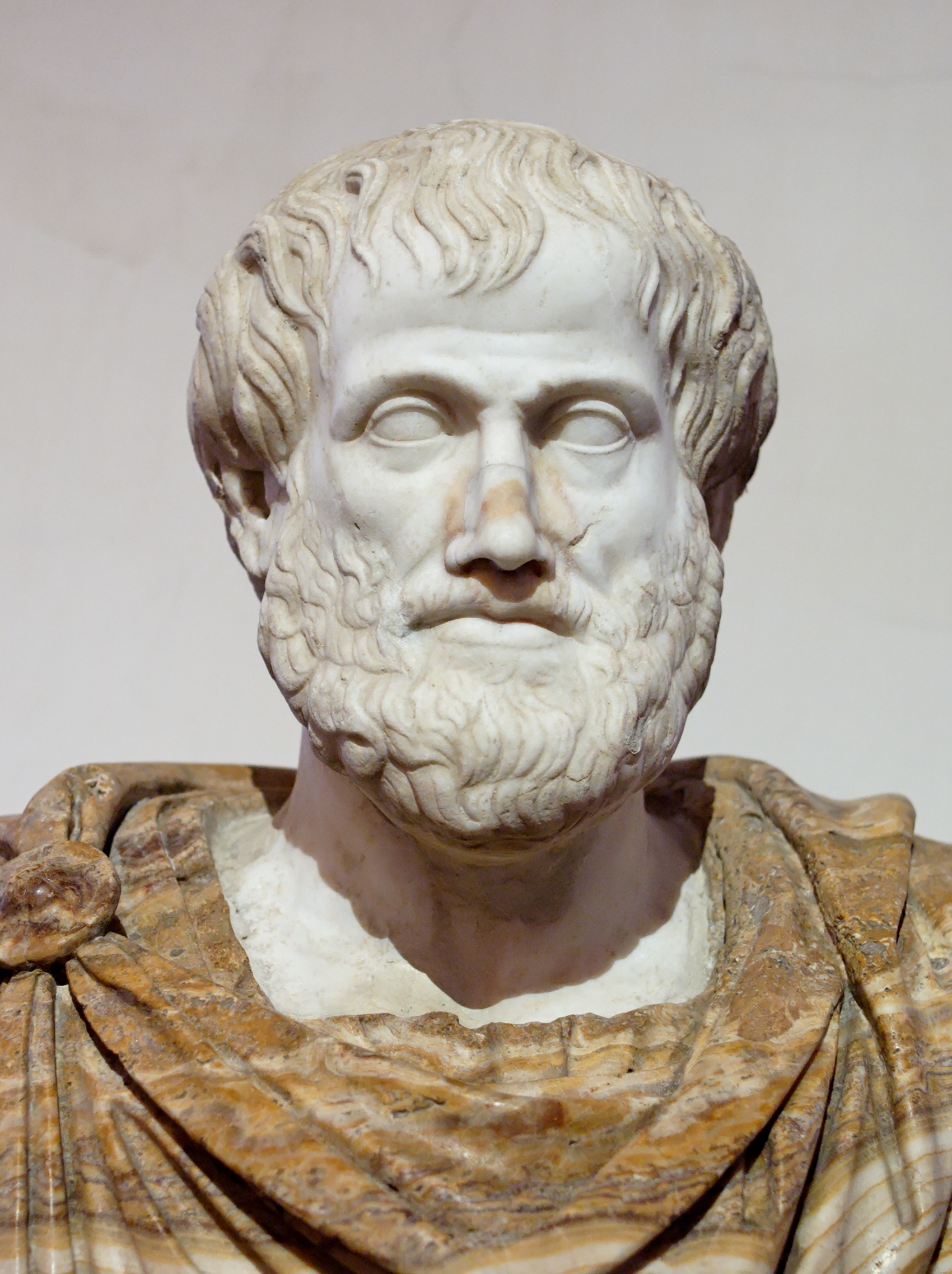
Aristotle
Greek philosopher and polymathWikipedia
8.9k
MENTIONS
2.4k
EPISODES
1.6k
PODCASTS
Search complete. 8912 mentions across 2380 episodes found for "Aristotle".
Sep 17, 2026

Tony Red RiggsGUEST
Uh, and I always tell people the ancient people didn't know about aerodynamics, but they could watch birds fly, so they knew it was possible.
Tony Red RiggsGUEST
So they, you know, Aristotle sat and watched the bugs and the birds fly by, so they knew it was possible, that flight was possible, that there was something going on with that, and you could breathe air.
Tony Red RiggsGUEST
But they just didn't understand it beyond that, and that's kinda where we're at with consciousness now.
Tony Red RiggsGUEST
When we do remote viewing, the psychic stuff, you know, people are psychic, and we, we've been taught, and honestly, there's been pushback.

Christy FaithHOST
...
Christy FaithHOST
Aristotle, those guys, they did not view education as shoving content.
Christy FaithHOST
They even said that.
Joe O'TooleGUEST
Right.

JohnHOST
Socrates, for those who don't know, was one of ancient Greece's most influential philosophers.
JohnHOST
With his interrogative nature, he stood alongside people like Plato and Aristotle and Epicurus as one of the great minds of the ancient world.
JohnHOST
Plato even issued a statement in his defense.
JohnHOST
And at the age of 70, Socrates was brought to trial and charged with impiety, or a lack of reverence for the Greek gods, as well as corrupting the Athenian youth, allegedly.

Rabbi KrazHOST
There are many things in Meru Nebuchad that seem to contradict Gemara.
Rabbi KrazHOST
The Rambam constantly quotes from Aristotle.
Rabbi KrazHOST
It seems to be Geisha ideas making their way.
Rabbi KrazHOST
And we're going to see that The Rajb himself respected the Rambam and therefore maybe it's like, you know, for the Rambam maybe these ideas are okay.
Rabbi KrazHOST
Their main tie was against the philosophy.
Rabbi KrazHOST
I just want to clarify.
Rabbi KrazHOST
Based on this letter, which is only an excerpt, but it could be that the Rajbe felt, you know, if the Rambam wants to dabble in Aristotle, for him it's going to work, but not for the masses.
Rabbi KrazHOST
As is a well-known story I've said before, that Semach Tzedek once gathered his children around him, and he said, none of you should learn Meir Nebuchadnezzar.

Jeremy ScottNARRATOR
You see, unlike the real world where humans don't ever change, in stories, you have to have a character reach a breaking point and have a crisis so that we can root for them to come back from it.
Jeremy ScottNARRATOR
It's been around since, like, Aristotle or something.
Jeremy ScottNARRATOR
And somehow we're still doing it today.
Jeremy ScottNARRATOR
Tom Hanks will now break down crying for a full minute, as if to prove my point about the predictability of storytelling tropes.

BrandonHOST
I want to.
BrandonHOST
So it's like, why not have your own intimate experience with Plato and Aristotle and intimacy, not on this low Freudian nonsense.
BrandonHOST
It's the expansion of wanting to know and understand the many intricacies of what's going on in the world that we live in.
BrandonHOST
What is going on? What is reality? What am I? What does it mean to be? And what is being itself? Welcome
15 MINS LATER
BrandonHOST
And I think that's why understanding the issues and talking about it in this kind of manner and understanding what is it when the Renaissance, what is the Renaissance mind? You know, like, what does that even mean? And I think it's really important to know throughout history, we've had many different renaissances and the big one we all think about was the period of the Renaissance in Italy and that timeframe in Europe and how important it was.
BrandonHOST
It was an unveiling of knowledge and wisdom from past years as you get a collective of individuals exploding with genius with their daimon, this interconnection that they could then tap into something larger than themselves to be able to create beautiful art and sacredness, that thing that we're truly trying to get back into our lives, to reawaken into our lives.
BrandonHOST
And so it's to then ask the question, what does it matter? And it matters because in the Renaissance period, right, we get Marsilio Ficino and Pico de Merindola, right? These characters who are transcribing Plato's writings and Aristotle's writings, but then they say, hey, just wait, let's actually first work on the thrice great Hermes Trismegistus and let's transcribe his work so then people can read it.
BrandonHOST
And in the 1500s, the explosion of this information through time, there were then charlatans at that time frame, but you could then read the work and then do the work and we have their works from here on out.

Ryan GilmoreHOST
So what does deficiency in humility look like? And what does excess look like? And how does wisdom help students find the golden mean?
Jonathan WinnGUEST
I love the insight of Aristotle on the deficiencies and excesses of these vices.
Jonathan WinnGUEST
The deficiency of humility or the lack of humility, I would say, is arrogance.
Jonathan WinnGUEST
It's pride.
Jonathan WinnGUEST
And that's where wisdom leads us.
Jonathan WinnGUEST
That's where that golden mean can be accomplished.
Jonathan WinnGUEST
And I would argue to Aristotle or anybody else that apart from the gospel, you can't get to that golden mean because you're going to have an inaccurate view of yourself.
Ryan GilmoreHOST
Jonathan, I think this is all really helpful because it helps us understand we're not looking at like window dressing on our kids or even on ourselves to figure this out.

Jeff JarvisHOST
You can say, well, what did she just say? And I think that it's just part of an ongoing, since the days of the scribes, effort to be able to record things because our memory fails.
Jason HowellHOST
Mr. Aristotle
Jeff JarvisHOST
didn't
Jason HowellHOST
like the idea of

speaker_1HOST
That is the whole goal.
speaker_1HOST
As the paper points out, quoting Aristotle, excellence is not an act, but a habit.
speaker_0HOST
Man, that reframes excellence entirely.
speaker_0HOST
It's not a momentary flash of brilliance.

Stacey WheelerHOST
Anatomically, we're the same.
Stacey WheelerHOST
Now, if we jump forward to the great thinkers, such as Aristotle, Plato, and Marcus Aurelius, who lived just 3,000 years ago or so, it's the same.
Stacey WheelerHOST
Their intellectual capabilities were the same as ours.
Stacey WheelerHOST
They could think and reason the same as we can.
2,370 more episodes mention Aristotle.
Create an account to see the whole feed, search across every transcript, and follow the entities you care about.