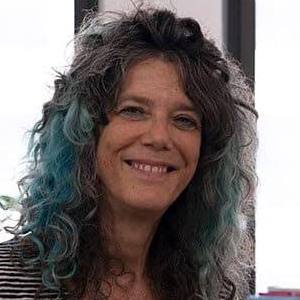
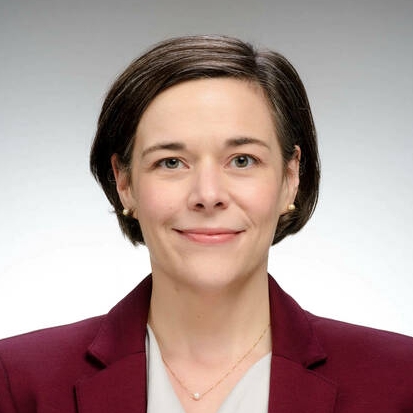
In this episode, hosts Cara and Anna talk with Dr. Virginia Vitzthum about novel findings in female reproductive functioning across populations, tell exciting fieldwork stories, and reflect on the changing nature of the field of Anthropology. Dr. Virginia Vitzthum is a professor emeritus in the Department of Anthropology at Indiana University. Currently, she is an Honorary Professor in the School of Medicine, University of British Columbia, Vancouver; Member of the Scientific Advisory Council at CeMCOR (Centre for Menstrual Cycle and Ovulation Research, UBC); and scientific advisor for Clue, a Germany-based menstrual tracking app. Her research focuses on women’s reproductive functioning and how it differs between individuals and across populations around the world. This work has direct implications for improving women’s health including reducing breast cancer, depression, autoimmune diseases, and other hormone related disorders; treating infertility and preventing early pregnancy loss; and developing more effective contraceptives with fewer side effects.
Contact Virginia at dr.vj.vitzthum@gmail.com
------------------------------
Find the book chapter discussed in this episode:
Chapter: How It Works: The Biological Mechanisms that Generate Demographic Diversity
In Book: Burger, O., Lee, R., & Sear, R. (Eds.). (2024). Human evolutionary demography. Open Book Publishers.
https://scholarworks.iu.edu/dspace/items/3777a36c-41cf-4a57-a8ec-4c0cdf21f69b
------------------------------
Contact the Sausage of Science Podcast and the Human Biology Association:
Facebook: facebook.com/groups/humanbiologyassociation/, Website: humbio.org
Cara Ocobock, Co-Host, Website: sites.nd.edu/cara-ocobock/
Email: cocobock@nd.edu, Twitter: @CaraOcobock
Anna Samsonov, Co-Host, Email: anna_samsonov1@baylor.edu
Bluesky: @annasamsonov.bsky.social