Jul 28, 2026 · 2 hr 18 min · 12 segments
Most people take it for granted that consciousness is the one thing science cannot explain. Julian Kiverstein thinks the problem has been set up backwards from the start. Rather than beginning with…
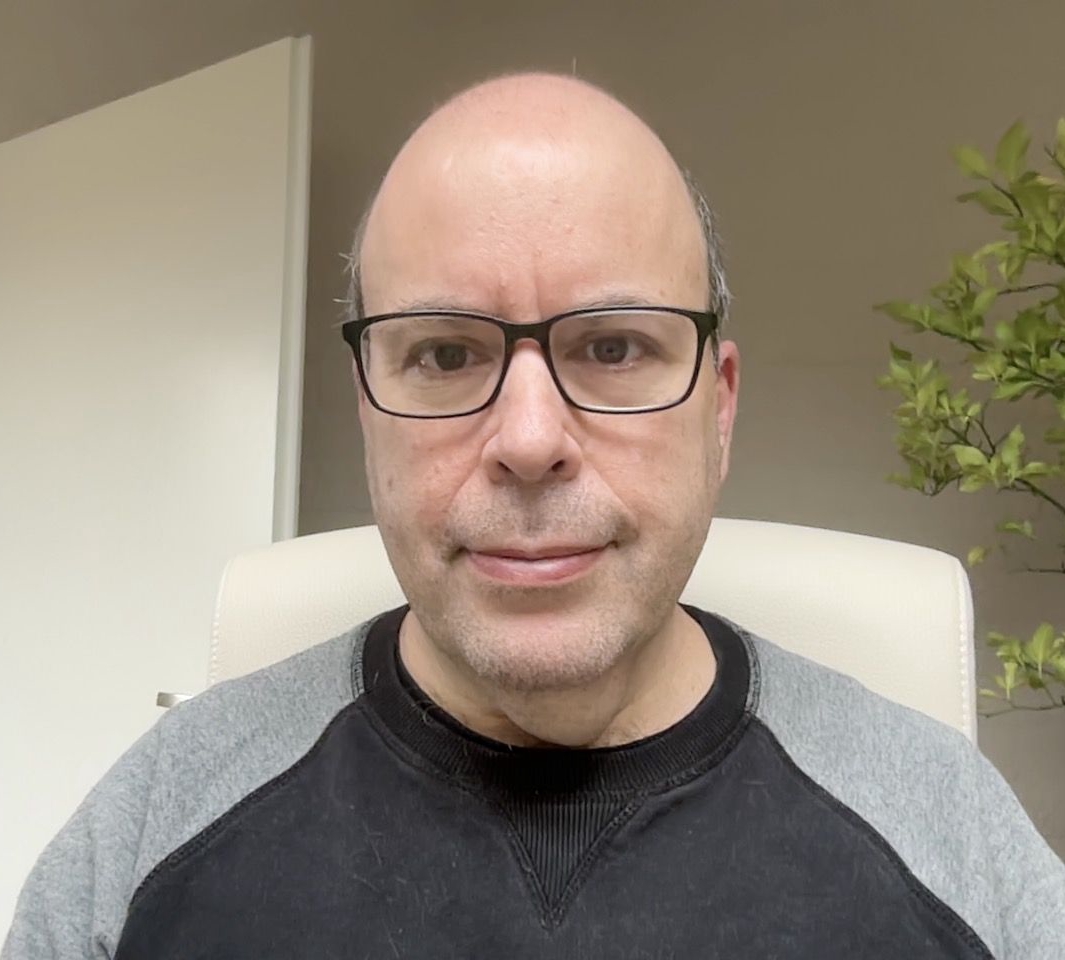
Julian KiversteinGuestAnagoge Podcast HostHost
Yeah, I think it was the, you know, I was a, a bit of a radical and what was being proposed here was a way to shake up the cognitive science community to present a new approach.

And it was one that pointed to the importance of subjectivity, human experience, lived experience and And I was fascinated in consciousness, exploring consciousness in different ways, meditation, psychedelics.

Within cognitive science, we don't really have the right set of theoretical and conceptual tools for making sense of human experience, so long as we just remain within this kind of computational representational paradigm.

And so I was excited by the radicalism of trying to present an alternative framework that would provide new conceptual foundations for cognitive science.

And I was really persuaded by their argument that that was necessary because as long as we operated with this kind of mechanistic, machine-like understanding of living beings, we think of the brain as basically doing computation, information processing.

then it would be very hard to see how you could fit experience into that, and how you would be able to explain experience in those terms.

Already I was thinking about that by working on the hard problem and the explanatory gap.

And the diagnosis of where the gap comes from, from inactive theorists, I found very persuasive.

And then their remedy for that is also persuasive to me that what we should do is to try to pay attention to approaches like contemplative practices in meditation or to the phenomenological tradition where there's been an enormous effort devoted to studying and describing lived experience, first-person experience from a first-person point of view.

we could try to bring those traditions into conversation with cognitive science and and that yeah that was like um wow can you do that and how would you do that um And yeah, once I started on that path, then I found that there are actually ways in which there are tensions involved in this project in the phenomenological tradition.

There's a kind of anti-scientism, which is sometimes presented as an anti-naturalism, whereas approaches to the mind that start from cognitive science and neuroscience, they have this broader philosophical perspective, which is a naturalistic one, the idea that human beings in the end are evolved from other animals and and we should be able to explain the workings of the mind using the best science available to us Whereas phenomenology was presenting a different perspective that was often given as a kind of anti-naturalistic perspective, where we would need to really start from thinking of consciousness as fundamental in some sense, as everything in the world disclosed to us from within consciousness.

making consciousness something that's always presupposed when we start to do science or it's always the starting point for us so how then science would be able to get a grip on that and explain it that gave rise to a puzzle for me and that's been something that you know one of the things that i've been occupied with ever since and wrote about in my phd and yeah i think i'm getting closer to being able to see how to solve the puzzle Yeah, that was what the embodied mind opened up for me.
Yeah, fascinating.
And I didn't know, actually, that you had such an explicit interest in consciousness in this most bare-bones sense of the heart problem and things like that.
And I'll be curious to... explore that a little bit because actually to me there's kind of like two different takes here and i'm not exactly sure how you how you are you putting this together or how do you relate to them because for example when i was younger when i first started uh studying philosophy i was also very very obsessed with philosophy of mind and the heart problem of consciousness and then to some degree there was a period that that's all i i thought about And then eventually I kind of gave up because the hard problem was too hard for me.
So I just kind of left it aside.
But then at some point I also got, just like you, very interested in phenomenology.
And again, precisely because of all this ability to somewhat counteract this kind of mechanistic representational kind of worldview that the culture and science more broadly was inheriting.
And I saw, okay, phenomenology is important because Again, it's like you said, consciousness is fundamental in the sense of this is where you start.
This is your entire world.
And so I also, obviously, I'm very aligned with everything you said.
Now, the issue here is that you seem to, if I understood you correctly, that you were interpreting or somewhat making a claim that these two things kind of joined together to some degree.

Yeah, I think it was the, you know, I was a, a bit of a radical and what was being proposed here was a way to shake up the cognitive science community to present a new approach.

And it was one that pointed to the importance of subjectivity, human experience, lived experience and And I was fascinated in consciousness, exploring consciousness in different ways, meditation, psychedelics.

Within cognitive science, we don't really have the right set of theoretical and conceptual tools for making sense of human experience, so long as we just remain within this kind of computational representational paradigm.

And so I was excited by the radicalism of trying to present an alternative framework that would provide new conceptual foundations for cognitive science.

And I was really persuaded by their argument that that was necessary because as long as we operated with this kind of mechanistic, machine-like understanding of living beings, we think of the brain as basically doing computation, information processing.

then it would be very hard to see how you could fit experience into that, and how you would be able to explain experience in those terms.

Already I was thinking about that by working on the hard problem and the explanatory gap.

And the diagnosis of where the gap comes from, from inactive theorists, I found very persuasive.

And then their remedy for that is also persuasive to me that what we should do is to try to pay attention to approaches like contemplative practices in meditation or to the phenomenological tradition where there's been an enormous effort devoted to studying and describing lived experience, first-person experience from a first-person point of view.

we could try to bring those traditions into conversation with cognitive science and and that yeah that was like um wow can you do that and how would you do that um And yeah, once I started on that path, then I found that there are actually ways in which there are tensions involved in this project in the phenomenological tradition.

There's a kind of anti-scientism, which is sometimes presented as an anti-naturalism, whereas approaches to the mind that start from cognitive science and neuroscience, they have this broader philosophical perspective, which is a naturalistic one, the idea that human beings in the end are evolved from other animals and and we should be able to explain the workings of the mind using the best science available to us Whereas phenomenology was presenting a different perspective that was often given as a kind of anti-naturalistic perspective, where we would need to really start from thinking of consciousness as fundamental in some sense, as everything in the world disclosed to us from within consciousness.

making consciousness something that's always presupposed when we start to do science or it's always the starting point for us so how then science would be able to get a grip on that and explain it that gave rise to a puzzle for me and that's been something that you know one of the things that i've been occupied with ever since and wrote about in my phd and yeah i think i'm getting closer to being able to see how to solve the puzzle Yeah, that was what the embodied mind opened up for me.
Yeah, fascinating.
And I didn't know, actually, that you had such an explicit interest in consciousness in this most bare-bones sense of the heart problem and things like that.
And I'll be curious to... explore that a little bit because actually to me there's kind of like two different takes here and i'm not exactly sure how you how you are you putting this together or how do you relate to them because for example when i was younger when i first started uh studying philosophy i was also very very obsessed with philosophy of mind and the heart problem of consciousness and then to some degree there was a period that that's all i i thought about And then eventually I kind of gave up because the hard problem was too hard for me.
So I just kind of left it aside.
But then at some point I also got, just like you, very interested in phenomenology.
And again, precisely because of all this ability to somewhat counteract this kind of mechanistic representational kind of worldview that the culture and science more broadly was inheriting.
And I saw, okay, phenomenology is important because Again, it's like you said, consciousness is fundamental in the sense of this is where you start.
This is your entire world.
And so I also, obviously, I'm very aligned with everything you said.
Now, the issue here is that you seem to, if I understood you correctly, that you were interpreting or somewhat making a claim that these two things kind of joined together to some degree.
The rest of this transcript — segmented and speaker-labeled, so you land on the exact moment something was said
Search every transcript — by keyword, by phrase, or by meaning, across every show Radar indexes
Trends — what is surging across podcasts, measured against its own baseline
Alerts — when a name you follow appears in a newly indexed episode
No account is needed to search Radar.