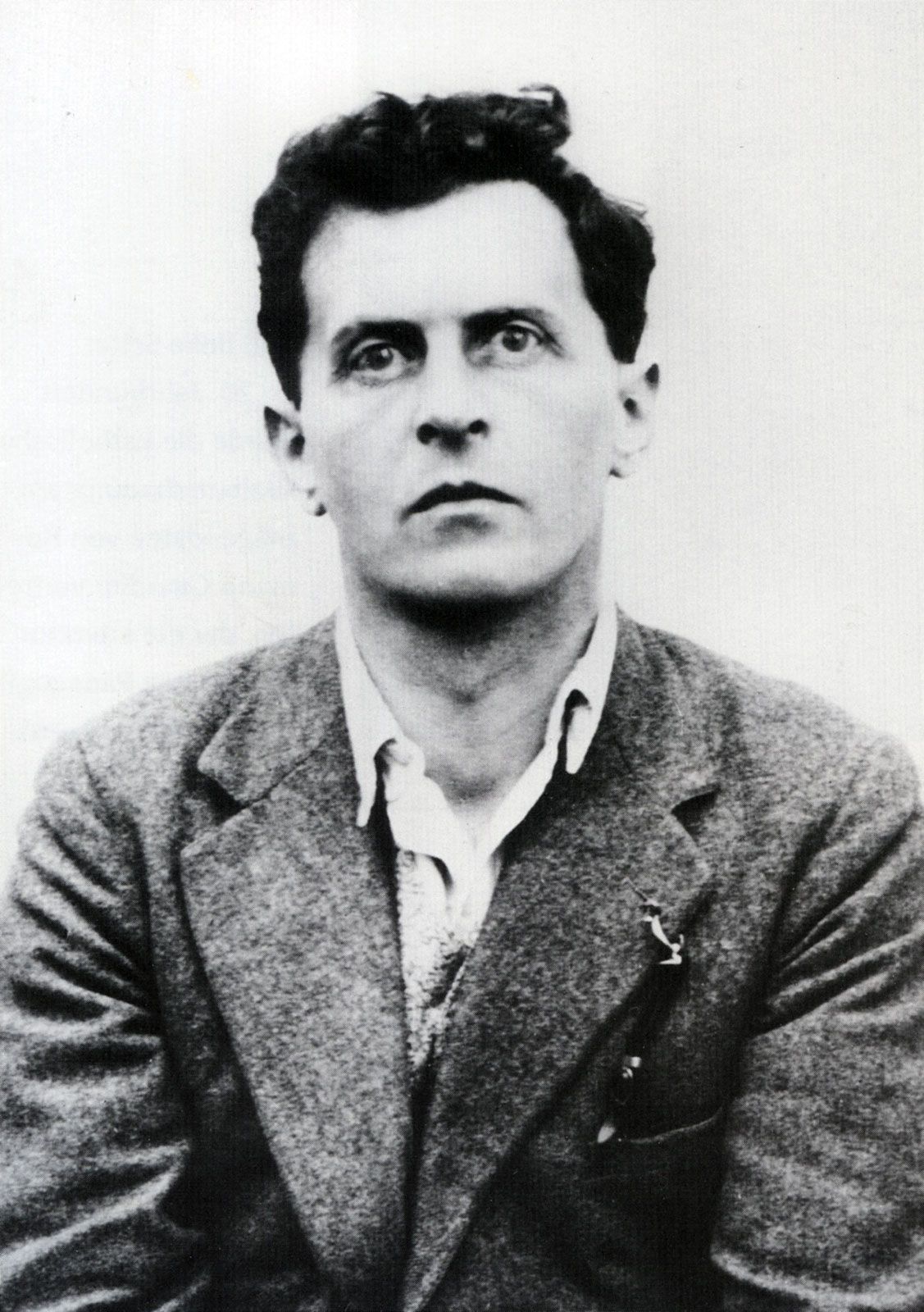
Ludwig Wittgenstein
British philosopherWikipedia
267
MENTIONS
123
EPISODES
113
PODCASTS
Search complete. 267 mentions across 123 episodes found for "Ludwig Wittgenstein".
Oct 28, 2026

David DebowHOST
You might think of philosophy as a way of explaining or giving context to or justifying the life that a person's chosen, which reflects that person's particular disposition.
David DebowHOST
Then, it's significant, perhaps, that Plato, Descartes, Spinoza, Hobbes, Locke, Leibniz, Hume, Schopenhauer, Wittgenstein, Kant, Kierkegaard, Nietzsche, all of whom never married, never fathered.
David DebowHOST
What is the common through line here? I believe all of these things.
David DebowHOST
This desire to transcend the body is a desire to seek greater and greater autonomy.

Tim GombosHOST
It resonated with how I had been thinking about thinking.
Tim GombosHOST
And I mentioned her relationship with Ludwig Wittgenstein.
Tim GombosHOST
I got that wrong.
Tim GombosHOST
Steve texted me later, a day or two later and said that that was actually Martin Heidegger that she was in a relationship with and about whom she was talking.

Roger CunninghamGUEST
That's ECDO.
Roger CunninghamGUEST
And even that title is not sufficient to fully describe the theory, but the theory name would have been three sentences long if I hit it in a Wittgenstein format or discipline.
Roger CunninghamGUEST
So people critique the name and say, well, it's not.
Roger CunninghamGUEST
And I'm like, well, yes, but I can't make the name longer than that.

Cole HastingsGUEST
When you have a very diverse lexicon with which to access at any given moment, I think...
Cole HastingsGUEST
You know, Wittgenstein, a linguistic philosopher, said the limits of my language is the limit of my world.
Cole HastingsGUEST
And I think there's debates about whether that's true or not.
Cole HastingsGUEST
But I have certainly felt that the more I've learned about languages, the English language, and I've studied Japanese as well, which has given me a completely different perspective on language.

Joe BartolozziHOST
I could go into more philosophers like Hume and Spinoza and shit, but they all fucking say the same thing in different ways.
Joe BartolozziHOST
And sometimes they go into other, like Wittgenstein goes into like, I guess a more word-based argument.
Joe BartolozziHOST
It's very hard to explain what he's trying to say.
Joe BartolozziHOST
I don't understand a lot of the shit that he says.

Ishmael ButlerGUEST
very
Jeff WeissHOST
influenced by Shakespeare, the Bible, Kant, Wittgenstein, all these big philosophers of the era.
Jeff WeissHOST
So that's the crazy thing.
Jeff WeissHOST
We got a bunch of additional reading that I barely understood.

Richard K. PayneGUEST
And as an alternative, one of the things that people came up with was technical terms, polythetic definitions, as opposed to monothetic, one theme, many themes.
Richard K. PayneGUEST
And this is... popularized by Wittgenstein's notion of family resemblances.
Richard K. PayneGUEST
So you look at a Thanksgiving photo of your family from 2012.
Richard K. PayneGUEST
Here's Uncle Willie and here's Aunt Betty and here's Cousin Joe and so on and so forth.

Paul AxtonHOST
Girardianism at this point in time is a kind of muddled place.
Paul AxtonHOST
Actually, it reminded me of people when I was in England, and I would mention Ludwig Wittgenstein.
Paul AxtonHOST
It's, oh yeah, I really like Wittgenstein.
Paul AxtonHOST
But of course, you never knew if they liked Wittgenstein of the logical positivist Wittgenstein of the Tractatus or if they meant the Wittgenstein of the Philosophical Investigations which is actually two different worlds and in fact in England it's very often it's the logical positivist Tractatus Wittgenstein in this country it's usually the Philosophical Investigations I thought the same thing is true about Girard but it's actually there almost in reverse.

Joe BartolozziHOST
I could go into more philosophers like Hume and Spinoza and shit, but they all fucking say the same thing in different ways.
Joe BartolozziHOST
And sometimes they go into other – like, Wittgenstein goes into, like, I guess a more – word-based argument it's very hard to explain what he's trying to say i don't understand a lot of the shit that he says and i i think i also gotta preface that i'm not that good of a philosopher i have a degree in philosophy but i'm not like some guy that reads you know fucking a book a week like i read philosophy i love learning about it i love thinking about it But I think I'm a very, I guess, responsive individual.
Joe BartolozziHOST
I love hearing takes and giving my own opinion rather than like, I guess, studying the takes of other people for hours on end.
Joe BartolozziHOST
But I still do it because I know that it's able to strengthen my own beliefs or obviously change them.

Sven BrodmerkelGUEST
I'm not saying that writing novels isn't an art form, but then we all know that good writers are usually the ones who are very good at working with metaphors because language has the inbuilt limitation.
Sven BrodmerkelGUEST
And I actually said something on Substack the other day about the famous Wittgenstein argument where he said, you know, imagine everyone... is carrying around a box and the box is a beetle, but you can never actually look into the box other people are carrying around.
Sven BrodmerkelGUEST
So we can still talk about the beetle, but we actually don't know what the beetle actually is for other people or what the beetle, you know, other people's beetle actually looked like.
Sven BrodmerkelGUEST
And when you think about all the abstract concepts we are talking about from love, hate, conflict, whatever, Those are just abstract things that stand in for something art is trying to express, meaning the emotion, the human condition behind this particular abstract concept.
113 more episodes mention Ludwig Wittgenstein.
Create an account to see the whole feed, search across every transcript, and follow the entities you care about.