Offers a transformative reading of the Marxist tradition by uncovering its connections to the institutions and practices of worker education.
For the past hundred years, “vulgar Marxism” has been the go-to insult among socialist and communist intellectuals, a shorthand for the ways Marxist theory could go wrong. But why would thinkers advocating for working-class emancipation use “vulgarity” as an epithet?
In Vulgar Marxism: Revolutionary Politics and the Dilemmas of Worker Education, 1891–1931 (U Chicago Press, 2025), Edward Baring seeks an answer by delving into debates over Marxism in the first decades of the twentieth century. He shows that this common phrase wasn’t aimed primarily at popular understandings of Marx. Rather, it was used to attack intellectuals for failing to teach Marx’s theory to the working masses *correctly*. His history of “vulgar Marxism” homes in on the project of mass worker education at a time when the project was both widely pursued and fiercely contested.
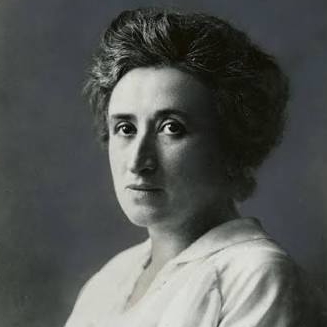
Worker education offered a mechanism through which Marxist theory was meant to promote large-scale social and political change, and it drew on a massive infrastructure of schools, publishing houses, and educational bureaus that stretched across Europe and reached millions. By centering this project, Baring radically recasts the history of Marxism from the Second International to World War II. He challenges classic oppositions between “economistic” and “cultural” versions of Marxism; rereads many of the most significant Marxist theorists of the time, including Karl Kautsky, Rosa Luxemburg, Georg Lukács, and Antonio Gramsci; and offers new resources for understanding how Marxist ideas transformed as they traveled around Europe and then spread throughout the world.
Edward Baring is associate professor of history and human values at Princeton University. He is the author of *Converts to the Real* and *The Young Derrida*.
Morteza Hajizadeh is a Ph.D. graduate in English from the University of Auckland in New Zealand. His research interests are Cultural Studies; Critical Theory; Environmental History; Medieval (Intellectual) History; Gothic Studies; 18th and 19th Century British Literature.
Hosted by Simplecast, an AdsWizz company. See pcm.adswizz.com for information about our collection and use of personal data for advertising.