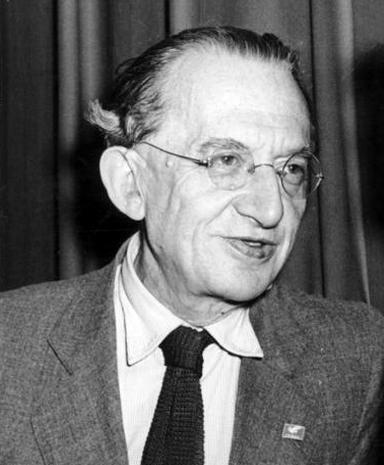
György Lukács
Hungarian philosopherWikipedia
26
MENTIONS
20
EPISODES
14
PODCASTS
Search complete. 26 mentions across 20 episodes found for "György Lukács".
Nov 21, 2026

E.W. JacksonHOST
The stuff that we're witnessing now is really not sudden, it's part of a long progression And by the way, I really believe that progression begins with Marxism and communism because there was a communist commissar of Hungary.
E.W. JacksonHOST
His name was George Lukacs.
E.W. JacksonHOST
And he came up with this idea that if you want to undermine the family, because of course Marx hated the traditional biblical family, but if you want to undermine the family, one of the best ways to do that is to start inculcating young children with sexual ideas that their likely Christian parents would object to.
E.W. JacksonHOST
Believe it or not, this was back in 1913.

Rainer ForstGUEST
So the question of false consciousness does not require some kind of objectivist interpretation of what the true interests of human beings are.
Rainer ForstGUEST
I think that is one of the major issues that has haunted the Marxist tradition up to Lukács.
Rainer ForstGUEST
But what you need to distinguish an ideologically formed frame of mind and a reflexive frame of mind is the right to justification and the right to ask to be respected as a justificatory equal in the social relations you are subject to.
Rainer ForstGUEST
And so, many forms of life, many forms of social relations, including very traditional gender relations, we do not assess from a standpoint of an objective notion of the true of the good life or some other such apparatus as has been suggested by a number of people.

CamHOST
I feel like I'm able to hold on to little things here and there, but I felt quite lost in this, so I'm looking forward to talking about it.
ReHOST
yeah right like one way i do think about this text is like it is at once a sequel and prequel to her like book hegel contra sociology where she deals with similar subjects uh like the antinomy of transcendental thought uh like as she puts it which comes out of kant and which is funneled through neocantianism in that text is mostly focusing on sociology as a discipline in how it specifically developed through different schools of neocontianism through Weber and Durkheim and also a lot of its heritages lineages which ends up in a lot of Marxist thought too where she includes everyone from Adorno, Althusser to Lukács like basically everyone.
ReHOST
And ultimately, because she wants to show this split between transcendental thought, like how it functions, and in its transcendentalism, it loses grasp of historical reality.
ReHOST
Here, I think she's doing that through a critique of jurisprudence, legal thought of a lot of metaphysical thinkers, of philosophers particularly, to in a way understand our modern, our modern and not so modern issues we are facing, right? And in one sense, it is because of how we do get stuck in antinomies between theoretical and practical reason, between antinomies where we end up needing to appeal to some sort of transcendental argument or transcendental realm.

Natalie WynnHOST
The Worth It boys, Andrew, Adam, Steven, these are not mere content creators, mere actors, dancing monkeys performing for ad revenue.
Natalie WynnHOST
They're philosophers, spiritual leaders even, and what they've accomplished on YouTube quite honestly far surpasses the combined insights of Marx, Engels, Lenin, Sartre, Trotsky, Luxembourg, Gramsci, Lukács, Zarathustra, and even our dear bread mom Kropotkin.
Natalie WynnHOST
I've of course read each of these great thinkers' complete works many, many times, but I always come away dissatisfied, and I find myself returning, yet again, to the unparalleled masterworks of Andrew, Adam, and Steve.
Natalie WynnHOST
See, each episode of Worth It poses to the viewer a fundamental question.

Matthew Raphael JohnsonGUEST
Absolutely.
Matthew Raphael JohnsonGUEST
I mean, when I think of left Hegelians, I think of Lubbock, who I do respect.
Matthew Raphael JohnsonGUEST
I mean, if I was an atheist, he would be my guy.
Matthew Raphael JohnsonGUEST
Bruno Bauer, I guess.

Christopher SandbatchGUEST
You know, it's wild.
Christopher SandbatchGUEST
I think so similarly to Lukács, whenever he started this, that I was thinking, we're going to go grab Kossuth's literary example here.
Christopher SandbatchGUEST
But this is one of these things that is very cool, you know, that he's doing here is that he's establishing, and if you look at the name of the section, it says personality.
Christopher SandbatchGUEST
He doesn't say persons.
Thomas777GUEST
This is a very real thing.
Thomas777GUEST
The two key figures of the Frankfurt School, and Buchanan did get this right, was Georg Lukács and Antonio Gramsci.
Thomas777GUEST
Gramsci was sort of the token goy within the Frankfurt School.
Thomas777GUEST
And Gramsci and Adorno are often credited as being political revolutionary political geniuses on the order of Mussolini or Lenin.
14 MINS LATER
Thomas777GUEST
And if you approach it with a certain understanding, there doesn't seem to be that rigid sort of breach with precedent and discourse.
Thomas777GUEST
But nevertheless, it's not just superficial, the, uh, kind of conventionally coded Hegelianism of the Frankfurt School.
Thomas777GUEST
The, uh-- And the course of the Frankfurt School, you know, like I said, I stipulate that Lukács, his early writings very much were within the paradigm dialectically and conceptually of Marxism.
Thomas777GUEST
I think that owes to the fact that everything was encompassed by that conceptual horizon.
ThomasGUEST
People like Gramsci and Adorno and, and Marcuse.
ThomasGUEST
Marcuse su- succeeded, uh, um, people like- Georg Lukács and, um, the aforementioned, but I mean, he, he was, he was a disciple of Lukács.
ThomasGUEST
But the- these guys weren't, they weren't Marxists who, who added, uh, some sort of extrinsic body of work to Marxist theory.
ThomasGUEST
I think that they split entirely with that tradition.
1 HR 2 MINS LATER
ThomasGUEST
It, it wasn't some elaborated form of neo-Marxism.
ThomasGUEST
You know, like I said last session, it, it-- these people basically broke with Marx completely.
ThomasGUEST
You know, the, uh-- Like, don't get me wrong, people like Max Horkheimer, um, Georg Lukács, Herbert Marcuse, Theodor Adorno, they saw capitalist organizational models and the sociological aspects of those models as, as a profound source of psychological scarring.
ThomasGUEST
But they didn't, they didn't view it as some problem in and of itself.

Andreas TögelGUEST
The envy-driven leftists of today must be criticized for their cultural relativism, their nihilism, and their attempt to destroy a civilization that has developed over millennia.
Andreas TögelGUEST
The great British conservative philosopher Roger Scruton aptly described the leftist thinker of the 20th century, namely Adorno, Horkheimer, and Horkheimer, the, belonging to the Frankfurt School, and Sartre, Foucault, and Lukács as fools, charlatans, and troublemakers.
Andreas TögelGUEST
The mathematician and Soviet dissident Igor Shafarevich described the various manifestations of socialism as a death drive in history.
Andreas TögelGUEST
What I now, now try to do is just shortly repeat the positions of left and right according to, uh, to, to, to kuningledin.

A.J.A. WoodsGUEST
Well, at the Frankfurt School, he sees as... almost a reflection of how think tanks work.
A.J.A. WoodsGUEST
You see them as this very partisan think tank institute that's been charged with fulfilling a particular agenda that has been set for them by other thinkers like George Lukács and Antonio Gramsci.
A.J.A. WoodsGUEST
So he sees them as part of a larger project of cultural warfare.
A.J.A. WoodsGUEST
When they come to the United States, he suggests that each of them was responsible for developing a separate issue with what you could call the Rainbow Coalition of the new left or multiculturalism.
10 more episodes mention György Lukács.
Create an account to see the whole feed, search across every transcript, and follow the entities you care about.