Sep 12, 2026 · 1 hr 2 min · 11 segments
What happens when those in power use law not as a safeguard, but as a weapon? In this gripping episode of The Talking Heads Podcast, I sat down with distinguished author and legal philosopher…
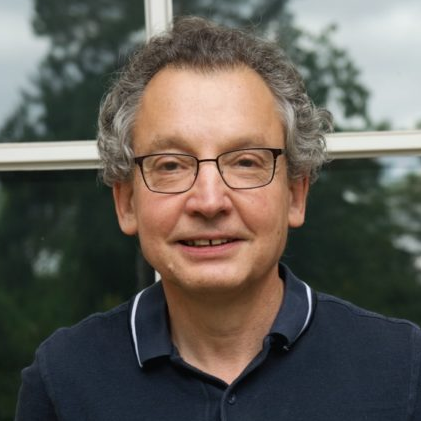
David DyzenhausGuest
Ghazaleh YoushaniHostHello, everyone, and welcome to this episode of the Talking Heads podcast with me, your host, Yasli Yashani.
Thank you so much as ever for all your support, for your wonderful comments and feedback.
If you enjoy what you hear, please do follow us on Instagram at thetalkingheads underscore podcast.
You can also find the Talking Heads podcast wherever you listen to your favorite podcasts.
So do follow or subscribe on your preferred platform so you don't miss future episodes.
The rule of law, democracy, Justice? The idea that those who exercise political power are ultimately constrained by something beyond themselves.
But what happens when the language of law itself begins to change? When arguments that appear to be about constitutional principle, sovereignty, or even the common good, begin to challenge the very institutions designed to place limits on political power? And perhaps even more unsettlingly, what happens when those ideas don't arrive announcing themselves as authoritarian? Instead, they arrive through lawyers, academics, politicians and institutions that speak the language of legality, democracy and constitutionalism.
And they are questions that feel particularly urgent at a moment when across established democracies, we're seeing growing tensions around immigration, executive power, human rights, international law, and the role of the courts.
To really understand these questions, we need to look backwards as well as forwards to the intellectual traditions that have shaped our understanding of law and political authority.
Perhaps to the final years of the Weimar Republic, to thinkers such as Carl Schmitt, and to the lived experience of societies where law has been used not simply to protect people, but also to legitimize profound injustice.
And that brings me to today's guest, because these questions aren't merely academic for him.
David Dyson House grew up and studied law in apartheid South Africa and is one of the world's foremost thinkers on constitutional law, legal philosophy, and the rule of law, an experience that has profoundly informed his thinking about legality, legitimacy, and the rule of law.
He has spent a remarkable career examining what happens when legal systems confront authoritarian power and asking perhaps one of the most fundamental questions in legal philosophy.
David is a university professor and the Albert Abel Professor of Law and Philosophy at the University of Toronto.
He is a fellow of the Royal Society of Canada, a corresponding fellow of British Academy and the recipient of some of Canada's highest academic honours.
including the 2023 Social Sciences and Humanities Research Council Gold Medal, the 2025 Killam Prize in Social Sciences and an honorary doctorate from the University of the Witt-Walterstrand.
His distinguished career has taken him to leading universities across five continents, where his scholarship has shaped global debates on democracy, constitutionalism and the limits of state power.
Over several decades, Professor Dyson House has become one of the most influential voices examining how legal systems respond to crises, authoritarianism, and political upheaval.
His landmark books, including Hard Cases in Wicked Legal Systems, Legality and Legitimacy, The Constitution of Law, and The Long Arc of Legality have transformed how scholars, judges, and policymakers think about the relationship between law, and political authority.
Drawing on his own experiences growing up and studying in apartheid South Africa, his work combines rigorous legal philosophy with an unwavering commitment to understanding how law can both enable injustice and serve as its strongest safeguard.
His latest book that I've got right here, The War Against Law and What's Wrong with Common Good Constitutionalism, brought to you by Cambridge University Press, which is out now, arrives at a moment when constitutional democracy is facing profound challenges around the world.
In this groundbreaking book, David investigates the ideology of this group, contending that their true aim is to establish rule by an illiberal executive under the guise of benefiting the common good.
David makes a powerful argument that this is a fundamentally illiberal ideology with roots in authoritarian thought from the 1930s, one which threatens to take a wrecking ball to the rule of law and democracy.
The debates both before and after the Act make concrete, profound questions about the nature of the rule of law and its role in a liberal democracy.
So today we're going to explore where the ideas come from, why they have gained traction, what they might mean for the rule of law, and perhaps most importantly, how can we recognize the direction we're traveling in before it's too late? David, a huge warm welcome to the Talking Heads podcast.
Read the full transcript.
Create an account to read the whole episode, search across every transcript, and follow the shows you care about.
Hello, everyone, and welcome to this episode of the Talking Heads podcast with me, your host, Yasli Yashani.
Thank you so much as ever for all your support, for your wonderful comments and feedback.
If you enjoy what you hear, please do follow us on Instagram at thetalkingheads underscore podcast.
You can also find the Talking Heads podcast wherever you listen to your favorite podcasts.
So do follow or subscribe on your preferred platform so you don't miss future episodes.
The rule of law, democracy, Justice? The idea that those who exercise political power are ultimately constrained by something beyond themselves.
But what happens when the language of law itself begins to change? When arguments that appear to be about constitutional principle, sovereignty, or even the common good, begin to challenge the very institutions designed to place limits on political power? And perhaps even more unsettlingly, what happens when those ideas don't arrive announcing themselves as authoritarian? Instead, they arrive through lawyers, academics, politicians and institutions that speak the language of legality, democracy and constitutionalism.
And they are questions that feel particularly urgent at a moment when across established democracies, we're seeing growing tensions around immigration, executive power, human rights, international law, and the role of the courts.
To really understand these questions, we need to look backwards as well as forwards to the intellectual traditions that have shaped our understanding of law and political authority.
Perhaps to the final years of the Weimar Republic, to thinkers such as Carl Schmitt, and to the lived experience of societies where law has been used not simply to protect people, but also to legitimize profound injustice.
And that brings me to today's guest, because these questions aren't merely academic for him.
David Dyson House grew up and studied law in apartheid South Africa and is one of the world's foremost thinkers on constitutional law, legal philosophy, and the rule of law, an experience that has profoundly informed his thinking about legality, legitimacy, and the rule of law.
He has spent a remarkable career examining what happens when legal systems confront authoritarian power and asking perhaps one of the most fundamental questions in legal philosophy.
David is a university professor and the Albert Abel Professor of Law and Philosophy at the University of Toronto.
He is a fellow of the Royal Society of Canada, a corresponding fellow of British Academy and the recipient of some of Canada's highest academic honours.
including the 2023 Social Sciences and Humanities Research Council Gold Medal, the 2025 Killam Prize in Social Sciences and an honorary doctorate from the University of the Witt-Walterstrand.
His distinguished career has taken him to leading universities across five continents, where his scholarship has shaped global debates on democracy, constitutionalism and the limits of state power.
Over several decades, Professor Dyson House has become one of the most influential voices examining how legal systems respond to crises, authoritarianism, and political upheaval.
His landmark books, including Hard Cases in Wicked Legal Systems, Legality and Legitimacy, The Constitution of Law, and The Long Arc of Legality have transformed how scholars, judges, and policymakers think about the relationship between law, and political authority.
Drawing on his own experiences growing up and studying in apartheid South Africa, his work combines rigorous legal philosophy with an unwavering commitment to understanding how law can both enable injustice and serve as its strongest safeguard.
His latest book that I've got right here, The War Against Law and What's Wrong with Common Good Constitutionalism, brought to you by Cambridge University Press, which is out now, arrives at a moment when constitutional democracy is facing profound challenges around the world.
In this groundbreaking book, David investigates the ideology of this group, contending that their true aim is to establish rule by an illiberal executive under the guise of benefiting the common good.
David makes a powerful argument that this is a fundamentally illiberal ideology with roots in authoritarian thought from the 1930s, one which threatens to take a wrecking ball to the rule of law and democracy.
The debates both before and after the Act make concrete, profound questions about the nature of the rule of law and its role in a liberal democracy.
So today we're going to explore where the ideas come from, why they have gained traction, what they might mean for the rule of law, and perhaps most importantly, how can we recognize the direction we're traveling in before it's too late? David, a huge warm welcome to the Talking Heads podcast.