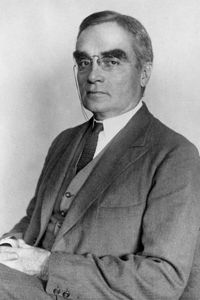
Learned Hand
American jurist and lawyerWikipedia
24
MENTIONS
14
EPISODES
12
PODCASTS
Search complete. 24 mentions across 14 episodes found for "Learned Hand".
Nov 1, 2026

Jaron LanierGUEST
There's a bunch of other issues with it.
Jaron LanierGUEST
Now, how do you define privacy? Well, there's a famous definition in the U.S., and I've heard—I need to research who this is, but I think it was somebody named Learned Hand, but it might have been somebody else.
Jaron LanierGUEST
But the definition was— I don't remember the exact initial wording, but it's the freedom from manipulation and the right to be left alone, approximately.
Jaron LanierGUEST
And I think that's where we need to go in the future, and the GDPR doesn't do that.

Ethan SamuelsGUEST
The fact that we're in a country where you have the opportunity to choose what you want done with yourself and what you want done with your life and maybe even how much exposure you have to taxes.
Ethan SamuelsGUEST
And Learned Hand used to say very well that in America, there are always two tax codes, one for the informed and one for the uninformed, both of which are 100% legal.
Theresa CarpenterHOST
So true.
Theresa CarpenterHOST
So true.

speaker_2HOST
Justice Elena Kagan wrote the majority opinion for the court, and she goes deep into legal history.
speaker_2HOST
She traces the law all the way back to an incredibly famous opinion by Judge Learned Hand in a case called Peony.
speaker_2HOST
Judge Hand laid down the golden rule.
speaker_2HOST
To be an accomplice, you must associate yourself with the venture and participate in it as something you actively wish to bring about.
speaker_2HOST
Based on that, Kagan rules that for a 924C accomplice conviction, The government cannot just prove you wanted to sell drugs.
20 MINS LATER
speaker_4NARRATOR
This perfectly illustrates the difference between mere knowledge, which might suffice for serious felonies in a very small minority of jurisdictions, and true purposeful facilitation, which is the strict majority rule.
speaker_4NARRATOR
Knowing a crime will happen is just not the same as staking a claim in its success.
speaker_4NARRATOR
This foundational quote from Judge Learned Hand really nails it, firmly establishing this purposeful mental state.

Eric LiuGUEST
that that's okay, that that is actually the work that all of us have to do to recognize simultaneously what it means to be able to have, whether it's a partisan or an ideological or a faith-infused idea of the right way to do things and the wrong way to do things on the one hand, and on the other hand, to have an intellectual and moral, sufficient intellectual and moral humility in a pluralistic society to know that there's so much you don't know that you don't know.
Eric LiuGUEST
And that the beginning of durable self-government is, well, let me quote the federal judge Learned Hand, who said the following at a naturalization ceremony in Central Park in 1947, a couple of years after we'd won World War II, but already new habits of righteous certitude were setting in that would that would blossom during the McCarthy years and kind of fear and paranoia.
Eric LiuGUEST
And what Learned Hand said to these new Americans attaining U.S. citizenship, as well as to all the other Americans who had just had the dumb luck to be born here and had not reflected much on the content of their citizenship, what he said to them was that the true spirit of liberty is the spirit that is not too sure it is right.
Eric LiuGUEST
And I think that is one of the most important things to remember in all times, but especially in a time like this, when you have a demonstrably wrong, bad president who is breaking so many norms and bending so many laws in ways that offend, again, both some of your colleagues at AI and some of my former colleagues, you know, in Democratic Party.

ChrisHOST
I got a lot of quotes today.
ChrisHOST
This one is from the Honorable Judge Learned Hand.
ChrisHOST
He said, in America, there are two tax systems, one for the informed, one for the uninformed.
ChrisHOST
Both are legal.

Brad MinerNARRATOR
In the midst of reading the essays on threats to the Constitution and the primacy of the right to religious liberty, I began saying to myself, How did we come to deserve a high-ranking government official with such extraordinary character? How is it even possible that this man has attained a seat on the highest court? If we fail at this project, will we have anyone else to blame but ourselves? Conveyed throughout the book is the relentless workload of a contemporary justice.
Brad MinerNARRATOR
Writing on learned hand, Justice Alito yearns for the days when a judge enjoyed the leisure to practice judging as a craft.
Brad MinerNARRATOR
If learned hand's opinion writing is akin to producing a custom-made garment, the judges who sign off on 50 opinions per day are more like factory managers.
Brad MinerNARRATOR
A striking humility about the role of a judge is also evident throughout this book.
Brad MinerNARRATOR
Again and again, Justice Alito insists that he isn't a philosopher.

Scott ReischHOST
How about a legal quote? Quote, the spirit of liberty is the spirit which is not too sure that it is right.
Scott ReischHOST
End quote.
Scott ReischHOST
Judge Learned Hands points to really about humility.
Scott ReischHOST
The justice systems gives judges, prosecutors, police, and juries enormous power.
Scott ReischHOST
But justice works best when the people exercise that power remain capable of asking one very important question.

Stephen BreyerGUEST
So I'm delighted he did not say money isn't speech.
Stephen BreyerGUEST
And the other thing which is interesting to me is that Ronnie Dworkin, who is a very good philosophy of law professor, told me one time when he clerked for Learned Hand, he's
Andy LipkaHOST
a trial judge,
Stephen BreyerGUEST
and he told me once, the only people who know any law are trial judges and trial lawyers.
Stephen BreyerGUEST
Because I'm not, he is.
Stephen BreyerGUEST
The other argument that Ronnie Dworkin repeated was what a great judge, Learned Hand, told him.
Stephen BreyerGUEST
He said, do not get into the...
Stephen BreyerGUEST
Oh, jeez.
speaker_3HOST
We call it the calculus of reasonableness or the Hand formula.
speaker_3HOST
It was articulated by a legendary federal judge named Learned Hand in a 1947 admiralty case called United States v. Carroll Towing Co.
speaker_2HOST
I have to admit, Learned Hand sounds like a name from a fantasy novel, not a federal judge.
speaker_3HOST
He is one of the most influential American jurists never to sit on the Supreme Court, and his formula changed tort law forever.
speaker_2HOST
Okay, set the scene.
23 MINS LATER
speaker_2HOST
If an individual store can't hide behind we didn't know, what happens when an entire industry tries to hide behind the defense of, well, nobody else does it either? Can an entire profession just collectively decide to lower the standard of care to save money?
speaker_3HOST
You are hitting on the tension between industry custom and the legal standard of care.
speaker_3HOST
Can a defendant say, "I acted reasonably because I did exactly what all my competitors do"? To answer this, we have to return to Judge Learned Hand.
speaker_2HOST
I mean, how do we give a jury a practical framework to figure out what this phantom reasonably prudent person would actually do?
speaker_3HOST
This is where we bring in the calculus of risk, and to understand this, you must know about Judge Learned Hand and his famous opinion in the federal case of United States v. Carroll Towing.
speaker_2HOST
Ah, the Hand formula.
speaker_3HOST
Yes.
1 HR 10 MINS LATER
speaker_2HOST
It has exactly two choices programmed into its logic matrix.
speaker_2HOST
It can either swerve left into a crowd of five pedestrians on the sidewalk, or it can swerve right into a solid concrete wall, definitely killing its own passenger to save the crowd.
speaker_6NARRATOR
How does Judge Learned Hand's formula B is less than PL apply to a machine making a moral choice? Does a machine owe a legal duty of self-sacrifice? Does the corporate manufacturer owe a duty to program the car to prioritize the lives of strangers over the life of the consumer who bought it? And finally, who exactly is the reasonable person when the person evaluating the risk is a black box containing millions of lines of machine learning code?
speaker_2HOST
We leave you to ponder how traditional centuries-old tort law, built on hay racks, dropped fireworks, and reasonable humans, will stretch, bend, or perhaps shatter to accommodate the cold algorithmic future of artificial intelligence.
4 more episodes mention Learned Hand.
Create an account to see the whole feed, search across every transcript, and follow the entities you care about.