The Quantum Based Podcast - With Dr Sara Pugh
#32 - Is Modern Lighting Disrupting Your Metabolism? Mitochondria & Photometabolism With Prof Bob Fosbury
Aug 17, 2026 · 1 hr 56 min · 15 segments
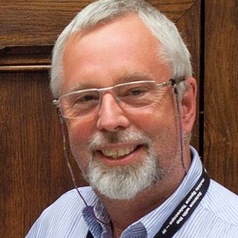
Astrophysicist Professor Bob Fosbury joins Dr Sara Pugh to explain photometabolism — the role of light, and especially near-infrared, in mitochondrial health, diabetes, obesity and ageing. We look at…
Astrophysicist Professor Bob Fosbury joins Dr Sara Pugh to explain photometabolism — the role of light, and especially near-infrared, in mitochondrial health, diabetes, obesity and ageing. We look at how modern lighting starves us of the infrared our mitochondria evolved to expect, why white LEDs are not the neutral choice they appear to be, and what incandescent bulbs, red light, sunlight, cold exposure and forest bathing actually do at the level of the electron transport chain. Bob takes us through water vibrations as an intermediary in electron transport and gives practical, actionable lifestyle suggestions. Metabolism in the Solar Photon Field — paper by Bob Fosbury, Glen Jeffery, Scott Zimmerman & Roger Seheult 📰👉 https://www.biorxiv.org/content/10.64898/2026.08.11.744135v1 Substack post 'Why Food Is Only The Beginning of Metabolism: Store Fat Or Use It?' 📰👉 https://drsarapugh.substack.com/p/why-food-is-only-the-beginning-of-d86 Retreats In France 2026 — Learn More & Download The Brochures 👇👇 https://busysuperhuman.com/retreats-events/ To book on a retreat or ask questions, book a 30 min Zoom call 👉 https://calendly.com/sara-pugh/enquiry-call-to-retreat Sponsored by Litewater Scientific Deuterium Depleted Water, Deuterium tests, Hydrogen Water Bottles, Quinton Minerals, Hydrogen Tablets Click The Link Below For 10 %OFF https://bit.ly/4aN9zdI Or Use Code: DRSARA https://www.drinklitewater.com/ New Content 🌞 Quantum Starter Kit - 50 Slides - 5 Videos 👇👇👇 https://courses.busysuperhuman.com/the-quantum-starter-kit 🍚 Light, Water, Charge & Sugar eBook - Prevent Insulin Resistance. Download the FREE 20 page PDF 👉 https://get.busysuperhuman.com/quantum-glucose ⚡☀ NEW - FREE Quantum Kickstart 2026 Edition 💦 👉 https://get.busysuperhuman.com/quantum-2026 FREE 10 Step Quantum Kickstart Guide 2025 https://get.busysuperhuman.com/10-step-quantum FREE Leptin 'The Master Hormone' Mini e-Book https://get.busysuperhuman.com/leptin-intro-1 FREE Tiny But Concise Guide To Fasting https://get.busysuperhuman.com/fasting Monthly Coaching Group $29 / month https://get.busysuperhuman.com/quantum-coaching63490130 Axiom Premium Molecular Hydrogen Machines & Hydrogen Tablets — Use Code DRSARA For 10% Off (Up to $500, depending on product) https://axiomh2.com/ref/10/ Quantum Foundations Course + Food & Deuterium Guide WINTER OFFER https://get.busysuperhuman.com/quantum-foundations-1 Dr Sara's Substack https://drsarapugh.substack.com/ Quantum Based Podcast https://sarapugh.podbean.com/ Takeaways Modern indoor lighting cuts off the near-infrared our mitochondria evolved to expect — an infrared starvation with metabolic consequences. Infrared light acts as a lubricant for the mitochondrial engine rather than as a fuel. Water vibrations work as an intermediary in electron transport, and Marcus theory explains the barrier crossing involved. Gentle, broad-spectrum infrared — incandescent bulbs, firelight, sunlight through leaves — matters more than intensity. Natural environments, forest bathing and cold exposure act on the same metabolic machinery as light does. Chapters 00:00 Introduction to Bob Fosbury and his background 06:06 Fosbury's career in astrophysics and space telescopes 11:23 Transition from astrophysics to biology and interdisciplinary work 19:54 The impact of indoor lighting on health and aging 28:00 Infrared light deficiency in modern environments 33:22 The effects of white LEDs and infrared starvation 41:20 Metabolic failures linked to light environment 49:26 Water vibrations and their role in mitochondrial function 01:00:52 The importance of gentle, broad-spectrum infrared light 01:23:33 The analogy of oiling the mitochondrial engine 01:28:53 Schrödinger's barrier and its relevance to biology 01:51:14 Marcus theory and electron transfer in mitochondria 02:02:16 Water as an intermediary in electron transport 02:18:28 Longevity and the role of infrared light in aging Sound bites "White LEDs make us sick by cutting off infrared light" "Infrared light lubricates the mitochondrial engine" "Schrödinger's barrier is the guardian of homeostasis" MY LINKTREE: https://zez.am/busysuperhuman INSTAGRAM: https://www.instagram.com/busy\_superhuman/ SUBSTACK: https://drsarapugh.substack.com/ YOUTUBE: www.youtube.com/@Thebusysuperhuman LINKEDIN: https://www.linkedin.com/in/sara-pugh-/ TIKTOK: https://www.tiktok.com/@busysuperhuman WEBSITE: www.busysuperhuman.com DISCLAIMER: This podcast is for entertainment purposes only and does not constitute medical advice. Please consult your healthcare provider before making any medical decisions. Views expressed by guests are their own and do not necessarily reflect those of the host.
Astrophysicist Professor Bob Fosbury joins Dr Sara Pugh to explain photometabolism — the role of light, and especially near-infrared, in mitochondrial health, diabetes, obesity and ageing. We look at…
- Show signals
- Audience≈107k followers