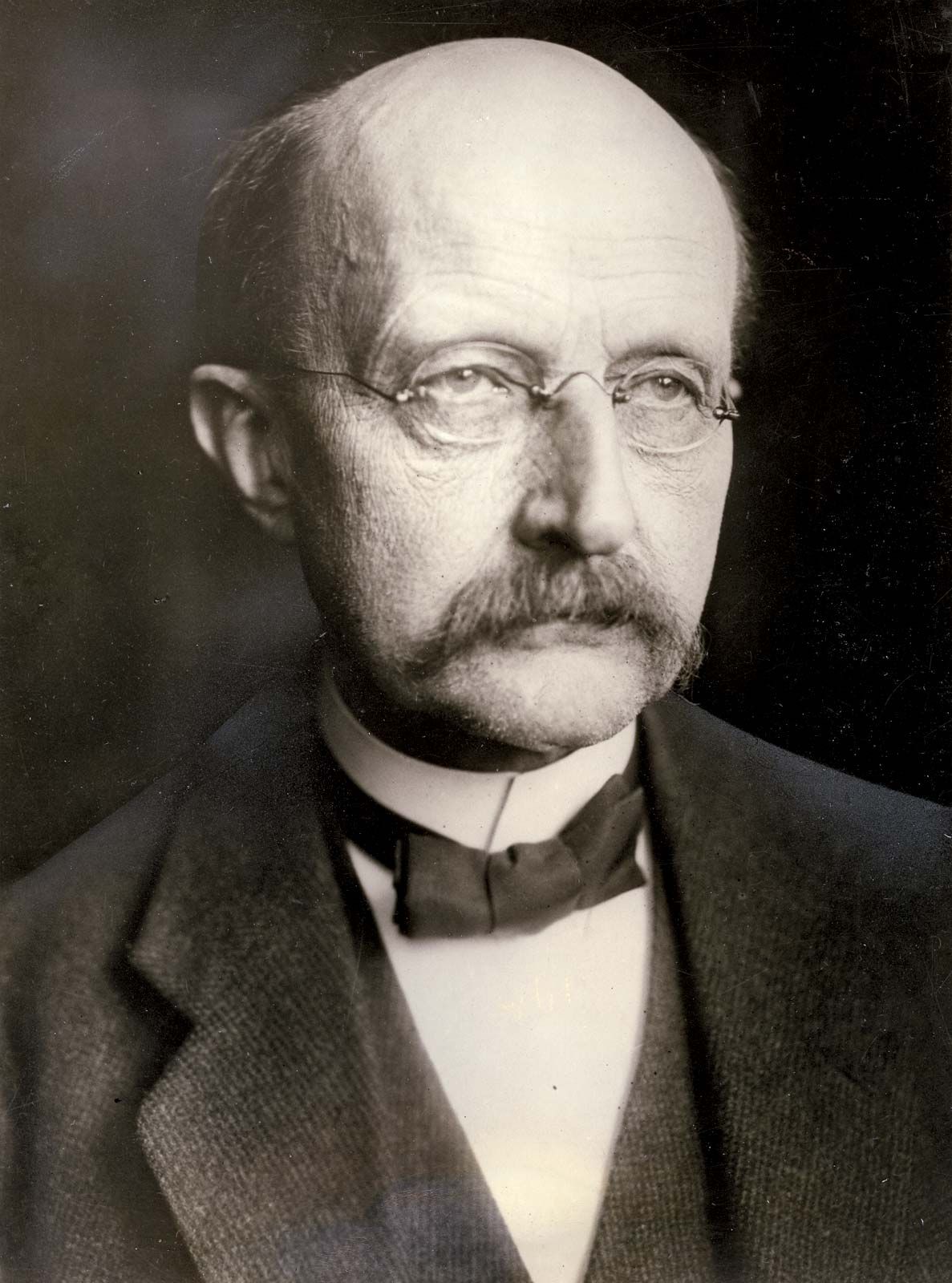
Max Planck
German theoretical physicistWikipedia
602
MENTIONS
222
EPISODES
94
PODCASTS
Search complete. 602 mentions across 222 episodes found for "Max Planck".
Nov 22, 2026

Ed SpinaGUEST
Um, but you know, he's mostly helping humans and he wants, I went to one, a lecture once he gave and he told me something that was very helpful to me with my scientific mind.
Ed SpinaGUEST
He was saying, Oh, your scientists don't understand this yet, but there's such a thing as a, a plank second or a plank distance that, uh, That's where everything changes, where the universe is renewed every Planck second.
Ed SpinaGUEST
So I had to look it up.
Ed SpinaGUEST
Planck is a constant number, and a Planck distance is the distance.
Ed SpinaGUEST
It's in the Heisenberg uncertainty principle.
Ed SpinaGUEST
You can't measure anything lower or smaller than that distance.
Ed SpinaGUEST
And a Planck second is the time it takes, or a time unit is the time it takes for the speed of light to travel across that infinitesimally small It's 10 to the minus 34th meters, and it's 10 to the minus 44th seconds.
Ed SpinaGUEST
So every 10 to the minus 44th second, the entire universe is renewed.

Dave FarinaHOST
Here we'll use the first one.
Dave FarinaHOST
We also need to know that E equals HV, or the energy of a photon is equal to Planck's constant times nu, which we often just write as V, and that's equal to the frequency.
Dave FarinaHOST
And we also need to know that C equals lambda nu, or the speed of light equals the wavelength of a photon times the frequency of the photon.
Dave FarinaHOST
So this is all the information we need.
Dave FarinaHOST
So a photon of some energy struck the electron, the electron absorbed that energy, and then jumped up to a higher energy level.
Dave FarinaHOST
So now that we know the energy of the photon, we wanna get wavelength.
Dave FarinaHOST
So we know that energy equals Planck's constant times frequency, And we also know that the speed of light equals wavelength times frequency.
Dave FarinaHOST
So we want wavelength.

speaker_7NARRATOR
Let's start with the really small powers of 10.
speaker_7NARRATOR
At 10 to the negative 35 meters, we come to what is known as the Planck length.
speaker_7NARRATOR
Planck length is the smallest measurable distance in the entire universe.
speaker_7NARRATOR
much like at the center of a black hole at a scale this tiny
AsmongoldHOST
the laws of physics that's as long as the dicks of the people that complain about me on twitter break down and cease to be valid the amount
12 MINS LATER
speaker_7NARRATOR
It's an invisible wall? It only took us 27 steps.
speaker_7NARRATOR
27 orders of magnitude.
speaker_7NARRATOR
But in order to travel to the tiniest limits known to man, at the Planck length, we have to take 35 steps backwards from the human level.

Steve SkinnerGUEST
But, you know, it's just not true.
Steve SkinnerGUEST
And one of my favorite quotes was from Max Planck, the physicist who came up with the quantum theory.
Steve SkinnerGUEST
And he basically said science advances one funeral at a time that the scientific truth doesn't come about by persuading people.
Steve SkinnerGUEST
It comes about by the opponents dying off.
Ed SpinaGUEST
And I went to a lecture once he gave, and he told me something that was very helpful to me with my scientific mind.
Ed SpinaGUEST
He was saying, your scientists don't understand this yet, but there's such a thing as a Planck second or a Planck distance that that's where everything changes, where the universe is renewed every Planck second.
Ed SpinaGUEST
So I had to look it up.
Ed SpinaGUEST
Planck is a constant number, and a Planck distance is the distance.
Ed SpinaGUEST
It's in the Heisenberg uncertainty principle.
Ed SpinaGUEST
You can't measure anything lower or smaller than that distance.
Ed SpinaGUEST
And a Planck second is the time it takes, or a time unit is the time it takes for the speed of light to travel across that infinitesimally small distance.
Ed SpinaGUEST
It's 10 to the minus 34th meters, and it's 10 to the minus 44th seconds.
Ed SpinaGUEST
And I went to one lecture once he gave, and he told me something that was very helpful to me with my scientific mind.
Ed SpinaGUEST
He was saying, your scientists don't understand this yet, but there's such a thing as a Planck second or a Planck distance that that's where everything changes, where the universe is renewed every Planck second.
Ed SpinaGUEST
So I had to look it up.
Ed SpinaGUEST
Planck is a constant number, and a Planck distance is the distance in the Heisenberg Uncertainty Principle You can't measure anything lower or smaller than that distance.
Ed SpinaGUEST
And a Planck second is the time it takes, or a time unit is the time it takes for the speed of light to travel across that infinitesimally small distance.
Ed SpinaGUEST
It's 10 to the minus 34th meters, and it's 10 to the minus 44th seconds.
Ed SpinaGUEST
So every 10 to the minus 44th second, the entire universe is renewed.

P. J. E. PeeblesGUEST
There is a characteristic signature, however.
P. J. E. PeeblesGUEST
This radiation began as thermal radiation, which has a very distinct spectrum, sometimes talked about a Planck spectrum.
P. J. E. PeeblesGUEST
You tell me the temperature, And remember, the astronomers had a temperature of a few degrees above absolute zero, a few Kelvin.
P. J. E. PeeblesGUEST
I'll tell you the intensity of each wavelength.

Antonin FeoriHOST
Have a look at Niels Bohr, Werner Heisenberg, Erwin Schrodinger.
Antonin FeoriHOST
Have a look at Hendrick Lawrence, Walter Kaufman, Max Planck.
Antonin FeoriHOST
A Frenchman, maybe you can help me with his name, the pronunciation of his last name.
Antonin FeoriHOST
Henri Poincaré, thank you.
1 HR LATER
Antonin FeoriHOST
we've
Antonin FeoriHOST
talked about how During the era of Nazi Germany, especially it was a period from around 1910 leading on forward, there were a tremendous number of brilliant scientists in and about Germany itself.
Antonin FeoriHOST
And many of them have become common names, you know, the Plancks, the Boers, etc.
Antonin FeoriHOST
And yet some, I think they were just as brilliant, just as gifted, and yet their talents probably went under the radar quite largely by way of, hey, today's favorite words for our U.S. leadership to use, national security.

Brownell LandrumGUEST
And maybe more spiritual, not religious people, but kind of all of us can kind of come together.
Brownell LandrumGUEST
So, you know, you probably know that quote from Max Planck, you know, the founder of quantum physics.
Brownell LandrumGUEST
He's like, the more we can bring science and religion together, you know, there's no opposition.
Brownell LandrumGUEST
We just need to bring them together kind of thing.

speaker_4NARRATOR
Roger Penrose has pointed out that the probability of the cosmos starting out with such low entropy, and thus such high order, is statistically off the charts improbable.
speaker_4NARRATOR
Many cosmologists admit that if even one physical constant, gravity, Planck's constant, or the speed of light, were slightly different, the universe couldn't support stars, stable atoms, or ultimately life.
speaker_4NARRATOR
To some, this precision implies an intentional cosmic design.
speaker_4NARRATOR
To others, it may just be one possibility among countless universes, as suggested by the multiverse hypothesis.
212 more episodes mention Max Planck.
Create an account to see the whole feed, search across every transcript, and follow the entities you care about.