Deuterium

Deuterium

IsotopeWikipedia

Search complete. 10 mentions across 9 episodes found for "Deuterium".

Sep 26, 2026

StephenHOST
5:01
So we'll park that one.
StephenHOST
5:02
Deuterium is the star of today's show.
StephenHOST
5:05
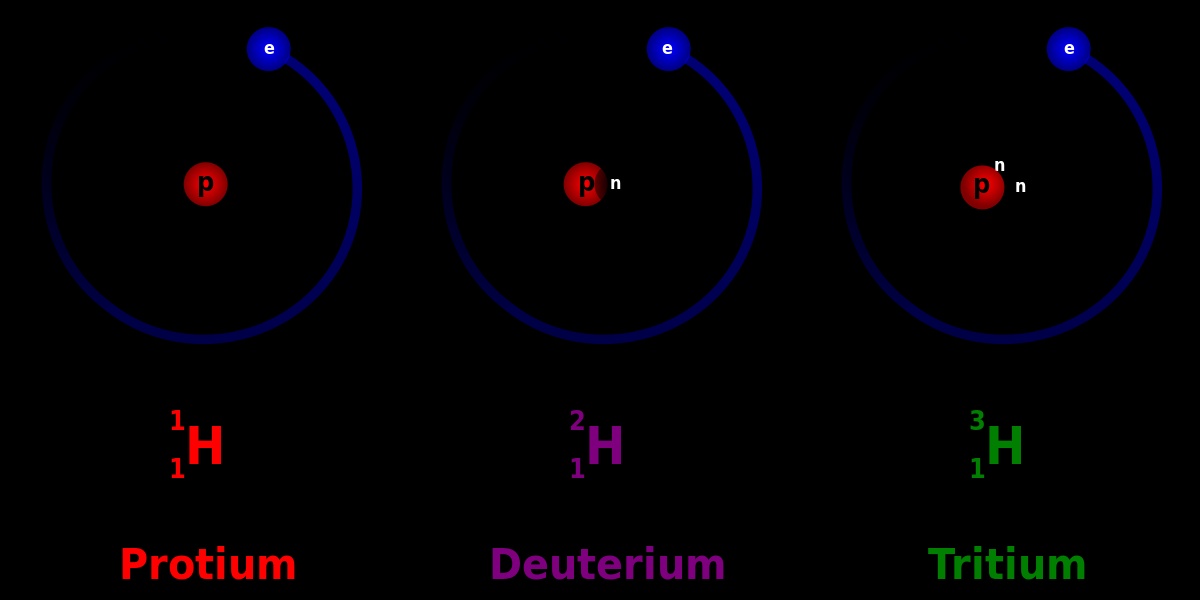
So what is deuterium? It's hydrogen with a neutron, just one neutron sitting alongside the proton in the nucleus.
StephenHOST
5:14
Now, that might sound trivial, but because a neutron weighs roughly the same as a proton, that single neutron doubles the weight of the atom.
David KippingHOST
19:08
The atmosphere contains further clues about Venus' past too.
David KippingHOST
19:12
Precise measurements by the Venera and Vega probes, and especially NASA's Pioneer orbiter, reveal the peculiar observation that the Venusian atmosphere appears heavily enriched in deuterium.
David KippingHOST
19:25
Deuterium is a heavier isotope of hydrogen, so you find it in anything containing hydrogen, most notably within water, H2O.
David KippingHOST
19:35
On Earth, deuterium is pretty rare.
David KippingHOST
19:36
Only 3 out of every 20,000 hydrogen atoms are deuterium.
MikeHOST
9:44
So let me break this down simply.
MikeHOST
9:46
Deuterium is a heavy, what's called an isotope of hydrogen.
MikeHOST
9:50
It's naturally present within water and within food and in small amounts is perfectly fine.
MikeHOST
9:57
But when it accumulates inside of your cells, specifically in the mitochondria, It acts like mud that kind of mucks up the system.
speaker_2HOST
16:06
If we connect this to the bigger picture of how metabolic therapies function, the paradox resolves into pure biological logic.
speaker_2HOST
16:13
Deuterium depletion works precisely by inducing selective metabolic stress.
speaker_1HOST
16:18
Okay, so altering the kinetic isotope effect generates reactive oxygen species, or free radicals, inside the cells.
speaker_2HOST
16:26
Exactly.
Brian ScottHOST
33:45
His chart carried the position where no element existed, and he filled them anyway, describing what belonged there.
Brian ScottHOST
33:52
Deuterium, tritium, neptunium, plutonium, two isotopes of hydrogen and two transuranic elements.
Brian ScottHOST
34:02
Positioned in a chart copyrighted in 1926, none of them yet isolated by any laboratory on Earth.
Brian ScottHOST
34:11
Deuterium arrived in 1931.
Brian ScottHOST
34:14
Tritium followed.
Brian ScottHOST
34:15
Neptunium and Plutonium followed at the start of the 1940s.

Unknown podcast

The Terrifying Truth About How Cold Space Really Is

Sep 5 · 1 Mention

speaker_2NARRATOR
36:45
Hydrogen nuclei form naturally since they are just individual protons.
speaker_2NARRATOR
36:50
Deuterium appeared when protons and neutrons stuck together.
speaker_2NARRATOR
36:54
Helium nuclei assembled from pairs of protons and pairs of neutrons.
speaker_2NARRATOR
36:58
Tiny amounts of lithium emerged from slightly more complex reactions.

Unknown podcast

Venus_ The Deadliest Planet We Know

Sep 5 · 1 Mention

speaker_4NARRATOR
70:47
Evidence for this ancient water loss persists in Venus's atmosphere today.
speaker_4NARRATOR
70:51
The ratio of deuterium to ordinary hydrogen in Venus's atmosphere is approximately 100 to 150 times higher than the same ratio on Earth.
speaker_4NARRATOR
71:00
Deuterium is a heavier isotope of hydrogen, containing one proton and one neutron instead of just one proton.
speaker_4NARRATOR
71:08
Because it is heavier, deuterium escapes to space more slowly than ordinary hydrogen.
speaker_4NARRATOR
71:14
Over billions of years of atmospheric loss, the lighter hydrogen was preferentially stripped away, leaving the atmosphere enriched in the heavier deuterium.

Unknown podcast

Space Is Dark For a Reason... And It_s Terrifying

Aug 31 · 1 Mention

speaker_3NARRATOR
40:23
protons and neutrons began combining into the lightest atomic nuclei.
speaker_3NARRATOR
40:28
Deuterium formed first, a nucleus containing one proton and one neutron, then helium-3, then helium-4, then trace amounts of lithium-7.
speaker_3NARRATOR
40:38
This process, called primordial nucleosynthesis, lasted only a few minutes before the expanding universe cooled below the temperature required to sustain fusion.
speaker_3NARRATOR
40:49
The window closed, the nuclear reactions stopped and the ratio of hydrogen to helium produced in those three minutes roughly 75 hydrogen and 25 helium by mass was locked in permanently this prediction is one of the most powerful confirmations of the big bang model when astronomers measure the chemical composition of the oldest most pristine gas clouds in the universe clouds that have never been enriched by stellar nucleosynthesis, they find exactly the ratio the Big Bang predicts.

Unknown podcast

Venus_ The Deadliest Planet We Know

Aug 31 · 1 Mention

speaker_1NARRATOR
63:15
Evidence for this ancient water loss persists in Venus's atmosphere today.
speaker_1NARRATOR
63:19
The ratio of deuterium to ordinary hydrogen in Venus's atmosphere is approximately 100 to 150 times higher than the same ratio on Earth.
speaker_1NARRATOR
63:28
Deuterium is a heavier isotope of hydrogen, containing one proton and one neutron instead of just one proton.
speaker_1NARRATOR
63:36
Because it is heavier, deuterium escapes to space more slowly than ordinary hydrogen.
speaker_1NARRATOR
63:41
Over billions of years of atmospheric loss, the lighter hydrogen was preferentially stripped away, leaving the atmosphere enriched in the heavier deuterium.

We value your privacy

We use cookies to understand how you use our platform and to improve your experience. Click “Accept All” to consent, or “Decline non-essential” to opt out of non-essential cookies. Read our Privacy Policy.