
From lead paint to DNA tests: surprising discoveries from America’s national parks
Oct 23, 2026 · 49 min · 12 segments
In this episode, Kate and Aaron talk to Robert Lull, author of the book…
- Show signals
- Audience≈6k followers
Oct 23, 2026 · 49 min · 12 segments
In this episode, Kate and Aaron talk to Robert Lull, author of the book…
 Kate GroetzingerHost
Well, on our last episode, we told you about Project Beehive, which is that plan to put hundreds of small nuclear reactors and a nuclear waste disposal site on BLM land outside of Price, Utah to power a massive data center complex.
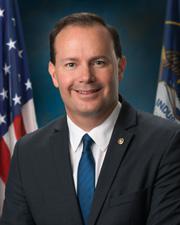
After the election, the Senate plans to take up a bipartisan permitting bill that's sponsored by Mike Lee, Shelley Moore Capito, Martin Heinrich, and Sheldon Whitehouse.
The bottom line from our perspective here is that this bill would be a disaster for public lands.
There are three provisions in here that are a huge problem as it's written right now.
The bill bars agencies from changing any permit in effect on or after September 16th of this year.
unless that agency can meet a clear and convincing evidence standard, which is a far higher bar than agencies normally face.

Right now, as written, if a judge finds an agency botched its environmental review, the court can pause the project, but construction keeps going while the review gets redone, and the agency can't even act on what it finds.
Oh, and anyone who wants to challenge a project just gets 150 days to sue, which may seem like a long time, but it's not.
If a future administration slows down a whole category of projects like gas plants or nuclear fuel facilities, taxpayers would pay developers 50 to 100% of their construction costs if the bill passes as written.
That money comes from a treasury fund that doesn't require a vote of Congress.
So if this bill were to pass, it would give Interior Secretary Doug Burgum over two years to approve as many data centers, nuclear reactors, and drilling permits as he wants on public lands, effectively locking them in for good.
Now, you remember last year, Martin Heinrich, who is a great champion of public lands, said after Mike Lee tried to sell off public lands, Don't, unless you feel like losing.
Senator Heinrich, fellow Democrats, could rework the problematic parts of this bill and wait to pass it until the new Congress comes in.
There is not some great political rush that says this thing has to get done during lame duck.
He says this bill will age very well over time, which I guess is true to the extent that plutonium-239 has a half-life of about 24,000 years.






Well, on our last episode, we told you about Project Beehive, which is that plan to put hundreds of small nuclear reactors and a nuclear waste disposal site on BLM land outside of Price, Utah to power a massive data center complex.
After the election, the Senate plans to take up a bipartisan permitting bill that's sponsored by Mike Lee, Shelley Moore Capito, Martin Heinrich, and Sheldon Whitehouse.
The bottom line from our perspective here is that this bill would be a disaster for public lands.
There are three provisions in here that are a huge problem as it's written right now.
The bill bars agencies from changing any permit in effect on or after September 16th of this year.
unless that agency can meet a clear and convincing evidence standard, which is a far higher bar than agencies normally face.
Right now, as written, if a judge finds an agency botched its environmental review, the court can pause the project, but construction keeps going while the review gets redone, and the agency can't even act on what it finds.
Oh, and anyone who wants to challenge a project just gets 150 days to sue, which may seem like a long time, but it's not.
If a future administration slows down a whole category of projects like gas plants or nuclear fuel facilities, taxpayers would pay developers 50 to 100% of their construction costs if the bill passes as written.
That money comes from a treasury fund that doesn't require a vote of Congress.
So if this bill were to pass, it would give Interior Secretary Doug Burgum over two years to approve as many data centers, nuclear reactors, and drilling permits as he wants on public lands, effectively locking them in for good.
Now, you remember last year, Martin Heinrich, who is a great champion of public lands, said after Mike Lee tried to sell off public lands, Don't, unless you feel like losing.
Senator Heinrich, fellow Democrats, could rework the problematic parts of this bill and wait to pass it until the new Congress comes in.
There is not some great political rush that says this thing has to get done during lame duck.
He says this bill will age very well over time, which I guess is true to the extent that plutonium-239 has a half-life of about 24,000 years.
The rest of this transcript — segmented and speaker-labeled, so you land on the exact moment something was said
Search every transcript — by keyword, by phrase, or by meaning, across every show Radar indexes
Trends — what is surging across podcasts, measured against its own baseline
Alerts — when a name you follow appears in a newly indexed episode
No account is needed to search Radar.