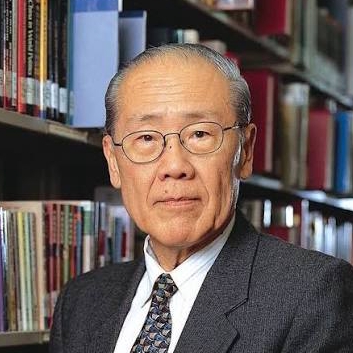
#95- Professor Wang Gungwu : How China and America Emerged As Superpowers
Sep 19, 2026 · 1 hr 32 min · 14 segments
Thank you for checking out The Front Row Podcast and my interview with Professor Wang Gungwu. Wang Gungwu is an internationally renowned historian known for his scholarship on the Chinese diaspora in…
Thank you for checking out The Front Row Podcast and my interview with Professor Wang Gungwu. Wang Gungwu is an internationally renowned historian known for his scholarship on the Chinese diaspora in Southeast Asia, as well as the history and civilisation of China and Southeast Asia. Across his illustrious academic career, Professor Wang has held eminent appointments at institutions around the world. He was Professor of History at the University of Malaya (1963–68), Professor at the Australian National University (1968–86), and Vice-Chancellor of the University of Hong Kong (1986–95). He is currently Professor Emeritus at the Australian National University and University Professor at the National University of Singapore. In this conversation, we explore how geography shaped China and America, why China historically remained a continental rather than maritime power, the differences between Chinese and Western civilisation, modernisation without Westernisation, Huntington's “Clash of Civilizations”, the US-China rivalry, Singapore, identity, and what history can teach us about the world today. TIMESTAMPS 00:00 Trailer 00:45 Introduction 01:39 Why China Never Built a Navy 06:52 Zheng He and the Fleet China Burned 13:06 Why China's Enemies Always Came by Land 15:05 How America Inherited Britain's Oceans 20:48 Is China Still a Civilisation? 31:00 Make America Great, Make China Great 32:24 America's One God vs China's Yellow River 43:25 Why America Preaches Universal Values 46:50 China's Choice: West One or West Two 50:58 Did China Modernise Without Westernising? 54:17 How Marx Gave China the Idea of Progress 59:48 US vs China: Where Huntington Went Wrong 1:05:23 Why China Has No Wish to Run the World 1:07:59 What China Admires About Singapore 1:11:23 Why America Feels a Duty to Convert the World 1:14:33 Being Chinese in Singapore: Multiple Identities 1:22:58 How China and the West Read History Differently 1:31:25 Closing This is Episode 95 of The Front Row Podcast. A huge thank you to our amazing Front Row Friends for supporting and advancing the podcast: @marinama2728 @deborahchoi1455 @annkowong @yewchoutan5876 FULL TRANSCRIPTS https://www.ykeith.com/tag/podcast/ FOLLOW THE FRONT ROW Instagram: https://www.instagram.com/frontrow.65/ LinkedIn: https://www.linkedin.com/in/keith-yap/ Website: https://www.ykeith.com Email: [keith@frontrow65.co](mailto:keith@frontrow65.co) LISTEN & SUBSCRIBE Spotify: https://creators.spotify.com/pod/show/keith-yap8 Apple Podcasts: https://podcasts.apple.com/sg/podcast/front-row/id1771599400
Thank you for checking out The Front Row Podcast and my interview with Professor Wang Gungwu. Wang Gungwu is an internationally renowned historian known for his scholarship on the Chinese diaspora in…