Industrial Revolution

Industrial Revolution

Search complete. 2410 mentions across 1516 episodes found for "Industrial Revolution".

Sep 11, 2026

Kate TurkingtonGUEST
15:31
They said that when the printing press was invented.
Kate TurkingtonGUEST
15:35
They said that at the Industrial Revolution.
Kate TurkingtonGUEST
15:39
They said that, what was it in the year 2000? Y-
Gareth CliffHOST
15:43
The, the-
Tom TateHOST
9:50
Level 5 is finally back with a Layton game.
Tom TateHOST
9:52
It appears to be set at the dawn of the Industrial Age.
Tom TateHOST
9:55
Layton and his companion Luke, they travel to an American town called Steam Bison that's dealing with all sorts of mysteries, and you solve a bunch of puzzles in true Layton fashion, and then you reveal the story along the way.
Tom TateHOST
10:08
Level 5 had one more teaser.
EdenGUEST
7:19
yeah
ZuuHOST
7:20
but I do like history in the industrial revolution I don't know who the person was but they started taking people to the factory
EdenGUEST
7:28
yeah
ZuuHOST
7:29
From a specific time to a specific time.
Alan GoldhamerGUEST
14:41
And in fact, you know, that's the kind of foods that people, modern humans ate for hundreds of thousands of years.
Alan GoldhamerGUEST
14:49
Until more recently, since the Industrial Revolution, we began to change the nature of our food.
Alan GoldhamerGUEST
14:55
So it looked a little bit more like this.
Alan GoldhamerGUEST
14:59
Now I'm going to show you a picture next.
Ones and Tooze

Ones and Tooze

Germany's AFD

Sep 11 · 1 Mention

Adam ToozeHOST
38:25
So from medieval feudal economics to capitalism, which someone like Dobb would locate at the end of the Middle Ages, in the 13th, 14th centuries, where feudalism is beginning to disintegrate, and something like a capitalist regime is unmistakably beginning to emerge in the 1500s, the 14th and 1500s.
Adam ToozeHOST
38:45
Hobsbawm's question is, how did it take so long? Why is it that the Industrial Revolution and fully-fledged capitalism doesn't emerge until the late 18th and 19th centuries, which he'll write a book about in his world-famous Asia Revolution, Capital Age of Empire sequence? which are all about the 19th century.
Adam ToozeHOST
39:04
And the answer he gives in this series of profoundly influential articles from the 1950s.
Adam ToozeHOST
39:10
So in the immediate aftermath of World War II, he's thinking about this in the midst of all of the crises within global politics.
HarryHOST
67:10
No, there was definitely both of them.
HarryHOST
67:13
We had government departments for eugenics because I think at the turn of the 20th century, everybody was in the agreement that, well, we want a healthy population, especially following the Industrial Revolution and everything that came from that.
HarryHOST
67:26
It's like, well, we've got more people than ever.
HarryHOST
67:28
We should probably have some government program of making sure that everybody's healthy.
Isaac HillGUEST
6:57
And that's one of the things with the Plant Cunning podcast is that in all traditional cultures throughout the world, spirituality and magic is part of healing.
Isaac HillGUEST
7:12
And it has been the case in Western cultures until the Industrial Revolution, the scientific enlightenment, all that.
Isaac HillGUEST
7:22
you know, going back basically to the Enlightenment.
Isaac HillGUEST
7:25
But it's still there, you know, it's still there.
speaker_6ADVERTISER
1:14
It feels good to Geico.
Katie GibneyNARRATOR
1:21
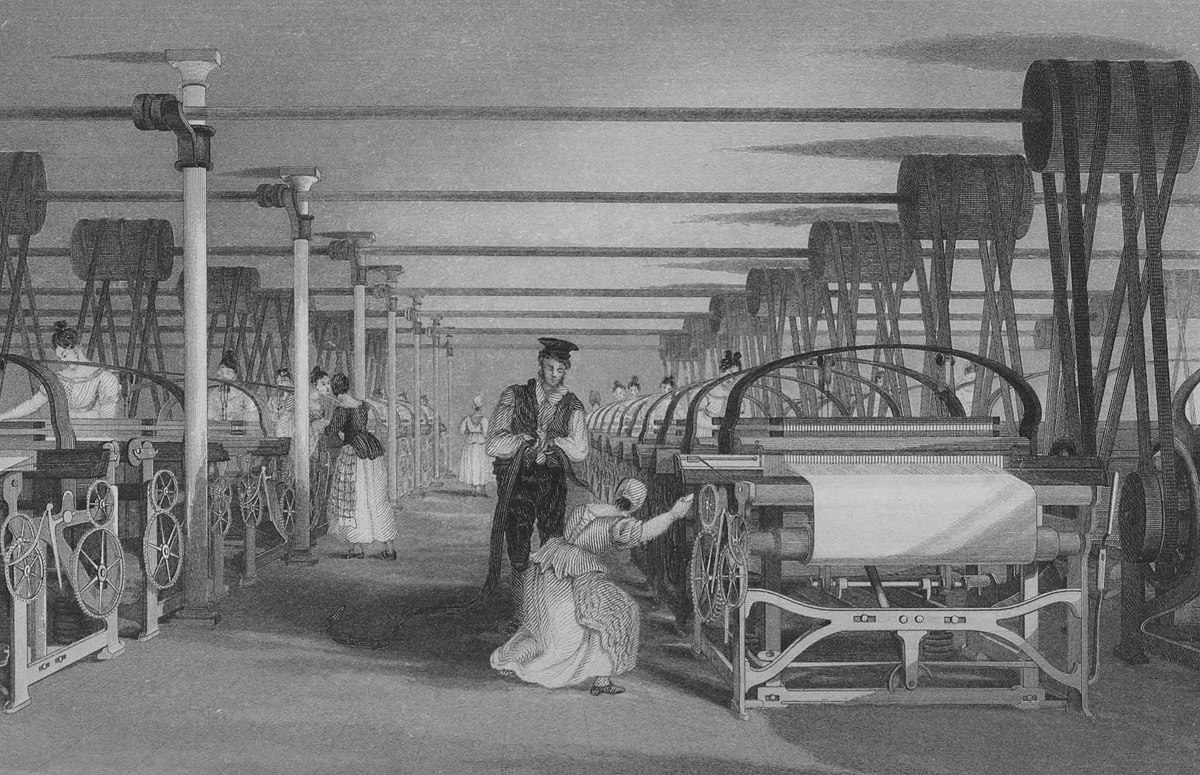
SECTION I. SECTIONAL CONFLICT AND RECONSTRUCTION history of the united states by charles a beard and mary r beard sectional conflict and reconstruction chapter thirteen the rise of the industrial system if jefferson could have lived to see the stars and stripes planted on the pacific ocean the broad empire of texas added to the planting states and the valley of the willamette waving with wheat sown by farmers from new england he would have been more than fortified in his faith that the future of america lay in agriculture even a staunch old federalist like governor morris or josiah quincy would have mournfully conceded both the prophecy and the claim manifest destiny never seemed more clearly written in the stars as the farmers from the northwest and planters from the southwest poured in upon the floor of congress the party of jefferson christened anew by jackson grew stronger year by year opponents there were no doubt disgruntled critics and whigs by conviction but in eighteen fifty two franklin pierce the democratic candidate for president carried every state in the union except massachusetts vermont kentucky and tennessee this victory a triumph under ordinary circumstances was all the more significant in that pierce was pitted against a hero of the mexican war general scott whom the whigs hoping to win by rousing the martial ardor of the voters had nominated on looking at the election returns the new president calmly assured the planters that the general principle of reduction of duties with a view to revenue may now be regarded as the settled policy of the country with equal confidence he waved aside those agitators who devoted themselves to the supposed interests of the relatively few africans in the united states like a watchman in the night he called to the country all's well the party of hamilton and clay lay in the dust the industrial revolution as pride often goeth before a fall so sanguine expectation is sometimes the symbol of defeat jackson destroyed the bank polk signed the tariff bill of eighteen forty six striking an effective blow at the principle of protection for manufactures pierce promised to silence the abolitionists his successor was to approve a drastic step in the direction of free trade nevertheless all these things left untouched the springs of power that were in due time to make america the greatest industrial nation on the earth namely vast national resources business enterprise inventive genius and the free labor supply of europe unseen by the thoughtless unrecorded in the diaries of wiseacres rarely mentioned in the speeches of statesmen there was swiftly rising such a tide in the affairs of america as jefferson and hamilton never dreamed of in their little philosophies the inventors watt and boulton experimenting with steam in england whitney combining wood and steel into a cotton gin fulton and fitch applying the steam-engine to navigation stephens and peter cooper trying out the iron horse on iron highways slater building spinning mills in pawtucket howe attaching the needle to the flying wheel morse spanning a continent with the telegraph cyrus field linking the markets of the new world with the old along the bed of the atlantic mccormick breaking the sickle under the reaper these men and a thousand more were destroying in a mighty revolution of industry the world of the stage-coach and the tallow candle which washington and franklin had inherited little changed from the age of caesar whitney was to make cotton king watt and fulton were to make steel and steam masters of the world agriculture was to fall behind in the race for supremacy industry outstrips planting the story of invention that tribute to the triumph of mind over matter fascinating as a romance need not be treated in detail here the effects of invention on social and political life multitudinous and never-ending formed the very warp and woof of american progress from the days of andrew jackson to the latest hour neither the great civil conflict the clash of two systems nor the problems of the modern age can be approached without an understanding of the striking phases of industrialism first and foremost among them was the uprush of mills managed by captains of industry and manned by labor drawn from farms cities and foreign lands for every planter who cleared a domain in the southwest and gathered his army of bondmen about him there rose in the north a magician of steam and steel who collected under his roof an army of free workers In seven-league boots, this new giant strode ahead of the southern giant.
Katie GibneyNARRATOR
7:09
Between 1850 and 1859, to use dollars and cents as the measure of progress, the value of domestic manufacturers, including mines and fisheries, rose from $1,019,106,616 to to one billion nine hundred million an increase of eighty six per cent in ten years in this same period the total production of naval stores rice sugar tobacco and cotton the staples of the south went only from one hundred sixty five million dollars in round figures to two hundred four million dollars at the half-way point of the century the capital invested in industry commerce and cities far exceeded the value of all the farm land between the atlantic and the pacific thus the course of economy had been reversed in fifty years tested by figures of production king cotton had shrivelled by eighteen sixty to a petty prince in comparison for each year the captains of industry turned out goods worth nearly twenty times all the bales of cotton picked on southern plantations iron boots and shoes and leather goods pouring from northern mills surpassed in value the entire cotton output the agrarian west turns to industry nor was this vast enterprise confined to the old northeast where as madison had sagely remarked commerce was early dominant cincinnati runs an official report in eighteen fifty four appears to be a great central depot for ready-made clothing and its manufacture for the western markets may be said to be one of the great trades of that city there wrote another traveler i heard the crack of the cattle-driver's whip and the hum of the factory the west and the east meeting louisville and st louis were already famous for their clothing trades and the manufacture of cotton bagging five hundred of the two thousand woolen mills in the country in eighteen sixty were in the western states of the output of flour and grist mills which almost reached in value the cotton crop of eighteen fifty the ohio valley furnished a rapidly growing share the old home of jacksonian democracy where federalists had been almost as scarce as monarchists turned slowly backward as the needle to the pole toward the principle of protection for domestic industry espoused by hamilton and defended by clay the extension of canals and railways as necessary to mechanical industry as steel and steam power was the great market spread over a wide and diversified area and knit together by efficient means of transportation this service was supplied to industry by the steamship which began its career on the hudson in eighteen o seven by the canals of which the erie opened in eighteen twenty five was the most noteworthy and by the railways which came into practical operation about eighteen thirty with sure instinct the eastern manufacturer reached out for the markets of the northwest territory where free farmers were producing annually staggering crops of corn wheat bacon and wool the two great canal systems the erie connecting new york city with the waterways of the great lakes and the pennsylvania chain linking philadelphia with the headwaters of the ohio gradually turned the tide of trade from new orleans to the eastern seaboard the railways followed the same paths by eighteen sixty new york had rail connections with chicago and st louis one of the routes running through the hudson and mohawk valleys and along the great lakes and the other through philadelphia and pennsylvania and across the rich wheat fields of ohio indiana and illinois baltimore not to be outdone by her two rivals reached out over the mountains for the western trade and in eighteen fifty seven had trains running into st louis In railway enterprise, the South took more interest than in canals, and the friends of that section came to its aid.
Katie GibneyNARRATOR
11:35
To offset the magnet drawing trade away from the Mississippi Valley, lines were built from the Gulf to Chicago, the Illinois central part of the project being a monument to the zeal and industry of a Democrat, better known in politics than in business, Stephen A. Douglas.

21 MINS LATER

Katie GibneyNARRATOR
33:21
The Rise of the Industrial System.
Katie GibneyNARRATOR
33:23
Continued.
Katie GibneyNARRATOR
33:25
The Industrial Revolution and National Politics.
Katie GibneyNARRATOR
33:29
Southern Plans for Union with the West.
Juan EnriquezGUEST
6:20
At, at what we're doing today, right? Uh, we've been doing it gradually 'cause we've been giving people cellphones, we've been giving people, uh-
Pablos HolmanHOST
6:28
Well, Industrial Revolution sort of did a ver- version one of that.
Juan EnriquezGUEST
6:32
Right.
Juan EnriquezGUEST
6:32
But, uh-
Kevin ThompsonSOUNDBITE_SPEAKER
6:01
And I don't think any of our previous commissions foresaw something like this on this magnitude coming.
Kevin ThompsonSOUNDBITE_SPEAKER
6:08
This is equivalent to the Industrial Revolution.
Taylor GriffithCORRESPONDENT
6:12
Thompson says the commission has been diligent in recent rate cases and line sightings about making sure large customers pay their share.
Taylor GriffithCORRESPONDENT
6:19
But Hill and Pratt argued utilities like APS have seen rates and profits rise due to poor oversight by the commission.

1,506 more episodes mention Industrial Revolution.

Create an account to see the whole feed, search across every transcript, and follow the entities you care about.

We value your privacy

We use cookies to understand how you use our platform and to improve your experience. Click “Accept All” to consent, or “Decline non-essential” to opt out of non-essential cookies. Read our Privacy Policy.