The Emotionally Healthy Leader Podcast
Sep 1, 2026 · 30 min · 11 segments
**Pre-Order Pete Scazzero's forthcoming book, Emotionally Healthy Success, at** www.emotionallyhealthy.org/success **and get a free chapter.** For…
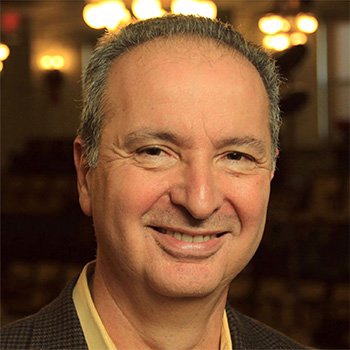
Pete ScazzeroHost
Now, the term comes from an author and a peacemaker, famous, quite famous, named John Paul Lederach.

and he's a Christian sociologist, global peace builder, and he's worked all over the world, engaging in international conflicts, helping bring about peace.

He's worked in places as diverse as Northern Ireland, Colombia, South America, Nicaragua, West Africa, Kenya, the Philippines, so vast experience, and Somalia.

And in his book called The Moral Imagination, he makes the point that in so many of these contexts, that what makes the difference in long-term transformation is really the efforts of just a few people, a few dozen people, a dozen people in some cases, to make a massive change.

And he writes this, the key to change was getting a small set of the right people involved in the right places.

And he writes this, what's missing is not the critical mass, the missing ingredient is critical yeast, and that's where the term comes from.

You know, let's get a large enough people excited about some idea, and it's a scale, and it ignites momentum, and change is gonna happen.

We wanna impact the world for Christ, so we naturally, we follow the world's leading, bigger, better, and as much as possible, move it forward.

Big impact is so embedded in Western culture for generations that we just take it for granted.

And we've been taught to build a bigger enough community with enough people and move it forward, we can change the world.

It was just kind of, it was the air I breathed as I began leading and pastoring.

And I remember one pastor with a large church said, you know, Pete, if you can get a big enough church, when I walk in a room, it's like the Red Sea parts.

Or, as another leader in New York City said to me, Pete, you want to really get into the corridors of power, mayor's office, et cetera, and politically, socially, get a large enough following of people of influence that you'll actually be able to change the city.

But get on big platforms, get the church big, and you're going to change Queens and New York.

And I actually saw and experienced it firsthand going to Christian conferences in my early years that were mostly held in large churches.

And I remember talking to a person on staff, a friend of mine, and he talked about getting to a certain number and the sense of swelling power.

And he goes, we could just point these thousands of people in a direction and we could bring about change, whether it's working with single moms, whether it's working with homeless population, whether it's an initiative in the school system.

Now, the term comes from an author and a peacemaker, famous, quite famous, named John Paul Lederach.

and he's a Christian sociologist, global peace builder, and he's worked all over the world, engaging in international conflicts, helping bring about peace.

He's worked in places as diverse as Northern Ireland, Colombia, South America, Nicaragua, West Africa, Kenya, the Philippines, so vast experience, and Somalia.

And in his book called The Moral Imagination, he makes the point that in so many of these contexts, that what makes the difference in long-term transformation is really the efforts of just a few people, a few dozen people, a dozen people in some cases, to make a massive change.

And he writes this, the key to change was getting a small set of the right people involved in the right places.

And he writes this, what's missing is not the critical mass, the missing ingredient is critical yeast, and that's where the term comes from.

You know, let's get a large enough people excited about some idea, and it's a scale, and it ignites momentum, and change is gonna happen.

We wanna impact the world for Christ, so we naturally, we follow the world's leading, bigger, better, and as much as possible, move it forward.

Big impact is so embedded in Western culture for generations that we just take it for granted.

And we've been taught to build a bigger enough community with enough people and move it forward, we can change the world.

It was just kind of, it was the air I breathed as I began leading and pastoring.

And I remember one pastor with a large church said, you know, Pete, if you can get a big enough church, when I walk in a room, it's like the Red Sea parts.

Or, as another leader in New York City said to me, Pete, you want to really get into the corridors of power, mayor's office, et cetera, and politically, socially, get a large enough following of people of influence that you'll actually be able to change the city.

But get on big platforms, get the church big, and you're going to change Queens and New York.

And I actually saw and experienced it firsthand going to Christian conferences in my early years that were mostly held in large churches.

And I remember talking to a person on staff, a friend of mine, and he talked about getting to a certain number and the sense of swelling power.

And he goes, we could just point these thousands of people in a direction and we could bring about change, whether it's working with single moms, whether it's working with homeless population, whether it's an initiative in the school system.
The rest of this transcript — segmented and speaker-labeled, so you land on the exact moment something was said
Search every transcript — by keyword, by phrase, or by meaning, across every show Radar indexes
Trends — what is surging across podcasts, measured against its own baseline
Alerts — when a name you follow appears in a newly indexed episode
No account is needed to search Radar.