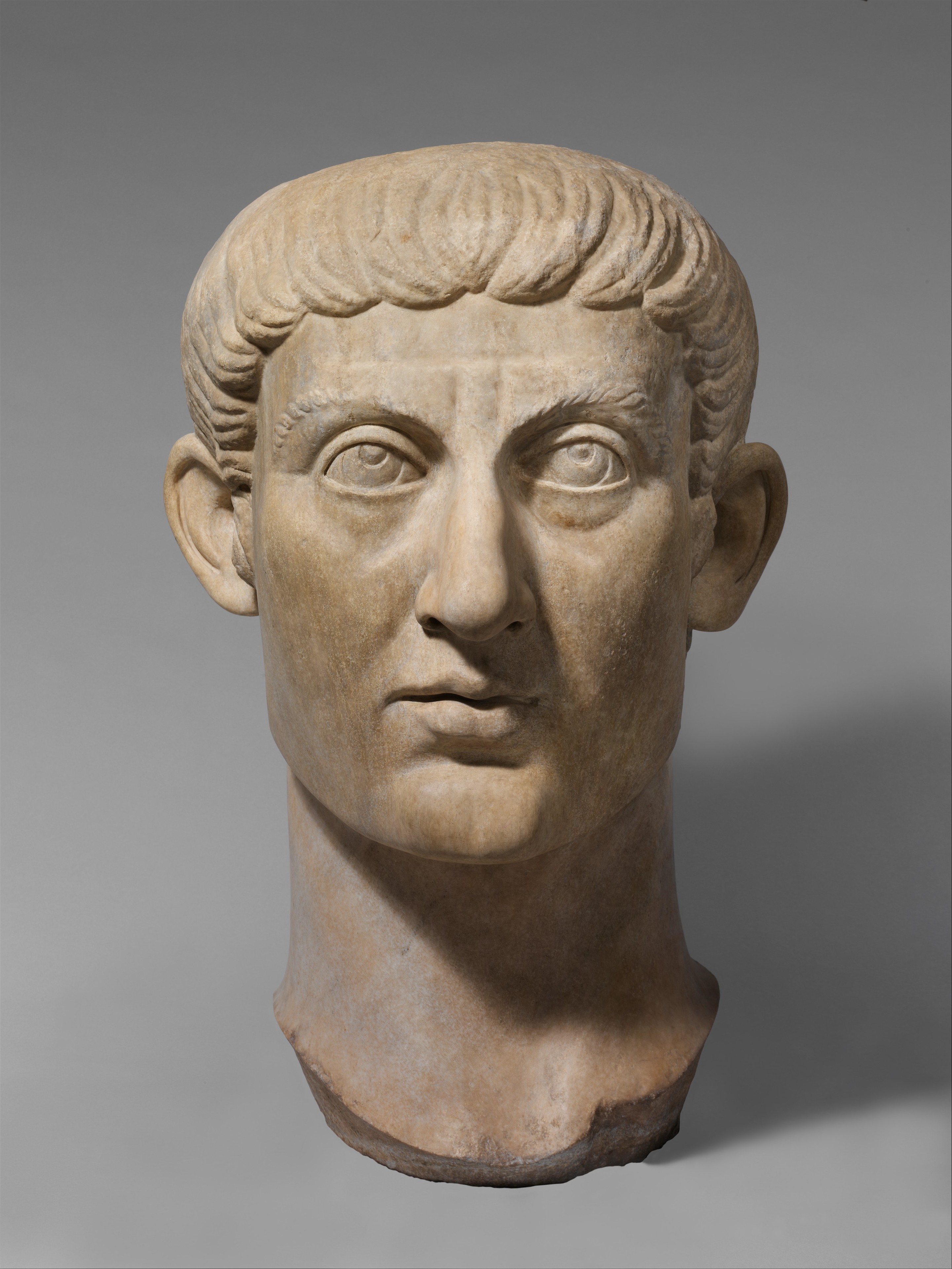
Constantine the Great
Former Roman emperorWikipedia
874
MENTIONS
205
EPISODES
177
PODCASTS
Search complete. 874 mentions across 205 episodes found for "Constantine the Great".
Oct 28, 2026

Mar Mari EmmanuelHOST
And he was very young.
Mar Mari EmmanuelHOST
And as he grew older, his enemy was in the West, the Roman Empire, Constantine the Great, the son of Queen Helena.
Mar Mari EmmanuelHOST
Queen Helena was the beautiful queen that found the cross of the Lord Jesus in Jerusalem.
Mar Mari EmmanuelHOST
She found it.

JimmyHOST
The blood of the martyrs, as the early Christian writer Tertullian reportedly put it, watered the seat of the church.
JimmyHOST
Then came Constantine and everything changed.
JimmyHOST
In 312, on the eve of the Battle of the Milvian Bridge, Constantine reportedly saw a vision, a cross of light in the sky, accompanied by the words, in this sign, conquer.
JimmyHOST
Whether he actually saw anything or simply made a calculated political decision is a question historians have debated for 17 centuries.
JimmyHOST
What's not debatable is what happened next.
JimmyHOST
That's a common misconception, but its effect would have a major impact on Roman paganism.
JimmyHOST
What it did was legalize Christianity and grant it equal status with other religions.
JimmyHOST
But Constantine went further than mere tolerance, and he poured imperial funds into church construction and granted clergy tax exemptions.

Linda RanellaHOST
The time is 920.
Linda RanellaHOST
Today in history, October 28, 312, Roman Emperor Constantine the Great defeated the superior forces of his rival, Maxentius, at the Battle of Milvian Bridge, securing his position as the sole ruler of the Western Roman Empire.
Linda RanellaHOST
This was a game changer in the history of the Western world, as it was Constantine who would legalize and promote Christianity in the Empire.
Linda RanellaHOST
In 1636, Harvard College, the oldest institution of higher learning in the United States, was founded in Cambridge, Massachusetts.
Linda RanellaHOST
1846, William Morton successfully demonstrated the use of ether as an anesthetic for surgery, revolutionizing the field of medicine.

Tanandra KallenbergerHOST
They also proposed that this may have been a site where possible human sacrifices occurred and that the cultic activity here was really in the later roman imperial period so think 2nd century ce through 4th century ce and if you're trying to place this in big name roman emperors around the time of constantine of course constantine is more 4th century ce but 2nd century is really trajan hadrian can't forget marcus aurelius caracalla as well he's third century CE.
Tanandra KallenbergerHOST
And then, of course, a hop, skip, and a jump later, we get Constantine I.
Tanandra KallenbergerHOST
And to the scholars working here, not only was this cave used for possible necromantic purposes, but it may have also been viewed as a portal into the underworld, which is perfect because within the last few episodes, we've been talking about possible entry points into the underworld, not only with cave sites, but with ancient necromancy sites.
Tanandra KallenbergerHOST
And these skulls and the other objects that were uncovered in excavations may have actually allowed the individuals who came into this cave to actually connect to the dead with this specific type of divination.

Ryan MatthewsHOST
Little bit of a history lesson.
Ryan MatthewsHOST
Several centuries later, an emperor called Constantine, for various reasons, took away all the criminal legal regulations against the Christians, and it resulted in Christianity becoming the populist religion of the day.
Ryan MatthewsHOST
Now, there were many benefits to that.
Ryan MatthewsHOST
Isn't it wonderful to live in a society where you don't have to look over your shoulder unless you're thrown into prison or thrown into, you know, the circus Maximus with the lions and you don't lose your head? That's all good.

Stephen AhokasGUEST
Well...
Stephen AhokasGUEST
It was the Passover, and to Constantine's credit, he was the first emperor to make it legal to be a follower of Christ.
Stephen AhokasGUEST
Oh, wow.
Stephen AhokasGUEST
But...

Irene BarbottiHOST
But he soon realized that the Soviet process of institutionalization of the Marxist revolution made it a rather repressive system, which led him to leave again, this time to Western Germany and particularly to Tübingen, where he spent his last years of teaching.
Irene BarbottiHOST
So he experienced in his own lifetime the same phenomenon that he identified in the revolutionary process that characterized Christianity, that it is a process of institutionalization, which finds its symbolic turn in the 4th century and particularly in 313 CE, according to which Christian came from being opposed to the system of power to part of it, which was what actually happened with Constantinus I, emperor known for being Christian.
Irene BarbottiHOST
And from that perspective, only at that point, Christianity became religion in the Latin meaning of the term, which is religare, keeping together.
Irene BarbottiHOST
So becoming part of a system of power, participating in keeping a system of power alive, which, of course, does not exclude that revolutionary idea expressions of Christianity continued existing, and this is the case, for example, of the circumciliums, the movement in Northern Africa that I mentioned before, which happened actually after the Roman Empire became Christian, or maybe we could also say Christians became part of the Empire.

Mark MillerHOST
At least if you're a Christian, it's a biggie.
Mark MillerHOST
Roman Empire, Constantine the Great saw his vision.
Mark MillerHOST
Without this, he doesn't make Christianity, Catholicism, whatever, the religion of Rome, and the religion dies.
Mark MillerHOST
You're not Christian today without this vision.

Mark OllyGUEST
I think it was in the fourth century.
Mark OllyGUEST
It was Emperor Constantine put that, you know, where he put it.
Mark OllyGUEST
It's the old story though, you know, if you've got a real site, you don't want the real site to be completely destroyed and trampled and, you know, stolen like, you know, Noah's grave was.
Mark OllyGUEST
If you don't want that to happen, you just put the site somewhere else.

Ken HudnallHOST
Cranky Coworkers Day, a lighthearted observance focused on managing workplace tension.
Ken HudnallHOST
In 3.0.12, Emperor Constantine experienced his vision of the cross, which changed his outlook on the world.
Ken HudnallHOST
1275, the city of Amsterdam is officially founded.
Ken HudnallHOST
1682, William Penn founds the city of Philadelphia.
195 more episodes mention Constantine the Great.
Create an account to see the whole feed, search across every transcript, and follow the entities you care about.