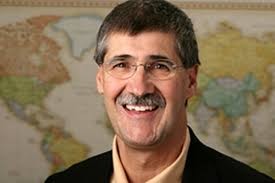
John Paul Lederach
American professorWikipedia
11
MENTIONS
6
EPISODES
6
PODCASTS
Search complete. 11 mentions across 6 episodes found for "John Paul Lederach".
Oct 8, 2026

Tara BrachHOST
We need to envision a more beautiful world.
Tara BrachHOST
And, um, I have been guided a lot by one, uh, peace activist, John Paul Lederach.
Tara BrachHOST
He's also a professor and author, and he's known for his work on conflict transformation.
Tara BrachHOST
He calls it moral imagination, that together we imagine a world rooted in empathy, respect, and interconnectedness, but not just imagine.

Matt WesleyGUEST
That opens a door, that willingness to admit to new possibilities.
Matt WesleyGUEST
I kn- I know we're gonna end up focusing on conflict, but one of my favorite authors is a fellow named John Paul Lederach, who w- is a peacemaker in Africa, and he's written a number of different books.
Matt WesleyGUEST
But, um, but o- o- in one of them, he talks about the, uh, the possibilities that exist in these- Countries that have been torn apart by horrific conflict and, and how do they find a way to peace?
Jane BettleHOST
Mm-hmm.

Douglas A. JonesGUEST
Any book, any article I would read, I would do a little summary, and I just got in the habit of doing them in haiku fashion.
Douglas A. JonesGUEST
And this came, it's written up in the book by, uh, a fellow named John Paul Lederach, who was a renowned peace mediator-
Leigh MitchellHOST
Mm-hmm
Douglas A. JonesGUEST
... through the Irish Troubles, uh, Rwanda, uh, like the Tutsis, the Hutus, et cetera-

Joan HalifaxHOST
So what is the, the measure of our humanity? You know, when you can ask yourself that question, what is the measure of my humanity? And where there is an absence, then how do I re-humanize not only myself, but how do I re-humanize, in my own view, um, those with whom I have the greatest differences? That's really a, an assignment for us.
Joan HalifaxHOST
And often, in almost every one of these, um, uh, series that we've done for now six years, we've asked John Paul Lederach, um, who has written many extraordinary books, including one that I, I love called The Moral Imagination.
Joan HalifaxHOST
And it's very much in Father Greg Boyle's, uh, sense of do you have the kind of moral imagination to actually see past the sort of ill deeds or unwholesomeness, uh, and hold that as, you know, one aspect.
Joan HalifaxHOST
But also to see into, you know, that unshakable goodness that is the ... at, at the heart of every human being, just as Father Greg Bole- Boyle describes it.

AliceHOST
We're calling sprints, three in homes and three in Hope Chapel in October, November, six weeks of formation in the love of God and community.
AliceHOST
And we're going to be looking at John 13 to 17, Jesus's words in the Gospel of John before he is betrayed and his sufferings and crucifixion, death and resurrection.
AliceHOST
So a really key section of Jesus's teaching in John 13.
AliceHOST
But I'm a real fan always of knowing our why.
AliceHOST
Like, why do we do anything? Why do we do what we do? Why are we doing this? And so the actual evenings are going to be super practical, relational, day-to-day.
17 MINS LATER
AliceHOST
You can say
JohnUNKNOWN
that for the tape.
AliceHOST
Say that for the tape, John.

Najla ElmangoushHOST
It's not exclusion, it's protection.
Najla ElmangoushHOST
Another researcher, John Paul Lederach, has spent decades working in peace in places like Colombia and Sierra Leone.
Najla ElmangoushHOST
His big finding in this, lasting peace doesn't come from grand agreement between big institution.
Najla ElmangoushHOST
It comes from relationships.