Sep 18, 2026 · 1 hr 4 min · 12 segments
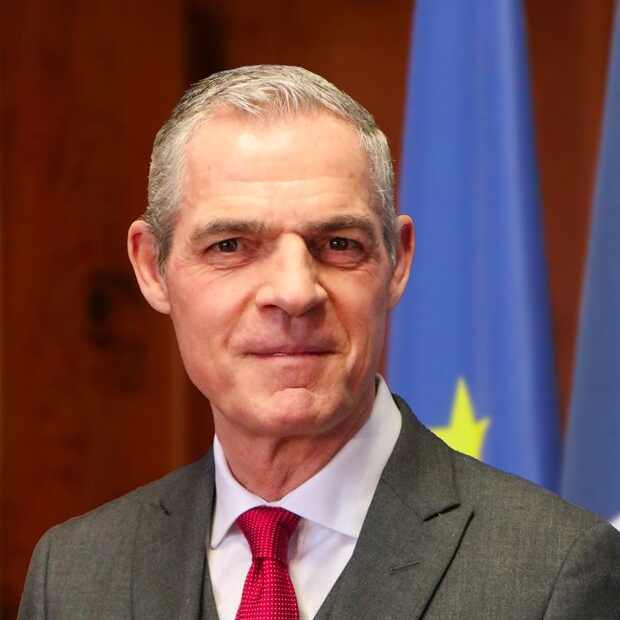
In this episode, Ambassador Jérôme Bonnafont discusses France’s priorities as it assumes the presidency of the UN Security Council. Host…
Jérôme BonnafontGuest
Jane HartleyHost
Okay, the anniversary of the Declaration of New York coincides with France's presidency.

What does this moment mean for multilateral diplomacy? And how does France access the Declaration's legacy?

Well, if I may come back to the previous question, because there is a wider point, which is the place of Iran in the region and in the world.

There is a question of the straight, but there is a question of the nuclear program of Iran.


It is off, but what do we substitute it with? And we strongly believe that we have to start again a sort of in-depth discussion beside what is being done by the US, which is what is going on now.

In the short, medium, and long term, we will have to have an agreement with Iran by which we will get assurances that it will not continue a doubtful nuclear program, It will stop destabilizing neighbors and threatening the life of neighbors, I think of Israel in particular, through militias, terrorism, et cetera.

It will stop a ballistic program that is, in our view, illegal, and that is threatening not only the region, but also more widely.

And it will decide to have a policy of non-aggressive presence in its regional and in the global community.

And this is something which is of capital importance for peace and security in the future.

It is exactly one year ago that we had this, in two times, 12th and 22nd of September, New York Declaration and the two-state solution.

What is our conviction? Our conviction is that war is not going to be the way by which Israel will ensure its security and its long-term establishment in the region.

And that if you want to stop war, you have to solve the question of the rights of the Palestinian people for a homeland and for a state.

And the peace process was establishing peace on the basis of the recognition of the rights of the Palestinian forest state at the same time as you recognize the rights of Israel for security.

Relationships are being established with Morocco, with Emirates, et cetera, et cetera.

But there is still a core issue that is a big obstacle to peace, which is the Palestinian question.
The rest of this transcript — segmented and speaker-labeled, so you land on the exact moment something was said
Search every transcript — by keyword, by phrase, or by meaning, across every show Radar indexes
Trends — what is surging across podcasts, measured against its own baseline
Alerts — when a name you follow appears in a newly indexed episode
No account is needed to search Radar.