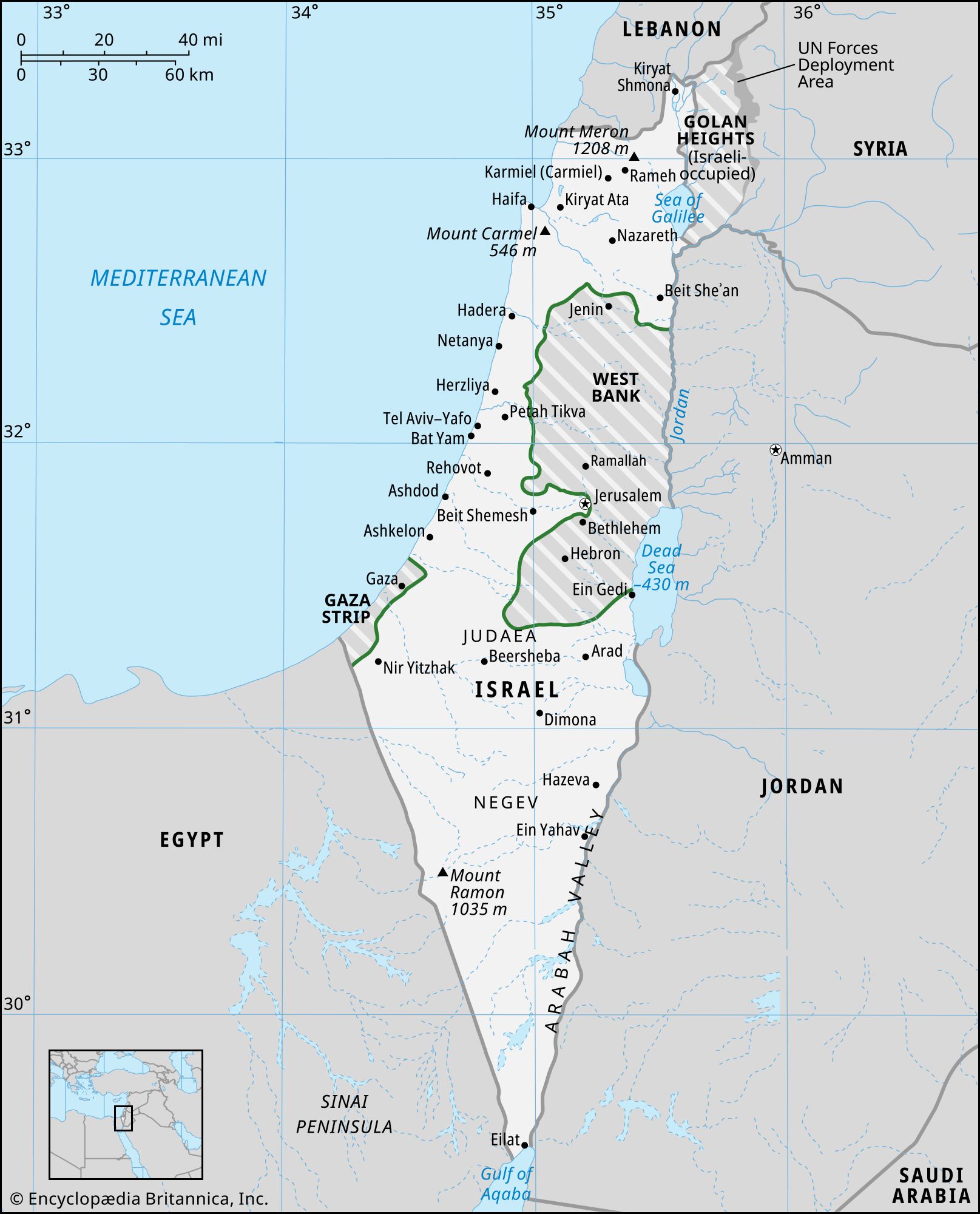
Two-state solution
141
MENTIONS
28
EPISODES
25
PODCASTS
Search complete. 141 mentions across 28 episodes found for "Two-state solution".
Sep 22, 2026

Jackie FoxCORRESPONDENT
Meetings between the Taoiseach and outgoing UN Secretary-General Antonio Guterres, New York Governor Cathy Hochul and Mayor Zoran Mamdani have been scheduled.
Jackie FoxCORRESPONDENT
Micheál Martin is also expected to attend events focused on the Middle East, including the Global Alliance for the Implementation of the Two-State Solution and another one hosted by the leaders of France, Canada and the UK to mark nearly a year since the Gaza Peace Plan was announced.
Jackie FoxCORRESPONDENT
Jackie Fox, RT News, New York.
Brian JenningsHOST
The White House has launched an online TV channel named Trump TV.

DanielHOST
But, you know, it is what it is kind of thing.
DanielHOST
Kind of growing up in that environment, how much were you aware of these dynamics about the two-state solution or if the settlements are a problem? Or are you, I mean, someone who went to a day Shiva, I'm guessing...
DanielHOST
this is more religiously, you have this kind of religious motivation that in a way obstructed your ability to think about it in terms of legality and peace.
DanielHOST
Is that fair? How did you understand the settlements as a settler yourself?
Daniel KleinGUEST
So to appeal to it is almost nonsensical, to try to appeal to the people who wrote the laws to save us from them.
Daniel KleinGUEST
So this kind of stuff was not really a part of the discourse.
Daniel KleinGUEST
Two-state solution is something that was always not really taken seriously.
Daniel KleinGUEST
And not only was it not taken seriously, I think a big part of the mission of many of the groups is to torpedo the idea of a two-state solution.

Akbar Shahid AhmedGUEST
They failed on their promise to prioritize the hostages taken by Hamas and the Palestinian fighters.
Akbar Shahid AhmedGUEST
And they failed at their promise to use this policy to promote a two-state solution.
Akbar Shahid AhmedGUEST
And I know we'll talk more about two-state solution and all that kind of stuff, but I see it as a policy failure step-by-step and a record that's really important for any future policymaker to learn from.
Jasper NathanielHOST
Yeah, no, that's that all sounds right to me.
Jasper NathanielHOST
And I mean, I'm so curious to get into this from a sort of structural level, political level, but also just the psychology of some of what we saw during that time with Biden and others.
1 HR 8 MINS LATER
Jasper NathanielHOST
Wow.
Jasper NathanielHOST
Did the Biden administration, I mean, they were not all that active on Israel-Palestine and I guess in their defense, Obama sort of gave up on it after a while too.
Jasper NathanielHOST
Like, are they, before October 7th, let's say, and after, are they still talking about a two-state solution? Like, how are they thinking about this? Have they just punted it to the next administration or what? Prior

John SimpsonHOST
As the Israeli election comes closer, is there any hope left whatever for a Palestinian state in the Middle East?
Shana OppenheimerGUEST
Both in terms of what's happening on the ground and in terms of rhetoric from some of the Israeli politicians who are seen as more moderate, a two-state solution is a non-starter.
John SimpsonHOST
And most apocalyptic of all, is artificial intelligence going to wipe us all out?
Joe TidyCORRESPONDENT
At the moment, there are people, very intelligent people, who are saying there is a 10% chance this might happen in the next 10 years.
14 MINS LATER
John SimpsonHOST
And whichever party wins the Israeli elections, whatever coalition is formed, nobody is going to go back to a two-nation solution, are they?
Shana OppenheimerGUEST
No, that rhetoric has really dropped from Israeli political discourse, both in terms of what's happening on the ground and the way that Israeli settlements have really expanded into parts of the West Bank, and in terms of rhetoric from some of the Israeli politicians who are seen as more moderate.
Shana OppenheimerGUEST
A two-state solution is a non-starter.
John SimpsonHOST
BBC Monitoring Middle East expert Shana Oppenheimer speaking to me from Jerusalem.

Marwan MuasherGUEST
They said we want a Palestinian state, but they never equated the Palestinian state with withdrawal from occupied territory.
Marwan MuasherGUEST
Today, you have an Israeli extremist government where the prime minister, Netanyahu, is saying openly and repeatedly, a two-state solution is a reward for terrorism.
Marwan MuasherGUEST
If a two-state solution is a reward for terrorism, then what are we doing? What are we doing? I mean, there is no hope for negotiations.
Marwan MuasherGUEST
This is, by the way, what regional countries are very concerned with, including Jordan.
Marwan MuasherGUEST
If the Israelis do not want a Palestinian state in the West Bank and Gaza and, of course, East Jerusalem, and if they also don't want a Palestinian majority in areas under Israel's control.
Marwan MuasherGUEST
implementing it is going to take two sides.
Marwan MuasherGUEST
It's, you know, the Israeli government has to also express interest.
Marwan MuasherGUEST
When Netanyahu once again says a two-state solution is a reward for terrorism,

Jérôme BonnafontGUEST
And then I come to your question on the New York Declaration, yes.
Jérôme BonnafontGUEST
It is exactly one year ago that we had this, in two times, 12th and 22nd of September, New York Declaration and the two-state solution.
Jérôme BonnafontGUEST
What is our conviction? Our conviction is that war is not going to be the way by which Israel will ensure its security and its long-term establishment in the region.
Jérôme BonnafontGUEST
And that if you want to stop war, you have to solve the question of the rights of the Palestinian people for a homeland and for a state.
Jérôme BonnafontGUEST
They want to be in peace.
Jérôme BonnafontGUEST
And as long as this Palestinian question will not be addressed, there will be no peace.
Jérôme BonnafontGUEST
And then, there is this de facto policy by which, through settlements, through occupation, a de facto situation is being created that would make the two-state solution impossible.
Jérôme BonnafontGUEST
We think that this fatality has to be stopped Because it is an obstacle to long-standing peace between the Arabs and Israel.

Joe ScarboroughHOST
I mean, it's, it's, it's h- it's very hard for them.
Joe ScarboroughHOST
I know it's very hard for them considering that Hillary was the first person, I think it was in '98 or '99, and it was radical when she did it, talking about a two-state solution.
Joe ScarboroughHOST
People are like, "Oh, no, you can't talk about a two-state sol- what are you doing?" But she was way out in front of everybody else.
Joe ScarboroughHOST
And then the deal that they struck in 2000 with Arafat, I mean, giving, giving so much power and control to the Palestinians, creating a Palestinian state that made East Jerusalem the capital, giving them 97% of the West Bank, saying, "Okay, the other 3% you just pick.
Jake SullivanGUEST
Well, first, I worked for Secretary Clinton when she was Secretary of State, and the last time that an Israeli prime minister and the president of the Palestinian Authority, Mahmoud Abbas, were in the same room negotiating with one another was when Hillary Clinton convened them in three sessions in Washington and Egypt and in Israel, and it's, that was back in 2010.
Mika BrzezinskiHOST
Mm.
Jake SullivanGUEST
So it has been a long time since we've actually gotten serious traction on diplomacy towards a two-state solution.
Jake SullivanGUEST
But it's the only solution that is possible.

Benjamin AnthonyHOST
Welcome to this episode of the Benjamin Antony Show, a product of the Miriam Institute.
Benjamin AnthonyHOST
You see, as Israel still struggles with what the day after this war might look like overseas, and with an uncanny degree of reflexive simplicity at best, many voices continue to demand that Israel enters into a two-state solution with the Palestinian Arabs forthwith.
Benjamin AnthonyHOST
Now, it's important to remember that these Palestinian Arabs are the same people whose Gazan flank massacred and kidnapped our innocents on October 7th, 2023, and proceeded to torture and execute those captives thereafter, and whose Judea and Samaria flank was frequently murdering innocent Israelis.
Benjamin AnthonyHOST
Jewish and non-Jewish alike, by way of a sustained wave of indiscriminate homicide bombings during the Second Intifada, which was a reign of terror that only really ended once Israel finally fenced itself in and away from those Palestinian Arabs in Judea and Samaria by way of a physical security barrier.
Benjamin AnthonyHOST
An aged man who, and I kid you not when I say this, is now in the 21st year of his four-year term.
Benjamin AnthonyHOST
But anyway, I digress.
Benjamin AnthonyHOST
In any event, rather than allowing foreign proponents of the idea of the two-state solution to continue their untrammeled trot toward the fantastical, I'd prefer that they first answer some very simple questions, such as question number one.
Benjamin AnthonyHOST
Is your two-state plan even remotely practicable? How exactly do you plan to create a contiguous state for the Palestinian Arabs incorporating parts of Judea and Samaria and the entirety of the Gaza Strip, as such a plan would call for, without bifurcating north from south Israel? Two, can you provide any proof or precedent whatsoever to support the notion that ceding yet more territory to the Palestinian Arabs will result in increased security for Israel? Or does all of the evidence actually point to the very opposite outcome? You'll recall, after all, that the October 7th massacre was a direct result of the land for peace formula espoused by those who suffer from the two-state obsession.
From Failed Peace Plans to a Real Destination with Prof. Sari Nusseibeh
Sep 14 · 12 Mentions
Sari NusseibehGUEST
So the negotiations crashed in time.
Sari NusseibehGUEST
The possibility in people's eyes of a two-state solution also crashed, and people slowly, uh, or quickly if you like, uh, withdrew from the, from those, uh, from those fronts, from the fronts where people were actually beginning to talk to one another.
Sari NusseibehGUEST
And to refer back to, uh, the wall, the separation wall barrier that was built, uh, which you mentioned and which you rightly also pointed out, was in fact, uh, something that the people from the Hebrew University students, professors came and stood by us, uh, to sort of oppose the building of this wall.
Sari NusseibehGUEST
Uh, it was a time which was opening up between the two sides.
Sari NusseibehGUEST
but that intellectuals, uh, public opinion leaders, if you like, on both sides, whether on the Israeli or on the Palestinian side, are no longer speaking, uh, to their constituencies in, uh, peaceful or in, um, in, in, in positive terms because even they have lost hope in the future.
Sari NusseibehGUEST
And so it's, it's really now much harder than before, but as I said earlier, because it's much harder, it's much more necessary to sort of try and bring that back to life.
Ksenia SvetlovaHOST
Well, I remember, you know, in 2011, I think maybe '12, uh, you were also very skeptical about the possibility of, uh, materializing the idea of the two-state solution.
Ksenia SvetlovaHOST
Uh, and y- you said that, you know, it's, uh, maybe not longer even possible, uh, anymore.

Tom CoteHOST
Let's go to Joel 3, verses 1 and 2.
Tom CoteHOST
You know, how many years have we heard about a two-state solution so that Israel and the Palestinians could live in kumbaya, side-by-side peace? The one problem is one side never wants peace.
Tom CoteHOST
In any agreement with Israel, there's always one side that doesn't want peace.
Tom CoteHOST
But we have heard the ebb and flow of all the talks about, about the two-state solution we have heard for so many years.
Tom CoteHOST
But it comes and it goes.
Tom CoteHOST
It dies down for a while.
Tom CoteHOST
So listen to this.
Tom CoteHOST
BRICS New Delhi Declaration backs a sovereign Palestinian state and calls for the 1967 borders.
18 more episodes mention Two-state solution.
Create an account to see the whole feed, search across every transcript, and follow the entities you care about.