Aug 17, 2026 · 1 hr 59 min · 15 segments
Dr. Evan Miyazono joins Jacob to talk about his path from quantum networking and Protocol Labs to founding Atlas Computing. They discuss why Atlas moved away from formal methods research and toward…
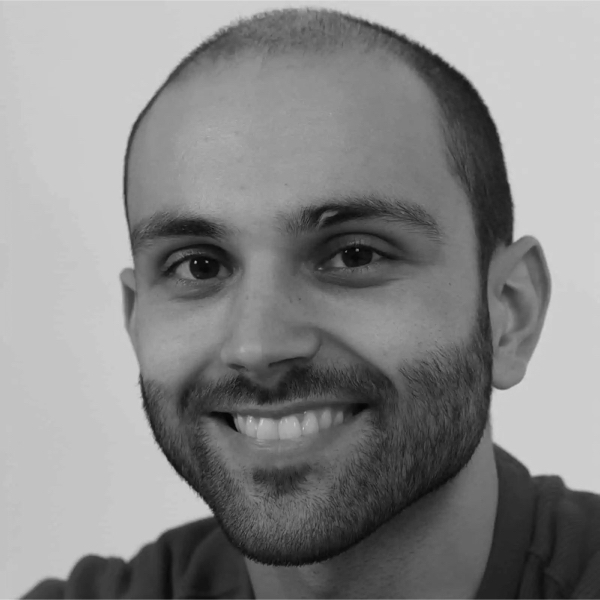
Evan MiyazonoGuest
Jacob HamesHost


It was really the user willingness and understanding of why formal methods was useful and Maybe this is

a great time then to give me a lesson on why formal methods is useful, just to make sure, because I totally know it really, really well.

Evan did explain things, but as is the case when you're asked to explain a highly technical concept off the cuff, it was a bit windy and there was a tangent or two.

Formal methods are a family of mathematical tools which allow us to reason about how correct a system is.

Formal verification is essentially an application of these tools to check whether a given program is correct.

Before getting into formal verification, I think it's helpful to first establish the three translation points where things can go wrong on the road from having an intention in your head to having the thing in the real world.

After thinking about it a bit, I hire some contractors and I tell them I want a two meter by three meter window on my south facing wall.

The contractors get to work and some indeterminate amount of time later, I have a window.

Finally, I can begin working next to my new window, translating the implementation into what actually happens in the world or reality.

As I said earlier, each of these translation points represents a place where things could go wrong.

Formal verification closes the gap between specification and implementation by introducing a mathematical proof, which demonstrates based on some fundamental model of the underlying hardware or programming language that you're working with, that it must meet all the characteristics in your specification always.

So if I had some sort of formal verification in this case, I would be able to say with extreme confidence that there was a 2 meter by 3 meter window on my south facing wall.


It was really the user willingness and understanding of why formal methods was useful and Maybe this is

a great time then to give me a lesson on why formal methods is useful, just to make sure, because I totally know it really, really well.

Evan did explain things, but as is the case when you're asked to explain a highly technical concept off the cuff, it was a bit windy and there was a tangent or two.

Formal methods are a family of mathematical tools which allow us to reason about how correct a system is.

Formal verification is essentially an application of these tools to check whether a given program is correct.

Before getting into formal verification, I think it's helpful to first establish the three translation points where things can go wrong on the road from having an intention in your head to having the thing in the real world.

After thinking about it a bit, I hire some contractors and I tell them I want a two meter by three meter window on my south facing wall.

The contractors get to work and some indeterminate amount of time later, I have a window.

Finally, I can begin working next to my new window, translating the implementation into what actually happens in the world or reality.

As I said earlier, each of these translation points represents a place where things could go wrong.

Formal verification closes the gap between specification and implementation by introducing a mathematical proof, which demonstrates based on some fundamental model of the underlying hardware or programming language that you're working with, that it must meet all the characteristics in your specification always.

So if I had some sort of formal verification in this case, I would be able to say with extreme confidence that there was a 2 meter by 3 meter window on my south facing wall.
The rest of this transcript — segmented and speaker-labeled, so you land on the exact moment something was said
Search every transcript — by keyword, by phrase, or by meaning, across every show Radar indexes
Trends — what is surging across podcasts, measured against its own baseline
Alerts — when a name you follow appears in a newly indexed episode
No account is needed to search Radar.