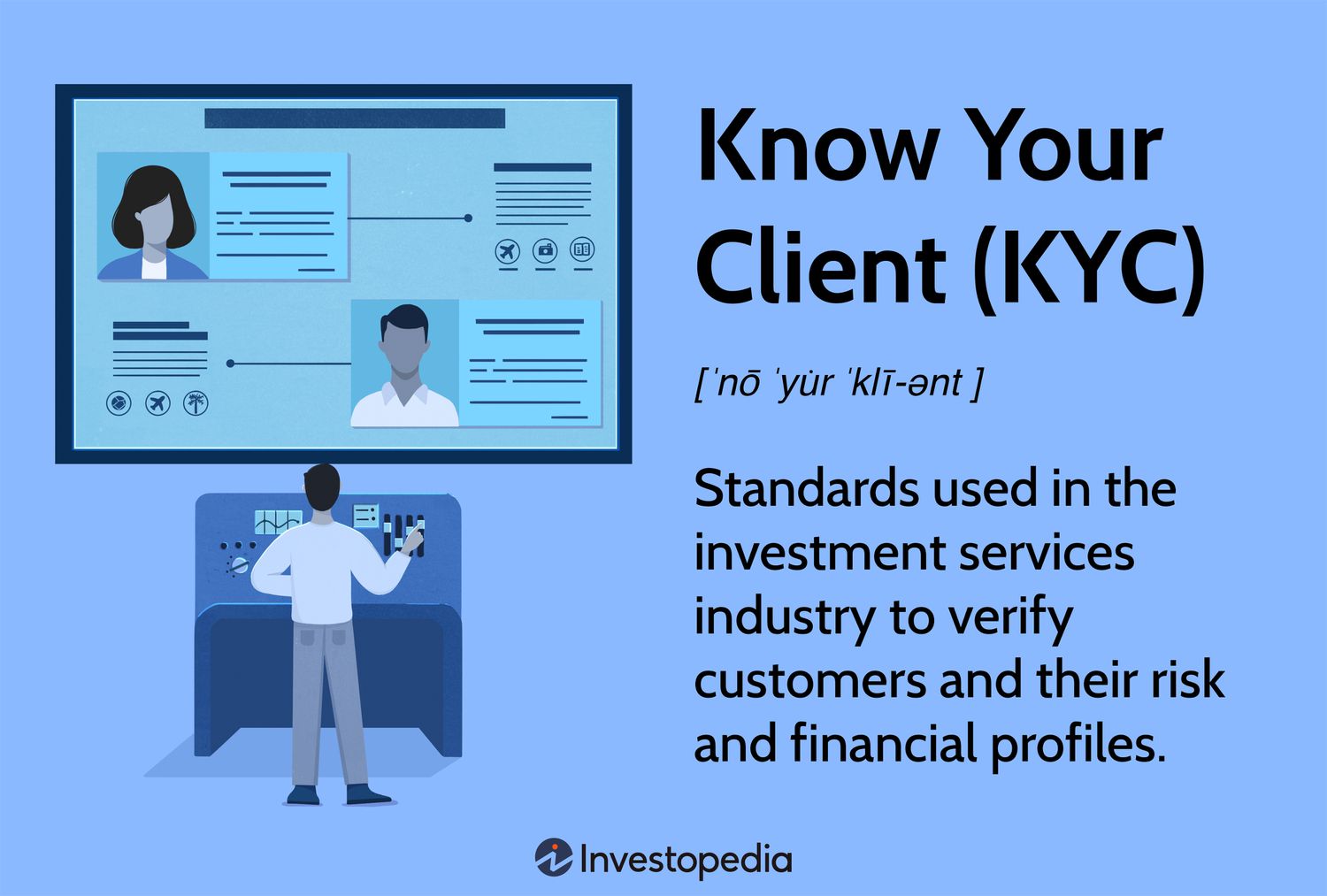
Know your customer
910
MENTIONS
445
EPISODES
324
PODCASTS
Search complete. 910 mentions across 445 episodes found for "Know your customer".
Sep 21, 2026

Richard SocherGUEST
And now you have to be very careful about who's using it.
Richard SocherGUEST
And maybe you should have a much more careful KYC process, know your customer process around when you launch it.
Richard SocherGUEST
Did that answer your question?
LG DoucetHOST
Yeah, sort of.

Brian ArmstrongGUEST
So that's the way that we'll get this in the U.S. And I think, you know, as the U.S. has the right to do, it might have a couple tweaks to it that make it more palatable to the U.S. regulator to create that safety and trust that they're striving for.
Brian ArmstrongGUEST
So there might be some KYC attestation on chain.
Brian ArmstrongGUEST
These are things that we've kind of helped pioneer recently.
Brian ArmstrongGUEST
from a technology point of view.

David BennettHOST
The workaround allowed meme coin purchases made with Visa credit cards to be processed under a merchant code intended for ordinary digital media.
David BennettHOST
The move comes after the block published an investigation finding that users of the Robinhood wallet and FOMO apps could purchase meme coins with credit cards through Apple Pay or Google Pay without completing a separate KYC process.
David BennettHOST
The block's test purchases, powered by CrossMint and made with both Visa and MasterCard credit cards, were coded as digital goods media, a category typically used for e-books, movies, and music, rather than as crypto transactions that allowed customers to earn ordinary credit card rewards, such as points or cash back, on the meme coin purchases.
David BennettHOST
Chase told the block that one Visa transaction had not been flagged as a cryptocurrency purchase, had been assigned the wrong merchant category code, and should not have earned any rewards.

Anders Meinert JørgensenGUEST
Thanks for having me.
Craig JeffreyHOST
But today's topic is know your customer reducing KYC nightmares.
Craig JeffreyHOST
And Anders, I have to say that as we look at and start the discussion, KYC is either the biggest pain point or one of the biggest pain points in corporate treasury.
Craig JeffreyHOST
People care about it.
Craig JeffreyHOST
It seems like that everything's changing dramatically.
Anders Meinert JørgensenGUEST
And it's a growing pain, that's for sure.
Anders Meinert JørgensenGUEST
And I think also one of the reasons it's a pain is that because it's not something that treasurers enjoy working with, right? So there are some pains that you accept because it's part of your job and it's part of the discipline you're in.
Anders Meinert JørgensenGUEST
But for treasurers, I actually haven't met anyone who loved KYC.

QHOST
Well, I've got a hot take on this that you might disagree with, which I'll get to in a minute after I've given the story.
QHOST
Yeah, HODLHODL is a peer-to-peer Bitcoin marketplace with no KYC.
QHOST
They trade settle through a kind of two or three multi-sig escrow where HODLHODL holds one of the keys and you buy from another peer essentially.
QHOST
So buyer has a key, seller has a key, and HodlHodl has one for arbitration purposes.
QHOST
On the 18th of September, HodlHodl announced, quote, enhanced Bitcoin security scoring, where incoming Bitcoin will be checked for, quote, serious red flags before a contract settles and trades with bad score would be blocked.
QHOST
HuddleHuddle said it was, quote, not a KYC AML process.
QHOST
Users pushed back pretty hard.
QHOST
And on September the 19th, just one day later, Anna from the HuddleHuddle team posted a follow-up where she kind of basically said, you know, we kind of got this wrong or this could have been announced better.

Cuy SheffieldHOST
I remember that was the time when we didn't know if institutions would be able to build on top of public permissionless chains.
Cuy SheffieldHOST
And so the fact that Biddle was sure it was gated at the smart contract for you had to be KYC, KYB, but you could still access it on Ethereum, that was a huge deal.
Cuy SheffieldHOST
And then now, they launched two additional funds in August, now one in September.
Cuy SheffieldHOST
And so you've got the potential of these money market funds being used as reserves for stablecoin issuers.

Ryan KirkleyGUEST
But when we start talking moving $100 million from JP Morgan to Fidelity, that stablecoin isn't what's actually moving, right? At some point, that treasury or that dollar representation has to move to the correct custodian.
Ryan KirkleyGUEST
The second side of that, though, and it's in a bigger picture, is as we look at stablecoins, we have to have a way to KYC and know who's touching these assets.
Ryan KirkleyGUEST
And so if you send $1,000 to, let's say, Syria, If I want to get that money back from the same business I sent it to, I have to be able to say where it touched, who had it.
Ryan KirkleyGUEST
Did it hit an OFACs list? Did it hit a sanctions list? Yes, no, et cetera.
6 MINS LATER
Ryan KirkleyGUEST
Someone like JP Morgan gets to run a supernode that holds a proof of authority node.
Ryan KirkleyGUEST
that first checks every transaction.
Ryan KirkleyGUEST
If, for example, and we allow decentralized transactions, let's say it's no KYC.
Ryan KirkleyGUEST
We have no idea where this wallet's from.

Andreja CobeljicGUEST
On-ramp, off-ramp, in tens of millions maybe, if you have it in crypto, now it's in Swiss francs or in dollars and you have it in the financial system.
Andreja CobeljicGUEST
You had to pass the KYC AML to begin with to be onboarded.
Andreja CobeljicGUEST
But once you are there and your coins are checked, actually, they're as good as fiat currencies.
Andreja CobeljicGUEST
So those were the early solutions, right? And then in 2020, we actually started doing derivatives.

PhilippaHOST
Generative AI allows fraud perpetrators to manipulate identity checks, construct realistic WhatsApp or email screenshots, and bypass voice authentication.
PhilippaHOST
For example, Know Your Customer identity verification, which may include asking new customers to send photos of themselves when opening an account, can be bypassed.
PhilippaHOST
Companies that develop KYC tools are trying to catch up, but AI is moving faster and faster every day, so we've got more sophisticated models.
PhilippaHOST
Perpetrators can also leverage AI to manipulate organizations into generating content that might falsify a claim, says Igbo.
PhilippaHOST
He cites the example of a large-scale motor insurance fraud where the scammer made 25 fraudulent claims worth over £440,000.

Daniel IshakGUEST
What I do know is in an agentic world, we're going to have to solve for a whole bunch of new problems.
Daniel IshakGUEST
Today, the banking system, the financial system is regulated, and we all go through processes called KYC, know your client, or KYB, know your business.
Daniel IshakGUEST
There is a universe where we're gonna have to create new technologies or know your agent, because we can't have rogue agents going out there spending money.
Daniel IshakGUEST
And I think this is one of those really interesting areas where you've got two problems that you need to solve.
435 more episodes mention Know your customer.
Create an account to see the whole feed, search across every transcript, and follow the entities you care about.