Fordism
25
MENTIONS
19
EPISODES
19
PODCASTS
Search complete. 25 mentions across 19 episodes found for "Fordism".
Sep 18, 2026

Tequila MockingbirdHOST
But we could not identify each other anymore because the thing about punk was you could identify each other by your individuality.
Jessica SchwartzHOST
And then when it becomes marketed and manufactured and mass produced, then you just have the Fordist production line, right? You can't really tell who's
Tequila MockingbirdHOST
who anymore.
Stella StraypopGUEST
It used to You know where I met Tequila?

Tejasvi NagarajahGUEST
In many ways, this is particular to the World War II period or the world wars from World War I to World War II.
Tejasvi NagarajahGUEST
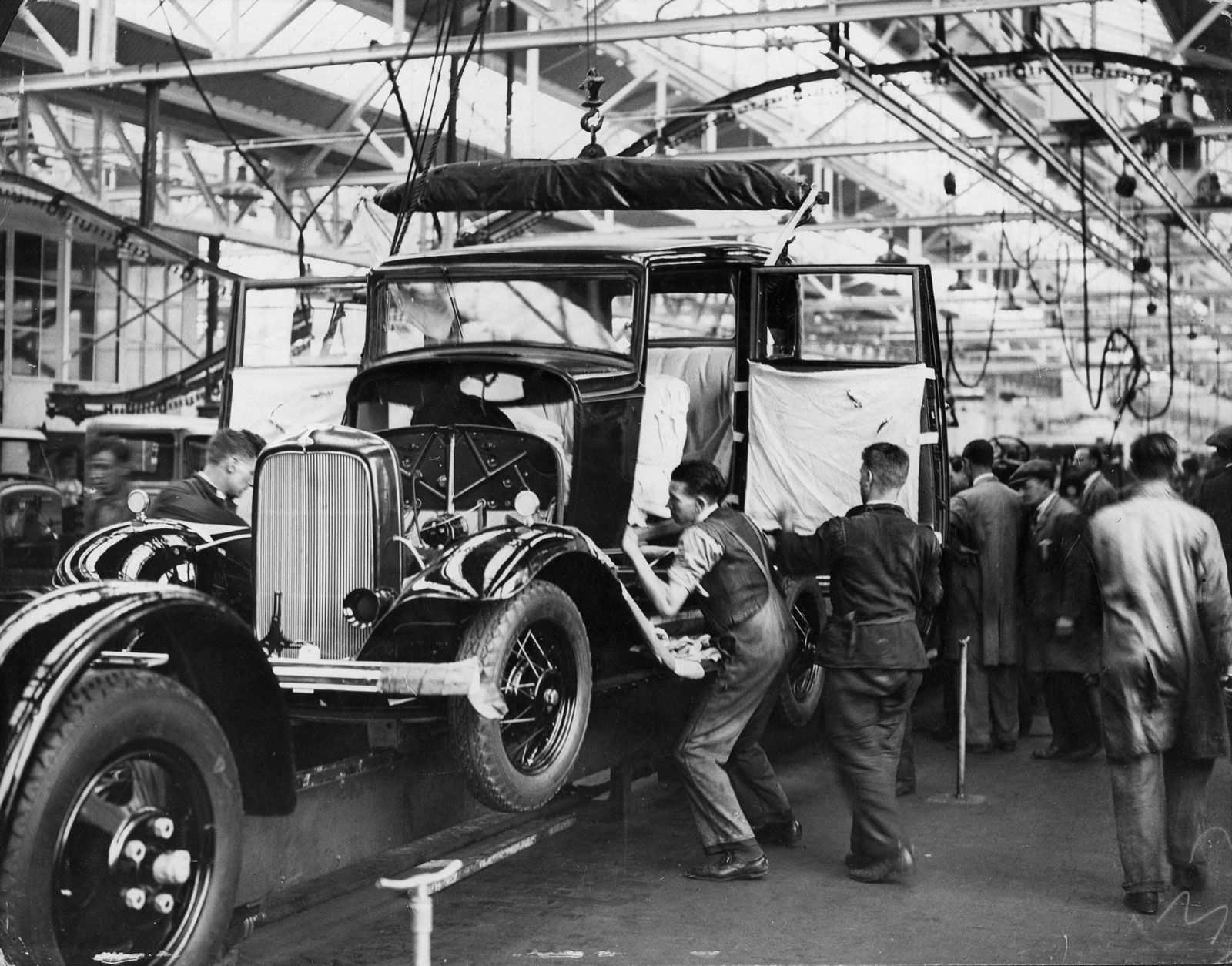
Those who analyze political economy sometimes use the word Fordism to describe sort of Henry Ford Motor Company and how its mode of mass society and mass work pervaded the industries of the time from World War I to World War II.
Tejasvi NagarajahGUEST
I think that can be thought of as well for the armed forces where you actually had mass draft and conscription as well as mass infantry service and service in other supply and non-combat roles.
Tejasvi NagarajahGUEST
This is part of that triumphalist story.
12 MINS LATER
Tejasvi NagarajahGUEST
And so World War II is an interesting period because sometimes that critical perspective, certainly a left critique of unions as becoming more bureaucratic and becoming brokers with business and government, it focuses on the Cold War years and later decades.
Tejasvi NagarajahGUEST
And so I think one of the reasons I study World War II is because you see a lot of the dynamism in different directions, right? Where some union leaders are navigating being responsive to sort of militant bases or even to civil rights pushes by more militant black workers, while others are finding themselves seeing an opportunity, but also a compromise in being part of what are government planning boards that also are military planning boards.
Tejasvi NagarajahGUEST
That raises a bigger question of a sort of welfare warfare state that comes out of the FDR years where social security, the big word of Franklin Roosevelt's welfare and labor state, was tied to national security as well.
Tejasvi NagarajahGUEST
And participating in some war planning boards seemed like a social democratic or industrial democratic opening.

Samantha BarabásGUEST
They can be used against unpopular minorities to silence their speech, and, you know, that's antithetical to everything they're working for.
Miranda MelcherHOST
And so this is not just when it comes to the NAACP and trying to fight against, um, things like the KKK's resurgence, right? You talk about this in civil society groups that are trying to fight back against sort of Fordist antisemitism roughly in the same sort of time.
Miranda MelcherHOST
Is that right?
Samantha BarabásGUEST
Yeah.

Nadia IdleHOST
And I think there's something important to say about th- going back to, like, the context in which they're operating, which is that none of these people had any proper jobs [laughs].
Nadia IdleHOST
You know, I'm saying this sounding like a conservative here, but, like, you know, they, it was anti-work politics in a way, and they were able to survive on odd jobs and not, you know, have to have a nine-to-five or kind of, like, fit into that kind of Fordist kind conceptualization of, of what work was.
Nadia IdleHOST
But that was only possible, I suppose, under certain conditions.
Nadia IdleHOST
We haven't talked about Lefebvre.
5 MINS LATER
Jeremy GilbertHOST
You know, like Marx says, you can be a critic in the morning and a fisherman in the evening.
Jeremy GilbertHOST
And it becomes really appealing to people in that post-war context, partly because everyday life becomes so boring.
Jeremy GilbertHOST
I mean, this is that great point, you know, by that famous Plan C document that we like to cite about how boredom becomes, like, the dominant affect of the post-war period, because that, that is like the side effect of Fordism, the side effect of the great Fordist social compromise is, right, revolution's off the table now, but you are all gonna have, like, stable jobs, careers, and homes for the rest of your lives.
Jeremy GilbertHOST
And it does mean, you know, people feel like something's lost, like a sense of adventure, a sense of danger, and a sense of possibility all seem to be lost compared to the way in which people are experiencing things.

Rich RobertsHOST
Um, okay, so our thought for the day comes from a gentleman, uh, a great American industrialist and business, um, person and, um, and that is Henry Ford, who was an American industrial and business m- um, person, as I said.
Rich RobertsHOST
As founder of the Ford Motor Company, he is credited as pioneer in making automobiles affordable, and boy, did he make them affordable, uh, for the middle class Americans through a system he called to be known as Fordism.
Rich RobertsHOST
And F- and then I don't think that took because, um, I didn't even know what Fordism was until I started doing his quotes.
Rich RobertsHOST
Um, he is the one that developed, uh, um, the assembly line process, the workflow.
Rich RobertsHOST
It's a workflow.

Phil NeelGUEST
And you had a bunch of second international socialists in Europe just infatuated with America back in the day.
Phil NeelGUEST
They just loved it, right? And even the ones who are very critical of it, like it gets this American, I don't know, like American Orientalism gets inherited by the Bolsheviks even when they start to talk about, well, we need like these Fordist style factories and American style electrification, right? Because they're obsessed with the forward edge of liberalism, right? And so in my opinion, There's absolutely no ambiguity about it.
Phil NeelGUEST
China is the world leader in reinventing liberalism today.
Phil NeelGUEST
It calls it socialism or whatever.
1 HR 18 MINS LATER
Phil NeelGUEST
It's couched in different language, but in other ways, it's not.
Phil NeelGUEST
Like you had people talking about Bismarckian Germany as an example of state socialism, right? And the same thing with Meiji Japan.
Phil NeelGUEST
And you had a bunch of second international socialists in Europe just infatuated with America, right? uh back in the day they just loved it right and even even the ones who are very critical of it like it gets it gets um this american i don't know like american orientalism um gets uh it inherited by the Bolsheviks, even, when they start to talk about, well, we need these Fordist-style factories and American-style electrification, right? Because they're obsessed with the forward edge of liberalism, right? And so, in my opinion, there's absolutely no ambiguity about it.
Phil NeelGUEST
China is the world leader in reinventing liberalism today it calls it socialism or whatever it doesn't actually call it socialism if you read the theory it's um it's setting the stages for future socialism it's just a market society right uh but it's the leading edge in both ideological and like reinventions of liberalism, and in the actual material experimentation that is what gives capitalism its vitality.

Jonas Patrick MarvinGUEST
Margaret Thatcher was elected in 1979, and that project is an explicit example project to try and dismantle the kind of emancipatory subjects and the life worlds around those subjects that suffused throughout the post-war period.
Jonas Patrick MarvinGUEST
So the South Yorkshire miner, the Fordist factory worker, the black textile worker, the female domestic laborer, for example, all of these different emancipatory subjects that constituted different social movements and different struggles after the Second World War.
Jonas Patrick MarvinGUEST
And, you know, like you said, really put the fear into the capitalist class on the one hand, brought down Tory governments, like in 1974, on the other hand.
Jonas Patrick MarvinGUEST
And for me, there's a kind of rational kernel to all this, which is that you have different types of capitalism throughout the history of capitalism.

David EdgertonGUEST
We know there was something like mass production.
David EdgertonGUEST
There was something called Fordism.
David EdgertonGUEST
And that kind of went in the 1980s.
David EdgertonGUEST
And we have something else

Alex HannaGUEST
So one of the findings is that it's about AI, but it's not about AI.
Alex HannaGUEST
Effectively, you know, there is lots of different threats in the workplace from technology, from automation, and those are continuous from a lot of prior fights, thinking all the way back to, you know, the factory line and the development of Fordism.
Alex HannaGUEST
And so thinking about that, it is highlighting not talking about AI threat, but thinking about technological threat and what it means to control that and have some ways in which workers have a say.
Alex HannaGUEST
So that's number one.

Douglas LainHOST
[Laughs] The social imperialists.
Douglas LainHOST
The, no, the Social Democrats, um, are the, just impervious to critique in that their, their argument for a kind of return to Fordism or the New Deal just keeps getting trotted out again and again and again, and it's persuasive.
Douglas LainHOST
It somehow will-
Chris CutroneGUEST
In this environment
9 more episodes mention Fordism.
Create an account to see the whole feed, search across every transcript, and follow the entities you care about.