Deuces Wild with Eric Byrnes & Will Clark
Oct 7, 2026 · 35 min · 15 segments
Pickleball: Eric Byrnes and Breland discuss their experience playing pickleball in Las Vegas and winning a gold medal. Entertainment Baseball: The Glo-Mojis are playing glow-in-the-dark baseball…
In Game one of the Brewers series, let's start there because this is where all the controversy was.
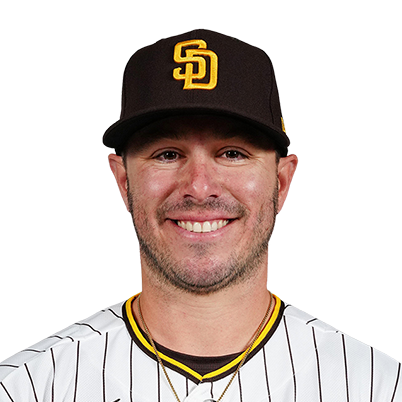
You had Ty France hit a ball in the ninth inning, 106 miles per hour off the bat, launch angle at 49 degrees.
Jackson Turio is there basically at the warning track to catch the ball, and that was that.
Huge debate whether or not this would've been a home run if the ball did not hit the cable.
So yesterday, I came up with some numbers and essentially shared them with the, uh, Padre contingency that is, uh, infiltrated my life.
So when you have this controversy on the ball hitting the roof and whether or not this would've been a home run, let's look at this for a second.
Because right away, whether it was my wife, whether it was Jimmy, whether it was Rhett LaRocca and Todd LaRocca, like we're talking about this, and everyone immediately is like, "Oh, 1,000% it would've been a home run," and on and on and on.
When they showed the behind view and they showed the ball going straight up in the air, immediately in my mind I thought to myself, "No fucking way that ball would've gotten out." So I dug in, did a little research, and here are the numbers.
The 37 instances in which a player hit a ball between 105 and 106 miles per hour with a launch angle between 48 and 50 degrees.
Of course, you bring in conditions where if you're in dry air, if it's a little bit warmer, you got the wind blowing out, the ball's going out of the ballpark.
So- The best argument that Padre fans have is, "Look, it went this far while hitting the cable.
The rest of this transcript — segmented and speaker-labeled, so you land on the exact moment something was said
Search every transcript — by keyword, by phrase, or by meaning, across every show Radar indexes
Trends — what is surging across podcasts, measured against its own baseline
Alerts — when a name you follow appears in a newly indexed episode
No account is needed to search Radar.