Making Sense of PISA 2025 with Montserrat Gomendio (Ep 81)
Oct 2, 2026 · 1 hr 24 min · 11 segments
In this episode, Anna is joined by Dr. Montserrat Gomendio, former Deputy Director for Education at the OECD, to discuss the newly released PISA 2025 results. They explore why student achievement is…
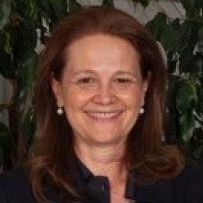
In this episode, Anna is joined by Dr. Montserrat Gomendio, former Deputy Director for Education at the OECD, to discuss the newly released PISA 2025 results. They explore why student achievement is falling in many countries. They discuss whether COVID, smartphones, and AI explain the declines, why some education systems are holding up better than others, and what policymakers can learn from countries that are seeing better results. They also answer questions from listeners that were submitted during a livestream version of the episode. Chalk & Talk website: www.chalkandtalkpodcast.com This episode is available in video at www.youtube.com/@chalktalk-stokke TIMESTAMPS \[00:00:04] - Introduction: PISA 2025 and student achievement \[00:05:41] - Why did reading become the dominant PISA story? \[00:08:23] - Do phones, digital technology, and AI explain the decline? \[00:14:54] - Did COVID and school closures cause the decline? \[00:20:58] - What can England teach us about education policy after COVID? \[00:22:14] – Scores started declining before COVID \[00:27:35] - What do top-performing education systems have in common?\[00:34:32] - What makes effective teacher training? \[00:39:59] - How can countries improve teacher quality in the short term?\[00:45:24] - Why evidence-based professional development matters \[00:48:10] - What can countries learn from England’s approach to math? \[00:51:22] - What should teachers do when they disagree with their training?\[00:56:10] – How to encourage teachers to change \[00:59:14] - How should schools design a knowledge-rich curriculum? \[01:03:35] - What makes an effective math curriculum? \[01:06:44] - Does PISA data hide differences between education systems?\[01:10:41] - What does the OECD get wrong about interpreting PISA data? \[01:16:14] – Finland: PISA declines and bad advice about following Finland \[01:21:54] - Final thoughts EPISODE TRANSCRIPT https://chalkandtalkpodcast.com/episode/ep-81/ RELEVANT PREVIOUS EPISODES (linking to website) The Story Behind Mississippi’s Education Turnaround with Rachel Cante https://chalkandtalkpodcast.com/episode/ep-76/ The Finland myth, East Asia’s rise, and what makes education systems work with Montserrat Gomendio https://chalkandtalkpodcast.com/episode/ep-68/ When a mathematician became education minister: Nuno Crato on transforming education https://chalkandtalkpodcast.com/episode/ep-58/ From decline to top rankings: How England transformed education with Nick Gibb https://chalkandtalkpodcast.com/episode/ep-49/ MUSIC Intro & Outro: Funk Jazz Big Band - ColorFilmMusic Website: http://www.chalkandtalkpodcast.com/ FB: Chalk & Talk IG: @chalkandtalkpodcast Tiktok: @chalkandtalkpodcast X: @rastokke LinkedIn: www.linkedin.com/in/anna-stokke-3a1b4c Bluesky: @rastokke.bsky.social
In this episode, Anna is joined by Dr. Montserrat Gomendio, former Deputy Director for Education at the OECD, to discuss the newly released PISA 2025 results. They explore why student achievement is…