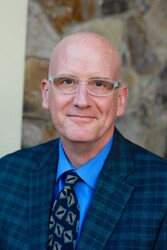
Daniel T. Willingham
American psychologist and professorWikipedia
17
MENTIONS
14
EPISODES
14
PODCASTS
Search complete. 17 mentions across 14 episodes found for "Daniel T. Willingham".
Nov 2, 2026

Doug LemovGUEST
And so then we learned how to hunt an antelope because we were listening to the story.
Doug LemovGUEST
And so Daniel Willingham says that stories are cognitively privileged in part for this reason, because the people who survived were the people who listened to the story and understood how to hunt an antelope.
Doug LemovGUEST
And the people who weren't listening, they were in trouble.
Doug LemovGUEST
So it became evolutionary beneficial to us to be very attentive to stories.

Scott YoungHOST
And how you pay attention determines how much you will later recall.
Scott YoungHOST
Or, using the words of cognitive scientist Daniel Willingham, memory is the residue of thought.
Scott YoungHOST
Think deeper and you'll remember more.
Scott YoungHOST
And if you want to go deeper into this topic, I've written a guide, The 7 Keys to Effective Notetaking, which you can grab for free by following the link in the description

Amol RajanHOST
Why couldn't you, why couldn't by the action of making the finger puppets, why couldn't you be imagining the beef between the Montagues and the cats?
Daisy ChristodoulouGUEST
So there is a great piece of advice from one of my favourite writers in education, a cognitive scientist called Professor Daniel Willingham.
Daisy ChristodoulouGUEST
Who's that? I don't know him.
Daisy ChristodoulouGUEST
Yeah, Professor Daniel Willingham.
Daisy ChristodoulouGUEST
He's a cognitive scientist at the University of Virginia.
Daisy ChristodoulouGUEST
He's written a fantastic book called Why Don't Students Like School? And what he tries to do in that book is to boil it down, all of cognitive science into nine chapters with what are the most useful things that...
14 MINS LATER
Daisy ChristodoulouGUEST
That is actually, I think, as it should be.
Daisy ChristodoulouGUEST
I also think that there is a less political way you can look at this.

Jared Cooney-HorvathGUEST
No, not Dylan either.
Danny JaberHOST
Who did it? Daniel Willingham.
Danny JaberHOST
Oh, that was – he's US.
Danny JaberHOST
He's out of University of Virginia.

David EpsteinGUEST
So we know this isn't true for a few reasons.
David EpsteinGUEST
And mainly because as the cognitive scientist Daniel Willingham has written, you may think your brain's made for thinking, but it's actually made for preventing you from having to think whenever possible.
David EpsteinGUEST
Because thinking is energetically costly.
David EpsteinGUEST
Right.

Mary FullingtonNARRATOR
Miles said families could exit the program and the district would pull children who do not make sufficient progress.
Mary FullingtonNARRATOR
Daniel Willingham, a cognitive psychologist at the University of Virginia, said he had serious concerns about Alpha's methods.
Mary FullingtonNARRATOR
Compressing academics into two hours per day suggests a lack of breadth and depth, he said.
Mary FullingtonNARRATOR
Quote, they think the way you toughen kids up is to get them to clean a bathroom, and the way you get them to learn is to power through it as quickly as possible, Professor Willingham said, adding, these are naive theories of psychology.

Andrew OldGUEST
And then on teaching methods, it was just not practical, but it was not scientific either.
Andrew OldGUEST
And I think I was one of the first people to notice Dan Willingham's videos about learning styles and realised that what we were being told about children blew in the face of psychology.
Harry Fletcher-WoodHOST
How do you think that gap emerged or emerges? How is it possible for things to be commonplace in schools attended by millions of children and yet not understood in the corridors of power or the corridors of academia or wherever it is? I
Andrew OldGUEST
think partly those in positions of power often never went to ordinary comprehensives themselves.

Michelle SullivanHOST
Interactive partner talk.
Mitchell BrookinsGUEST
And what's important about even the hashtag, I'm sure everyone listening knows Daniel Willingham, right? Right.
Mitchell BrookinsGUEST
And understanding that memory is the residue of thought.
Mitchell BrookinsGUEST
the hashtag becomes a retrieval cue.

Kristopher BoultonGUEST
There's more to it, but that's a necessary component.
Kristopher BoultonGUEST
So I try not to use the word rote learning at all, and my inspiration for this was Daniel Willingham, and instead think about rote knowledge.
Kristopher BoultonGUEST
This is how he talks about it instead, a distinction between rote and inflexible knowledge.
Kristopher BoultonGUEST
So if we think of a fact as something that is connecting concepts together, relating concepts, so we had two is the smallest prime number as an example.

Katie MegrianHOST
Yes.
Kim LockhartGUEST
There are some amazing books by Dr. Willingham.
Katie MegrianHOST
Mm-hmm.
Kim LockhartGUEST
By Dr. John Hattie.
Kim LockhartGUEST
I am not going to learn to swim by someone say, "Okay, you put your right arm over your left, o- over your head, and then you put your left arm, and then you kick your feet, flutter kick." Um, but what we have to do is match the modality to the skill.
Kim LockhartGUEST
So in order to learn to ride a bike, whether you're a visual learner or not, you have to physically get on a bike and do that kinesthetic motion.
Kim LockhartGUEST
Um, I think in Daniel Willingham's book, he said, "Dismantling the idea of multiple intelligences-
Katie MegrianHOST
Yes
4 more episodes mention Daniel T. Willingham.
Create an account to see the whole feed, search across every transcript, and follow the entities you care about.