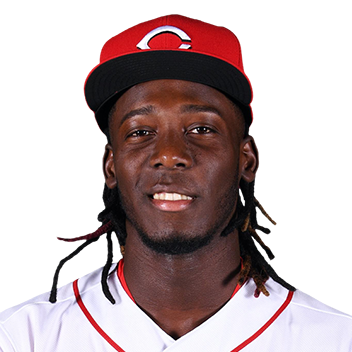
At the time of trade, Pablo Lopez had three years of control remaining for the Marlins prior to going to the Twins.
And over the two years leading into that deal, Pablo had a 3.50 ERA, a 3.62 xERA, a .356 FIP, and a .347 xFIP.
So pretty much very consistent across the board of what his run prevention was.
He had about a 9.2 K per nine with a 2.52 walks per nine, and only allowed about 1.02 home runs per nine innings.
Over that two-year period, he threw 282 and two-thirds innings and was worth roughly 5.3 fWAR.
Now at time of trade, Luis Arraez was coming off of being a batting champion in the National League and had a slash line over the two-year period that we just discussed with Pablo Lopez of .307, .367, .401.
That was good for a 119 WRC+, and he was able to do that over 1,082 plate appearances, which was worth roughly 4.2 fWAR.
This is pretty impressive, all things considered, when you take into the account that Arraez had a negative nine run value when it comes to terms of defense.
Arraez, similar to Lopez, also had three years of control, so for the most part, it seems like a pretty fair straight-up trade.
But that said, the trade wasn't necessarily straight up.
So this wasn't necessarily a one-to-one.
There was a little bit more involved, but at the same time, the purpose of the trade was realistically Lopez for Arraez with additional pieces that came with it later.
Over the previous two years, George has been sitting at a 4.28 ERA, which I'm sure for most of you will be a little surprising to hear that that has been that high.
He's had a 4.06 xERA.
Well, you can also say that it might be a little bit of the defensive related issues that the Mariners have had over the last season, as his FIP and xFIP are nearly a half run lower at 3.68 for FIP and 3.66 for xFIP.
His strikeouts were a little lower at a per rate stance than Pablo Lopez at 8.52 K's per nine.
And his walks, as you can expect, were a little bit better than Pablo Lopez at only being at 2.27 walks per nine.
He's allowed 1.1 home runs per nine over that two per- two-year period while throwing roughly 300 in two-thirds innings while being worth about 4.9 F-WAR.
So realistically across the board, Kirby is a very, very marginally worse pitcher that you could say than Pablo Lopez was the two years leading into the trade.
And realistically, he also only has one year of control less than Pablo Lopez, so anyone acquiring George Kirby would likely get him for the what we can assume will be a shortened 2027 season as well as 2028.
Obviously, we are not sure on what the money will be due for George Kirby over the next two years in arbitration.
A lot of things could potentially move, especially given the CBA being completely revisited.
At the time of trade, Pablo Lopez had three years of control remaining for the Marlins prior to going to the Twins.
And over the two years leading into that deal, Pablo had a 3.50 ERA, a 3.62 xERA, a .356 FIP, and a .347 xFIP.
So pretty much very consistent across the board of what his run prevention was.
He had about a 9.2 K per nine with a 2.52 walks per nine, and only allowed about 1.02 home runs per nine innings.
Over that two-year period, he threw 282 and two-thirds innings and was worth roughly 5.3 fWAR.
Now at time of trade, Luis Arraez was coming off of being a batting champion in the National League and had a slash line over the two-year period that we just discussed with Pablo Lopez of .307, .367, .401.
That was good for a 119 WRC+, and he was able to do that over 1,082 plate appearances, which was worth roughly 4.2 fWAR.
This is pretty impressive, all things considered, when you take into the account that Arraez had a negative nine run value when it comes to terms of defense.
Arraez, similar to Lopez, also had three years of control, so for the most part, it seems like a pretty fair straight-up trade.
But that said, the trade wasn't necessarily straight up.
So this wasn't necessarily a one-to-one.
There was a little bit more involved, but at the same time, the purpose of the trade was realistically Lopez for Arraez with additional pieces that came with it later.
Over the previous two years, George has been sitting at a 4.28 ERA, which I'm sure for most of you will be a little surprising to hear that that has been that high.
He's had a 4.06 xERA.
Well, you can also say that it might be a little bit of the defensive related issues that the Mariners have had over the last season, as his FIP and xFIP are nearly a half run lower at 3.68 for FIP and 3.66 for xFIP.
His strikeouts were a little lower at a per rate stance than Pablo Lopez at 8.52 K's per nine.
And his walks, as you can expect, were a little bit better than Pablo Lopez at only being at 2.27 walks per nine.
He's allowed 1.1 home runs per nine over that two per- two-year period while throwing roughly 300 in two-thirds innings while being worth about 4.9 F-WAR.
So realistically across the board, Kirby is a very, very marginally worse pitcher that you could say than Pablo Lopez was the two years leading into the trade.
And realistically, he also only has one year of control less than Pablo Lopez, so anyone acquiring George Kirby would likely get him for the what we can assume will be a shortened 2027 season as well as 2028.
Obviously, we are not sure on what the money will be due for George Kirby over the next two years in arbitration.
A lot of things could potentially move, especially given the CBA being completely revisited.
The rest of this transcript — segmented and speaker-labeled, so you land on the exact moment something was said
Search every transcript — by keyword, by phrase, or by meaning, across every show Radar indexes
Trends — what is surging across podcasts, measured against its own baseline
Alerts — when a name you follow appears in a newly indexed episode
No account is needed to search Radar.