Oct 12, 2026 · 49 min · 14 segments
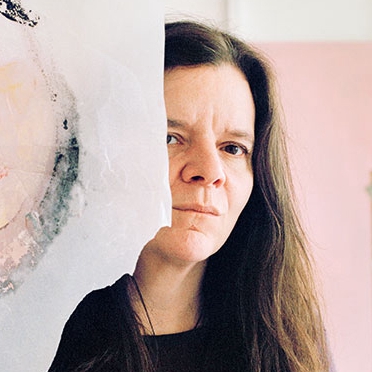
In this episode, we chat with Sara Baume about her piece "On Handkerchiefs" (Tolka, Issue Eleven), as well as her book, Opening Night (2026). We discuss friendships, grandmothers, and crafting as an…
Sara BaumeGuest
Liam HarrisonHostMadeline ArkinsHost
Approximately a decade after I had graduated with a degree in fine arts, I began to lose all respect for my chosen discipline.

I had read one too many overly verbose, vacuously clever descriptions of artwork that was physically and visually dull and cold, needlessly expansive in scale, self-consciously provocative.

For decades, I'd unthinkingly believed that the carefully presented work I visited in galleries was inherently more important, more worthy of my attention than, say, the amateur craft which occupied my daily world.

Gradually it happened that I was opting to visit folk museums or antique stores or model railways rather than contemporary art galleries.

Absences, for the first time, opened up in my life, and at a certain point I started attempting to materialize them.

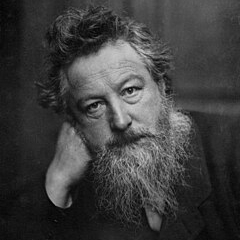
I had become very interested in William Morris and the arts and crafts movement of the late 19th century.

His opposition to industrialization and mass production echoed my opposition to digitalization and crass consumerism.

It was partly because of this that I felt driven to make use of the tools of needlecraft my dead grandmother had bequeathed me; a seam ripper, a pair of sewing scissors, a set of embroidery hoops, tens of spools of vari-colored thread.

I was being inexorably inspired by the domestic cloths that had accompanied me through childhood; pillowcases, place mats, tablecloths, and of most intimate significance, handkerchiefs, the unifying feature of which was a central void surrounded by a decorative border.

The void was the site of the main event, the empty space where things got placed, crockery, cutlery, a sleeping head, a seeping nose.

My grandmother's household cloths astutely embodied Morris' assertion that one ought to have nothing in your houses that you do not know to be useful or believe to be beautiful.

The beauty was in the hand-stitched patterns skirting the perimeter, enclosing the center.

This combination exuded a warmth that felt, to me, simultaneously ancient, familiar, and prescient.

In the town of Clonakilty, there is a house museum dedicated to the Irish revolutionary Republican leader, Michael Collins, and in 2024, it made its arguably most important acquisition at auction in the form of the handkerchief that Collins carried in his pocket when he was killed in an ambush by opposition guerrilla forces in 1922.

Collins' handkerchief is completely unembellished, as was the tradition of the time, men being naturally less embellished in their emotions, but also more inclined to use their handkerchiefs for a multiplicity of applications.

A friend once described to me how her grandfather, a farmer in rural Mayo, would wear his large plain handkerchief as a sun hat tied at the corners when working outside on hot summer days.

In its original state, the Collins handkerchief was no doubt snow white and spotless.

Now, it is discolored, folded into an overlapping square, and pressed inside a large frame.

Now, it is creased, and I like to believe these were the creases inflicted upon it by Collins' pocket, as opposed to the century of storage that followed.

The squash of his clothes as he moved through his final day, as he loaded and reloaded his rifle to return fire at an indistinguishable enemy in the final minutes of his truncated life.

It was late summer evening, the light just starting to dissipate when Michael Collins was struck in the head by a ricocheting gunshot.
The rest of this transcript — segmented and speaker-labeled, so you land on the exact moment something was said
Search every transcript — by keyword, by phrase, or by meaning, across every show Radar indexes
Trends — what is surging across podcasts, measured against its own baseline
Alerts — when a name you follow appears in a newly indexed episode
No account is needed to search Radar.