PHILOSOPHICAL1:36
The Beautiful Science
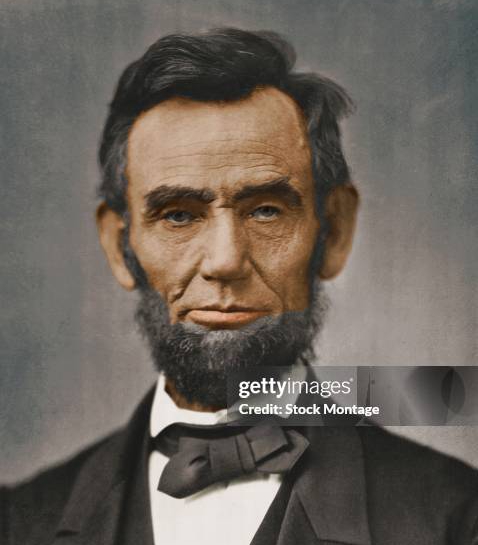
Lincoln saw optimism where others saw gloom

The National Conservatism Institute of Australia Podcast
Sep 1, 2026 · 57 min · 11 segments
My guest today is Dr Mathew A Frith who is a lecturer at the University of New England where he specialises in the history of economic thought. Today we discuss: - His new book “*America's Neglected…
 Mathew FrithGuestDanHost
Yeah, and I mean, it's still, even though my books come out and I uncover a lot of these thinkers, it's still a significantly undervalued area of research.
I mean, you could almost write a PhD thesis just on one of those thinkers in many ways.
I thought it was a goldmine when I came across this because you didn't have a significant and original contribution in writing a PhD.
So, you know, this is kind of a niche that I've carved out in terms of researching that.
Yeah.
Because it's been neglected.
Um, there are just all these undiscovered treasures in this area of trade policy which are relevant today.
And you sort of, I often find when discussing trade policy that it amazes me that you could say anything new because it's been, people have supposedly had all the answers for the last 30 plus years and yet they're completely unfamiliar with any of the counter arguments almost.
And I think what your book does is it kind of makes clear there's a that it there's a usual amount of legitimacy in this school um this wasn't just sort of american rubes or no nothings that kind of pulled something together because they thought it might work or they needed to do it because i don't know particular vested interests were pushing them to introduce tariffs to protect themselves no there was it was some very human and deep thinking which went went behind it and it's certainly contrary to what you read in the Wall Street Journal and contrary to the sort of general narrative about Adam Smith, this and, you know, David Ricardo, that, and suddenly we all lived happily ever after until Milton Friedman came along and pushed it to the next level.
And something I try to emphasize is as far as I can tell, uh, there weren't really um any economists actually going out and discrediting these guys and refuting their arguments right um at the start of the book i explain um there's something known as the weak theory of history which is um when applied to intellectual history it's the idea that knowledge will tend to progress in a linear kind of manner where bad ideas are discarded because they're uh seem to be bad ideas they're kind of discredited and refuted and um uh new ideas emerge that push forward our understanding so the idea according to this weak theory of history is that present day economics should be better than the economics of the past and uh basically the best ideas float to the top very much but um it seems to me that that isn't exactly how history of economic thought tends to progress because um it's not as if the uh these ideas were refuted they were just kind of ignored and just uh uh pushed aside um
It also just assumes, like I said, there's a certain parochialness to that thing, argument too, right? Because it assumes that the age in which we live in is the best of all possible worlds.
And if you look at history, everything was working towards creating the conditions in which we live under today, which somehow can't be perfected much more.
And that's just not how history has ever worked.




Yeah, and I mean, it's still, even though my books come out and I uncover a lot of these thinkers, it's still a significantly undervalued area of research.
I mean, you could almost write a PhD thesis just on one of those thinkers in many ways.
I thought it was a goldmine when I came across this because you didn't have a significant and original contribution in writing a PhD.
So, you know, this is kind of a niche that I've carved out in terms of researching that.
Yeah.
Because it's been neglected.
Um, there are just all these undiscovered treasures in this area of trade policy which are relevant today.
And you sort of, I often find when discussing trade policy that it amazes me that you could say anything new because it's been, people have supposedly had all the answers for the last 30 plus years and yet they're completely unfamiliar with any of the counter arguments almost.
And I think what your book does is it kind of makes clear there's a that it there's a usual amount of legitimacy in this school um this wasn't just sort of american rubes or no nothings that kind of pulled something together because they thought it might work or they needed to do it because i don't know particular vested interests were pushing them to introduce tariffs to protect themselves no there was it was some very human and deep thinking which went went behind it and it's certainly contrary to what you read in the Wall Street Journal and contrary to the sort of general narrative about Adam Smith, this and, you know, David Ricardo, that, and suddenly we all lived happily ever after until Milton Friedman came along and pushed it to the next level.
And something I try to emphasize is as far as I can tell, uh, there weren't really um any economists actually going out and discrediting these guys and refuting their arguments right um at the start of the book i explain um there's something known as the weak theory of history which is um when applied to intellectual history it's the idea that knowledge will tend to progress in a linear kind of manner where bad ideas are discarded because they're uh seem to be bad ideas they're kind of discredited and refuted and um uh new ideas emerge that push forward our understanding so the idea according to this weak theory of history is that present day economics should be better than the economics of the past and uh basically the best ideas float to the top very much but um it seems to me that that isn't exactly how history of economic thought tends to progress because um it's not as if the uh these ideas were refuted they were just kind of ignored and just uh uh pushed aside um
It also just assumes, like I said, there's a certain parochialness to that thing, argument too, right? Because it assumes that the age in which we live in is the best of all possible worlds.
And if you look at history, everything was working towards creating the conditions in which we live under today, which somehow can't be perfected much more.
And that's just not how history has ever worked.
Every episode on Radar is fully transcribed, speaker-labeled, and rich with metadata. Here is a taste of this one. Try Radar for free to see the rest.
3 of 7
The Beautiful Science
Lincoln saw optimism where others saw gloom
Trade, Purpose, and Happiness
Modern economies may trade abundance for purpose
Labor Is Not Interchangeable
Classical economics reduced people to interchangeable workers
+4 more clips · 9 min 4 sec of audio in all
7 of 24
The rest of this transcript — segmented and speaker-labeled, so you land on the exact moment something was said
All 7 clips — the highlight moments, each cut as its own audio, with a title and a speaker
All 11 segments — the transcript broken into labeled sections, every ad read marked
All 24 topics — jump to every other episode discussing the same subject
Every related episode — other shows Radar links to this one
No account is needed to search Radar.

