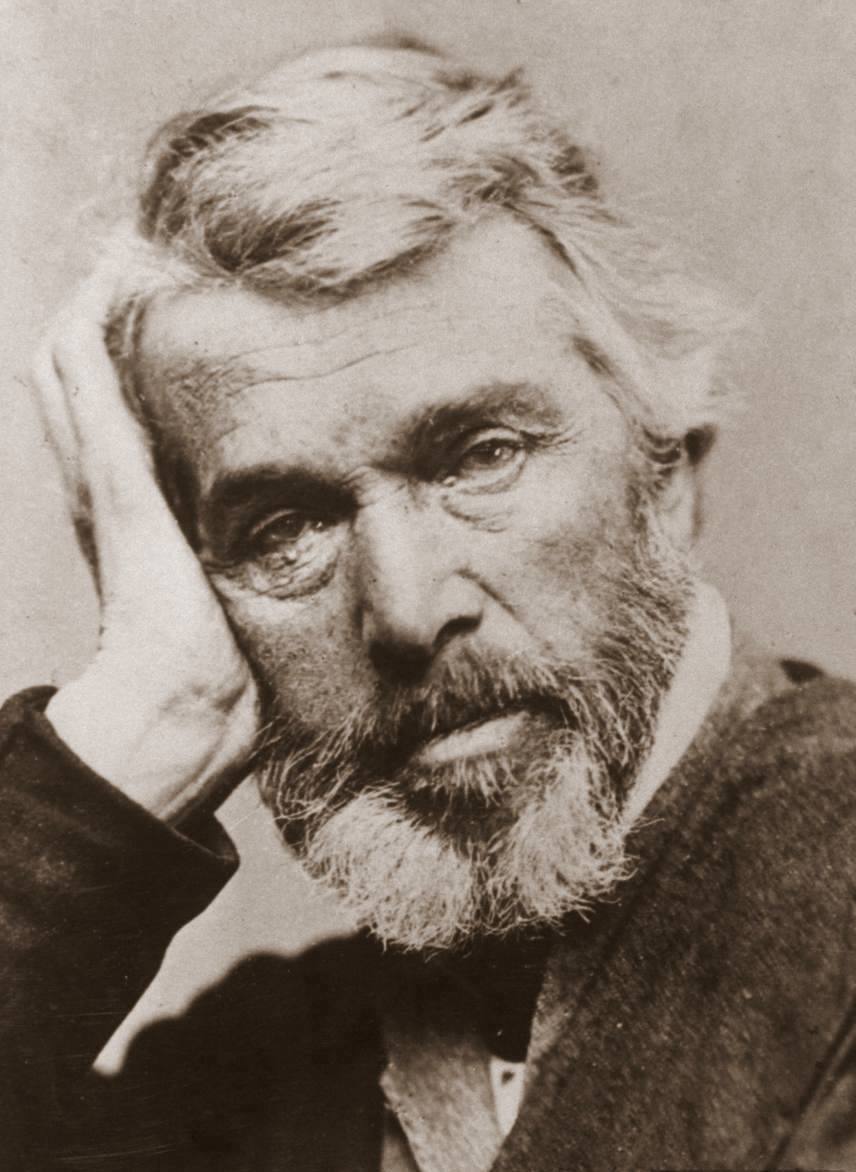
Thomas Carlyle
Scottish essayist and historianWikipedia
226
MENTIONS
52
EPISODES
50
PODCASTS
Search complete. 226 mentions across 52 episodes found for "Thomas Carlyle".
Oct 29, 2026

Rodney LakeHOST
In five years, super hard to tell, 60 months from now, what's the world going to look like with superintelligence? And certainly beyond that, even tougher.
Rodney LakeHOST
But I think as analysts, business people, investors, we can absolutely think about, okay, well, what's going to be happening in the next year? What's going to be happening in the next three years? And let's really focus in on, okay, over the next 12 months, as Thomas Carlyle said, it's not what's dimly in the distance, but what's straight in front of us to focus on here.
Rodney LakeHOST
So that's where we're going to focus on next 12 months, next 36 months.
Rodney LakeHOST
How does Amazon position itself well? And it's already done a lot of that, but how does it continue to grow that advantage that it has? How does it continue to build out this infrastructure, both on the retail side, on the AWS side? and continue to monetize on the advertising side.

Jack GrahamSOUNDBITE_SPEAKER
Another thing I would say in proving the will of God, it is by doing the will of God today, right now.
Jack GrahamSOUNDBITE_SPEAKER
Thomas Carlyle said, our main business is not to see what lies dimly in the distance, but to do what clearly lies at hand.
Jack GrahamSOUNDBITE_SPEAKER
The will of God is not so much what I'm going to do five years from now, 10 years from now, 20 years from now, but what am I going to do today? Will you trust God's will today and trust Him for every tomorrow? You say, I can't see clearly.
Jack GrahamSOUNDBITE_SPEAKER
I don't know exactly which turn.

Emily JonesGUEST
So, you have lots of people like, you know, Lord Ashley, who later becomes the 7th Earl of Shaftesbury, figures like Richard Osler, Michael Sadler, later the kind of Young England figures, which obviously includes Disraeli.
Emily JonesGUEST
as well as figures like John Ruskin, so the art critic and social critic, figures like Thomas Carlyle, who's, you know, this incredibly influential sage to socialists and Labour figures, as well as to, you know, people, liberals, and his bestie is John Stuart Mill, as well as kind of conservatives and things like that.
Emily JonesGUEST
So this concern for the condition of the people is not a kind of it's really not about finance or our funding.
Emily JonesGUEST
So no one wants to raise taxes.

James MarriottGUEST
the working class autodidact movement, these guys who were working in mines, in mills, in factories, in some of the worst jobs that have ever been created for human beings in the aftermath of the Industrial Revolution.
James MarriottGUEST
They were coming home from brutalizing work and they were going to the Mining Education Institute or they were going to the library, or they were sitting down and they were reading Thomas Carlyle or Edward Gibbon or Tennyson or teaching themselves Latin and living this unbelievably rich life.
James MarriottGUEST
life in books, even while they were doing these appallingly difficult jobs.
James MarriottGUEST
And, you know, that's not the universal story of working class reading, but it's a part of it that I think is often overlooked and often forgotten and is a testament to how deep the culture of literacy once went in our society.

E. Michael JonesHOST
by reading Paradise Lost.
E. Michael JonesHOST
There was a moral consensus, and as late as, I've said this before, when Ralph Waldo Emerson met with Thomas Carlyle and Charles Dickens up in Scotland, he said, if you don't know that American men are virgins when they go to their marriage bed, you don't know anything.
E. Michael JonesHOST
So that was the paradox.
E. Michael JonesHOST
I think that's the form we return to, where we have a moral people.

Jon GegenheimerGUEST
He read...
Jon GegenheimerGUEST
Thomas Carlyle's book, The French Revolution, that was his outline, a very long story by Francis Carlyle, who told the history of the French Revolution as no one else ever had or has since that day, since he wrote it.
Jon GegenheimerGUEST
But Charles Dickens nails the French Revolution, and he does it in fictional format.
Jon GegenheimerGUEST
But there's so much truth in it.

Robert McTeigueHOST
But it wasn't just the Irish, it was the Scots as well.
Robert McTeigueHOST
Historian Thomas Carlyle saw the disaster coming too, because people didn't see the danger they were in, number one, for rejecting Christ, and number two, for listening to clowns like Jean-Jacques Rousseau, who's considered the intellectual architect of the French Revolution.
Robert McTeigueHOST
Carlyle wrote this, There was once a man called Rousseau who wrote a book containing nothing but ideas.
Robert McTeigueHOST
The second edition was bound in the skins of those who laughed at the first.
Robert McTeigueHOST
Ouch, that hit hard.

Walter Russell MeadGUEST
So we ought to be thinking about this as a country in a time of great difficulty.
Walter Russell MeadGUEST
And so history, which, and history through the minds of great historians who, you know, a guy like Thomas Carlyle with the French Revolution is writing about history using the techniques of epic poetry.
Walter Russell MeadGUEST
And he's quite explicit about that.
Walter Russell MeadGUEST
And you can follow that thread through the book, The French Revolution.
32 MINS LATER
Robert FergusonHOST
Professor Mead, before you go, have you got one last book recommendation for people?
Walter Russell MeadGUEST
Gosh, well, I mean, I gave you two titles and you picked the shorter one.
Walter Russell MeadGUEST
I do think that Thomas Carlyle's History of the French Revolution is... is maybe the most underappreciated truly great contribution to historical thinking.
Walter Russell MeadGUEST
It was his attempt with about a 50-year gap to make sense of what at the time was the most colossal upheaval that civilization had ever experienced.

Martyn Lloyd-JonesSOUNDBITE_SPEAKER
There is subtle argument.
Martyn Lloyd-JonesSOUNDBITE_SPEAKER
There are immensities and infinities, to quote Thomas Carlyle.
Martyn Lloyd-JonesSOUNDBITE_SPEAKER
And you can't take these things of a run.
Martyn Lloyd-JonesSOUNDBITE_SPEAKER
And people born again, Christian people, they come and read the epistle to the Ephesians.

Martyn Lloyd-JonesHOST
There is subtle argument.
Martyn Lloyd-JonesHOST
There are immensities and infinities, to quote Thomas Carlyle.
Martyn Lloyd-JonesHOST
And you can't take these things of a run.
Martyn Lloyd-JonesHOST
And people born again, Christian people, they come and read the epistle to the Ephesians.
42 more episodes mention Thomas Carlyle.
Create an account to see the whole feed, search across every transcript, and follow the entities you care about.